Almost every bag enquiry reaches the same question within two emails: will you send a free sample? It is a reasonable thing to ask and an awkward thing to answer, because "a sample" describes four different objects with four different costs.
The useful framing is not free or paid. It is: what is being made, how much work goes into it before anything can be sewn, and what the charge is buying you that a photograph would not.
The four things called "a sample"#
A stock sample is an existing product pulled off a shelf. Nothing is developed and the only real costs are the piece and the courier. This is the sample that is often supplied free, and it answers questions about a factory's workmanship rather than about your product.
A counter or reference sample is an existing style adapted lightly — a different colour, a logo applied. Some development, modest cost.
A development sample is your product, made for the first time. Pattern making, material sourcing, one operator building a single unit by hand. This is where the real cost sits, and it sits almost entirely in labour and time rather than in materials.
A pre-production sample is built in bulk materials on the bulk line, which means it waits for those materials to arrive. It is the approval gate, not a preview — our note on what a PPS confirms covers what it locks in.
What a development sample charge is actually paying for#
The fabric in a single pouch costs very little. The charge is for everything around it.
Pattern making. Turning a drawing into a graded set of pieces that a line can cut and sew, with seam allowances that work at the corners. This is skilled work and it is done once per style, whether you order a hundred pieces or ten thousand.
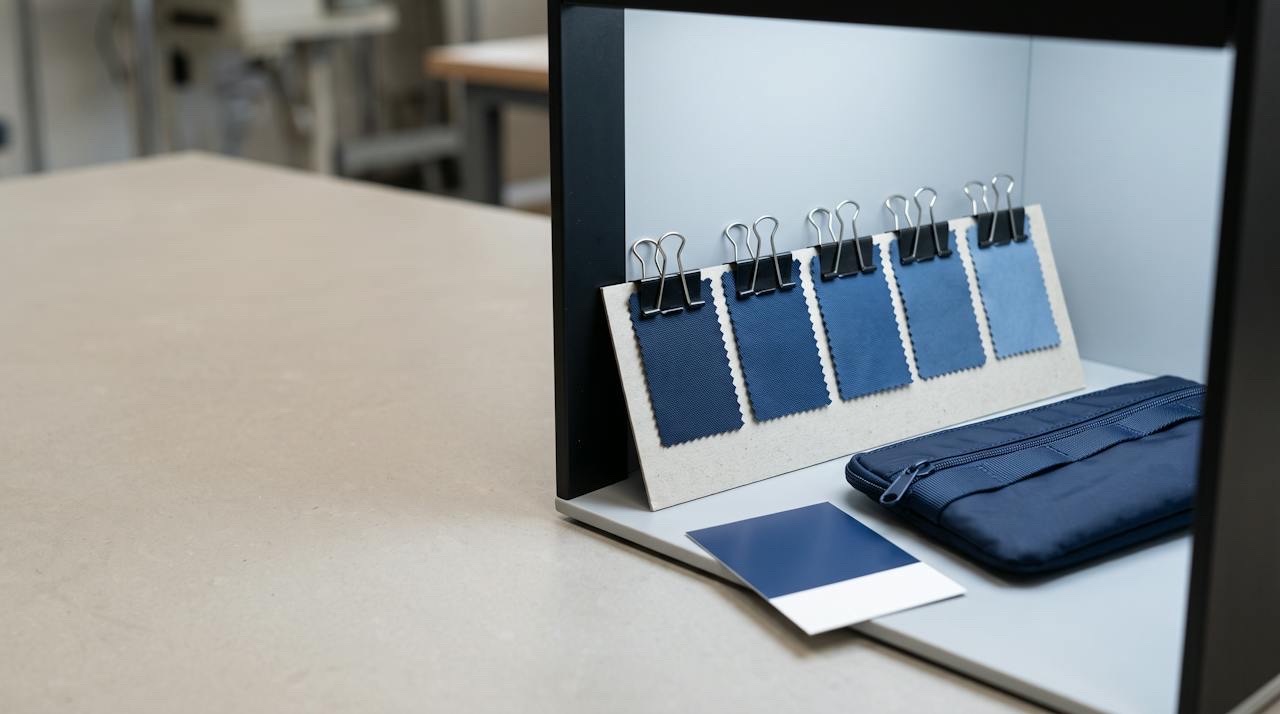
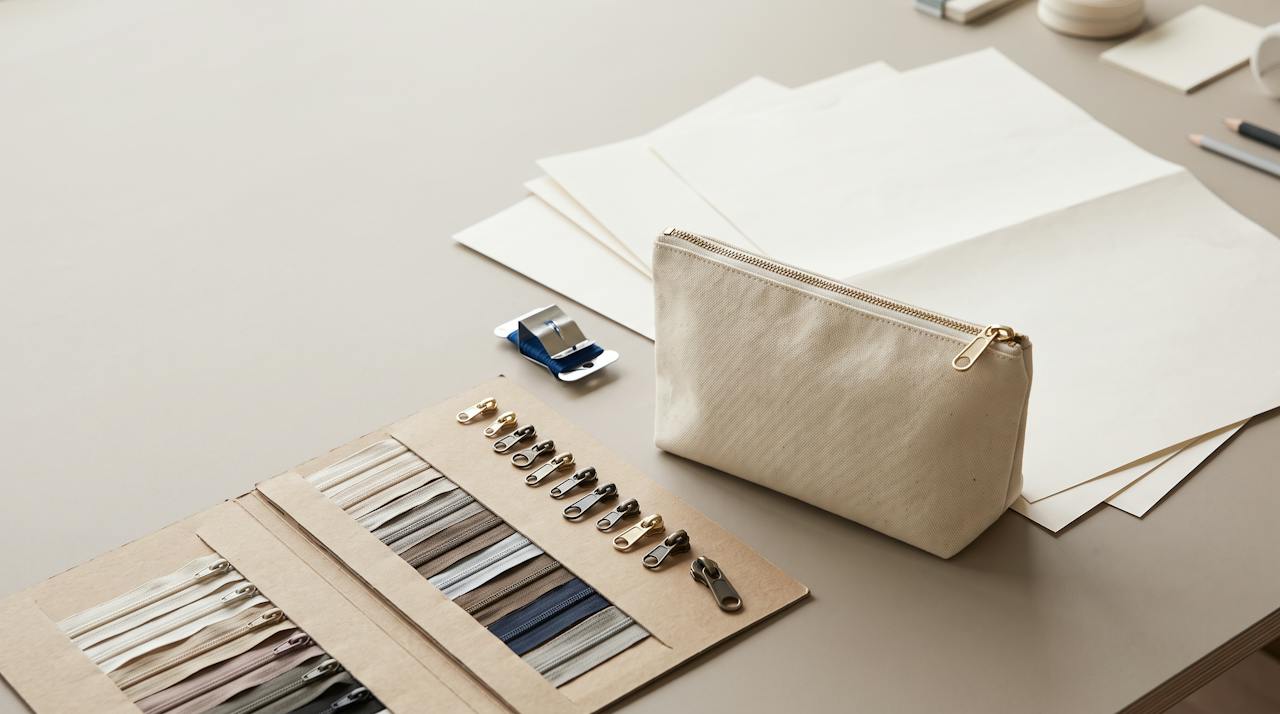
Sourcing. Finding the shell, the lining, the zip in the right size and colour, the puller, the webbing — often in quantities far below any supplier's minimum, which means buying a full roll or a full box to make one bag.
Line time. A sample is built by one experienced operator working alone, outside the production flow. It takes a multiple of the time the same bag takes in a run.
That is why a sample charge can look disproportionate against the eventual unit price. It is not the unit price plus margin; it is a different activity.
Who normally pays, and what is normal to ask for#
Across the industry the common arrangement is that the buyer pays for development samples and courier, and that the charge is credited against the first production order once it is placed. That structure is worth asking for by name, because it aligns both sides: the factory is covered for work that may lead nowhere, and a buyer who does order is not out of pocket.
Stock samples are frequently free, sometimes with the courier on the buyer's account. Asking for a stock sample first is a cheap way to judge workmanship before committing to development.
What is not normal is a factory charging for a sample and being unable to say what the charge covers. "What does the sample fee include, and is it credited against the order?" is a fair question at enquiry stage and the answer is informative either way.
ROOTSMEN confirms sample terms per programme once the build is defined — the charge depends on how much development the style actually needs, which is not knowable from a photograph.
Courier, and why it is quoted separately#
International courier on a single bag is rarely trivial, and it is charged on volumetric weight rather than actual weight — a light, bulky parcel is priced on the space it occupies. A structured wash bag can cost more to send than a heavier flat pouch.
Customs and duty on samples are the receiver's responsibility in most arrangements, and a sample declared at a nominal value can still attract charges. It is worth confirming who is the importer of record on the sample before it ships, rather than discovering it in a broker's invoice.
Sending several samples in one shipment is materially cheaper than sending them as they are finished. If the schedule allows, ask for them batched.
Revision rounds, and how to spend fewer of them#
Most programmes budget for one revision round and use two. The second round is rarely caused by the factory misreading the brief; it is usually caused by the brief not containing the answer.
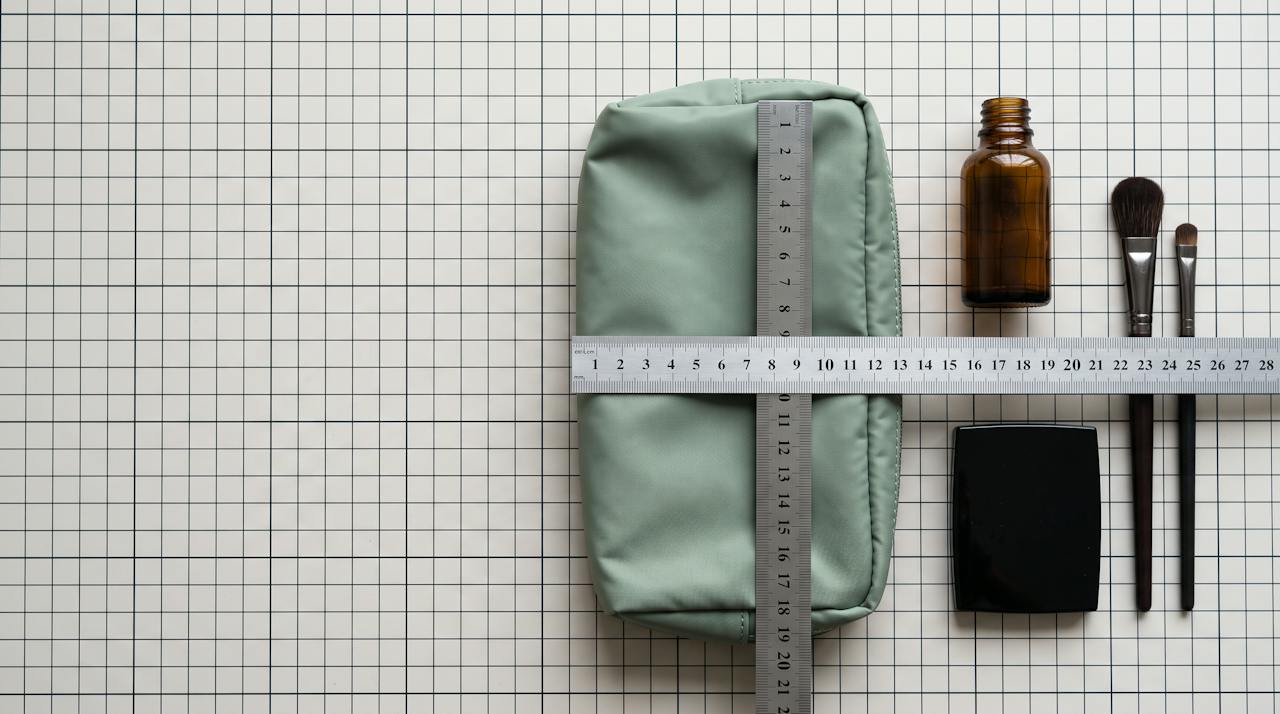
The things that most often trigger an extra round: dimensions given without a tolerance or without saying whether they are flat or filled, a logo position described as "centred", colours described in words rather than a standard reference, and contents the bag has to hold that were never stated. Each of those is a sentence in the brief and a round in the schedule.
The cheapest round is the one replaced by a question. A factory that asks before cutting is saving you a sample, and our notes on writing a tech pack and specifying dimensions cover what to put in so the question does not need asking.
Tooling: the cost that is not a sample cost#
Some samples need tooling before they can exist: a die for a debossed mark, a mould for custom hardware, screens for a print, a digitised file for embroidery.
These are one-off charges per mark and per size, and they are separate from the sample charge even when they appear on the same invoice. They also survive the sample: the die used on the sample is the die used in production, which is why it is worth asking who holds it and whether it can be released.
Where a programme is still deciding between decoration methods, it is usually cheaper to sample the construction first with a simple applied mark, and to commit to tooling once the build is settled.
What a sample is worth paying for#
A sample charge buys information, and the question is whether the information is worth the money. Three cases where it clearly is.
The contents test. Loading the bag with the real items it must hold is the check that most often changes a specification, and no photograph substitutes for it.
The hand feel. Material weight, coating and lining read completely differently in the hand than on a screen, and a buyer approving a shell from a swatch photograph is approving something they have not assessed.
The zip under load. A zip that runs cleanly on an empty flat bag and binds on a full one is the most common late discovery in this category. Our note on what to check when your first samples arrive sets out the rest of the sequence.
What to ask, and in what order#
At enquiry: is there a stock sample close to this, what does it cost to send, and what would a development sample cost for this build. Three questions, one email, and the answers tell you both the price and the supplier.
Before approving any charge: what does it include, is it credited against the order, how many revision rounds are covered, and what is the timeline. A sample that arrives after the launch window has closed cost more than its invoice.
And before the first sample is cut, put the contents, the dimensions with tolerance, the colour references and the branding position in writing. That single document is what decides whether you pay for one sample or three. Our note on how long an order takes shows where each round lands in the schedule.
| Type | What is developed | Cost driver | Usually paid by |
|---|---|---|---|
| Stock sample | Nothing | The piece and courier | Often free; courier on the buyer |
| Counter sample | Colour or logo on an existing style | Light development | Buyer, often credited |
| Development sample | Your product, first time made | Pattern, sourcing, line time | Buyer, commonly credited |
| Pre-production sample | Built in bulk materials on the bulk line | Waits on bulk materials | Buyer, commonly credited |