
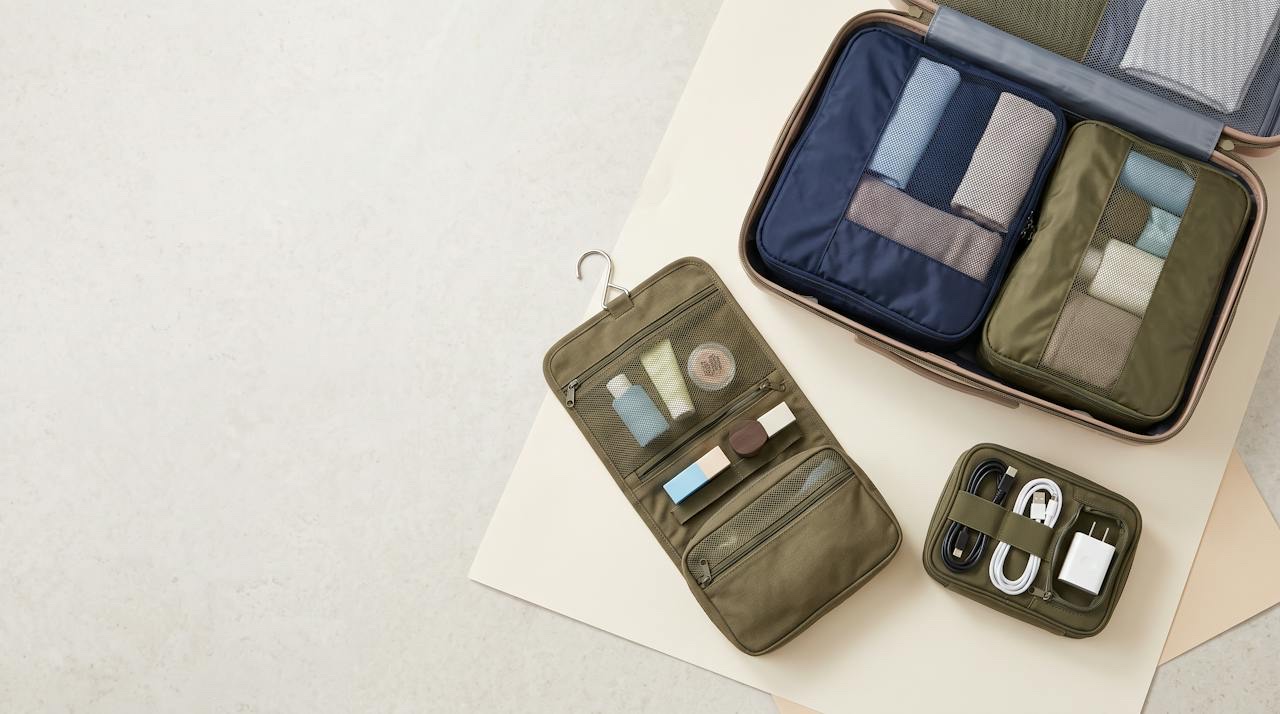
Travel Organizer Features Buyers Want: A Design Checklist
Packing cubes, hanging toiletry bags and tech organizers: which features sell, and how each one changes construction and cost.
The travel organizer features buyers look for most are compression zips, mesh or clear windows, hanging hooks, water-resistant linings, clear panels sized for airport liquids rules, cable and tech storage, lightweight fabrics, sturdy carry handles, colour-coding and labelling. Each one adds parts, stitching steps or specialist materials, so choose features that match the traveller and the retail price you are aiming for.
Packing cubes, hanging toiletry bags and tech organizers are some of the most searched travel accessories, and shoppers compare them feature by feature. For a brand developing its own range, the challenge is to pick features that actually sell without piling on construction that the product cannot carry.
This checklist goes through the features buyers ask for most, what each one means on the factory floor, and which way it pushes cost. It is written for product developers and sourcing managers briefing a supplier on a new travel accessories programme.
A useful rule before you start: every feature should solve a problem your target traveller actually has. A business traveller with a carry-on values slim profiles and tech storage, while a family on a long trip values colour-coding and capacity. Designing for one clear user keeps the specification focused and the cost under control.
Compression zips and expandable gussets
A compression packing cube usually has a second zip running round the body. Closing it pulls the two halves together and squeezes the contents flat. Expandable toiletry bags do the opposite, with a zipped gusset that opens up for extra space.
Construction impact: an extra zip, extra seam allowance and a stronger zip track, because the teeth take real strain when the cube is overfilled. Cost direction: up. Zip grade matters more here than on almost any other feature, so agree the zip specification and a pull-strength check at the sample stage.
Mesh windows and see-through panels
Mesh tops let travellers see what is inside and let damp items breathe. Clear TPU or PVC panels do the same for toiletries. Both help a shopper grasp the product quickly on the shelf.
Construction impact: mesh must be bound or taped at the edges so it does not fray, and clear films need the right needle and stitch length so they do not tear along the stitch line. Cost direction: mesh is usually neutral to slightly up. Clear film panels add handling care and a stricter check for cosmetic defects.
Clear bags sized for airport liquids rules
Shoppers often ask whether a toiletry bag is "TSA-friendly". In the US, the TSA 3-1-1 liquids rule allows containers of 3.4 ounces (100 ml) or less in one quart-sized bag per passenger. The UK government's hand luggage liquids guidance describes a single transparent, resealable bag holding no more than a litre, about 20cm x 20cm, and notes that rules vary by airport.
Design takeaway: size the clear pouch to these dimensions and use cautious wording on packaging. Airport rules change and vary from place to place, so avoid promising that a product guarantees passage through security.
Hanging hooks and fold-out layouts
Hanging toiletry bags open out and hang from a towel rail or door, which matters in small hotel bathrooms. The hook is often the first thing to fail in reviews.
Construction impact: a metal or moulded hook, a reinforced anchor point (often with bar-tacking or a backing patch), and inner panels that stay tidy when the bag is hanging. Cost direction: up, mainly from the hardware and the extra reinforcement. Ask for a loaded hang test during sampling.
Water-resistant linings and lightweight fabrics
Coated linings help contain spills from toiletries, and wipe-clean interiors are an easy selling point. Outer fabrics are moving towards lightweight ripstop and recycled polyester; our comparison of ripstop nylon vs RPET for travel organizers covers the trade-offs.
Construction impact: coated fabrics can show needle holes, so seams may need taping or careful placement if you want to call the product water-resistant. Be precise with claims: "water-resistant" and "waterproof" mean different things, and any claim should match how the bag was tested. Cost direction: neutral to up, depending on the coating and seam treatment.
Cable and tech organization
Tech organizers sell on layout: elastic loops for cables, padded pockets for power banks, and small zipped compartments for adapters and memory cards.
Construction impact: many small parts, elastic of consistent tension, and padding layers that must line up with the stitching. Loop spacing should be designed around the chargers and cables your customers actually carry. Cost direction: up with every added loop and pocket, because each one adds a sewing operation.
Keep the layout flexible where you can. A removable divider or a single row of mixed-width loops fits more devices than a layout built around one model of charger, and it will not date as quickly when connectors change.
Handles, colour-coding and labelling
Grab handles make cubes easy to pull out of a suitcase. Colour-coded sets and write-on or window labels help families and frequent travellers find things fast. These features are cheap to add and noticeable to shoppers.
Construction impact: handles need secure stitching into the seam, colour-coded sets need colour matching across fabrics, zip tapes and binding, and labels can be woven, printed or embroidered; see embroidery vs debossing on soft goods. Cost direction: small per feature, but more colourways mean more material lots to manage.
Turning the checklist into a brief with ROOTSMEN
A good brief lists every feature with a reason, a reference photo or sketch, and a measurable check. Vague requests such as "strong zip" or "waterproof lining" lead to samples that miss the mark and extra rounds of revision.
Rank features as must-have, nice-to-have and optional, then work out how each one affects cost using our guide on what drives unit price. Confirm the functional details, such as zip strength, hook load and panel sizing, on the pre-production sample, and write them into your AQL inspection plan.
ROOTSMEN is a Taiwan OEM/ODM maker founded in 1981 in Taipei, with its own factory in Guangdong since 1993, making custom cosmetic bags, travel organizers and soft goods. Contact us to talk through your feature list.
| Feature | Best suited to | What it adds in construction | Cost direction |
|---|---|---|---|
| Compression zip | Packing cubes | Second zip, stronger zip track, extra seam | Up |
| Mesh window | Packing cubes, laundry bags | Bound or taped edges | Neutral to slightly up |
| Clear panel (liquids-rule size) | Toiletry bags | Film handling, careful stitching, sizing to guidance | Slightly up |
| Hanging hook | Hanging toiletry bags | Hardware, reinforced anchor point | Up |
| Water-resistant lining | Toiletry bags | Coated fabric, possible seam taping | Neutral to up |
| Cable loops and padded pockets | Tech organizers | Many small parts, elastic, padding layers | Up per pocket |
| Grab handle | Cubes, toiletry bags | Secure stitching into the seam | Slightly up |
| Colour-coding and labels | Multi-piece sets | Colour matching, label application | Small, rises with colourways |
Event Details
From the Stand
Frequently Asked Questions
The questions this topic actually raises when a program is being scoped.
Compression zips, a mesh top, a grab handle and colour-coded sizes are the features shoppers compare most. Pair them with a lightweight, durable fabric and a quality zip, since the zip is where overfilled cubes usually fail first.
Avoid it. The TSA sets the 3-1-1 rule for passengers: containers of 3.4 ounces (100 ml) or less in one quart-sized bag. It does not approve bags, so describe sizing accurately and avoid wording that suggests official approval.
Design to the published guidance for your markets. TSA refers to a quart-sized bag, and UK guidance describes a transparent, resealable bag holding up to a litre, about 20cm x 20cm. Check current rules before finalizing packaging text.
No. Water-resistant usually means the fabric or lining resists spills and light moisture, while waterproof implies a much higher standard that includes sealed seams. Only use a claim that matches how the finished bag was built and tested.
Features that add hardware or sewing operations add the most: hanging hooks, compression zips, and tech layouts with many loops and pockets. Mesh, handles and labels usually add less. Rank features by how much shoppers value them before adding them.
Confirm them on the pre-production sample: zip function under load, hook strength, panel size and loop fit for real cables. ROOTSMEN recommends writing these checks into your inspection plan so bulk goods are judged against the same standard.
Related Products
Builds where this decision applies.

Have a product requirement of your own?
Tell us the product, the quantity and the timeline — we'll scope a development plan.