Most sourcing decisions for cosmetic bags and travel accessories are made on a spreadsheet of unit prices, and most of the pain that follows comes from what that spreadsheet never captured: who redraws the pattern when the sketch does not close, who owns the mould for a custom zip puller, and what counts as a reject when the goods land.
This is a vetting framework to use before you shortlist: the terms buyers are expected to already know, what audit reports do and do not prove, and what a first enquiry should contain. If you are already comparing quotes, what drives the unit price of a custom cosmetic bag covers the cost side.
What is the difference between OEM and ODM?#
OEM (original equipment manufacturer) means the supplier manufactures to a design you own and specify. You arrive with a tech pack — the drawings, measurements, construction notes, stitch and seam callouts, labelling and packing instructions that define the product — and a BOM (bill of materials: every shell fabric, lining, zip, slider, webbing, label, thread and carton in one unit). The factory's job is to reproduce it accurately and repeatedly.
ODM (original design manufacturer) means the supplier does part or all of the engineering. You arrive with an idea, a reference photo or a half-finished sketch, and the supplier's pattern maker — the person who converts a design into the flat panel shapes a sewing line can cut and assemble — resolves it into a buildable product. Most soft-goods programmes sit in the middle: the brand owns the look, the factory owns the construction. The four sourcing models — OEM, ODM, private label and white label — and which of them decides who owns the pattern, are set out in full here.
The distinction predicts who carries the risk when something does not work. Under a pure OEM arrangement, a pouch that does not sit square because the gusset was drawn 4mm short is your problem; under ODM it is the supplier's, because they engineered it. Decide which one you are buying and say so in the first email — a supplier who answers "yes, both" without asking what your sketch contains has not read it. ROOTSMEN works on the developer-plus-factory side of that line, which the solutions and production and supply chain pages describe.
What does a social audit report actually tell you?#
Buyers routinely ask "are you certified?", and the most commonly cited scheme does not issue a certificate in the way the question implies. SMETA, run by Sedex, is an audit methodology rather than a certification: an independent auditor visits the site and measures it against the ETI Base Code, ILO conventions and local law, in a two-pillar (labour, health and safety) or four-pillar (adding environment and business ethics) scope.
So the useful question is not "do you have one" but "may I see the report, and what is the corrective action plan" — the report carries the visit date, the scope audited, the non-conformances found and what was committed to. What it does not tell you is that the factory can make your bag well: social audits measure working conditions, not pattern accuracy, colour matching or zip durability. A quality-management-system certificate is the same trap in a different costume — it tells you an auditor reviewed documented procedures, not that your product will pass.
What SMETA, BSCI and ISO 9001 actually prove about a bag factory goes through each scheme in detail, and choosing AQL levels for bag and pouch inspections is the product-side conversation that sits underneath it: who signs off the pre-production sample, what the in-line checkpoints are, and what inspection standard applies at the end.
Who owns the pattern, the artwork and the tooling?#
This is the question buyers skip and regret. Three separate things are in play. Your artwork and marks are yours, and protecting them is a registration question, not a supplier question: a trademark is, in WIPO's words, a sign capable of distinguishing one enterprise's goods or services from another's, registered nationally or through the Madrid System, usually for ten-year terms that can be renewed indefinitely on payment of further fees; the USPTO sets out the application, examination, publication and registration path for the US. If the shape of the bag is genuinely novel, that is an industrial design instead — the ornamental aspect of an article, which WIPO notes is protected by registration in most countries and internationally through the Hague System.
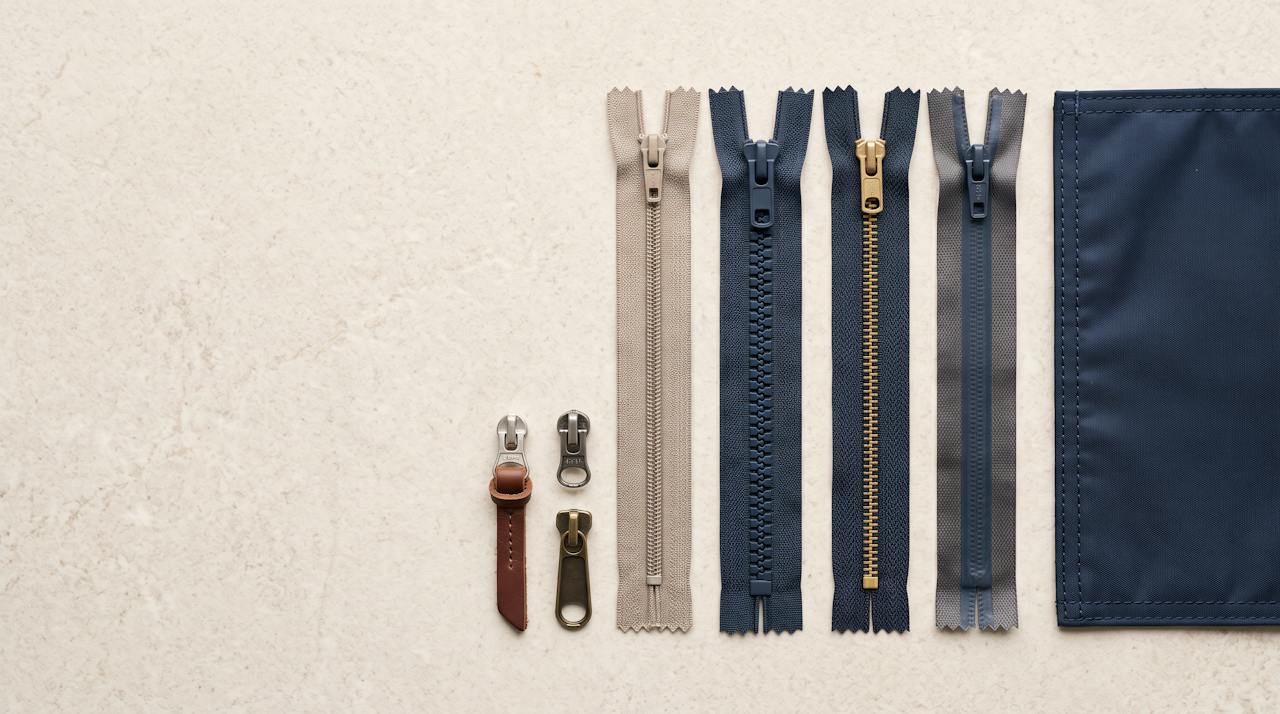
The pattern is different. It is the engineering work that makes your sketch producible, and unless the contract says otherwise it usually sits with whoever paid for its development. The same applies to tooling: custom moulds for zip pullers, buckles, embossing plates and die-cut knives are physical assets with a cost, and "we absorbed the tooling" often means "we own it". Put it in one clause agreed before the first sample — development outputs created for this programme, patterns, graded specs, tooling and moulds included, are exclusive to the buyer, are not used for other customers, and are released on request.
What does the route from sketch to pre-production sample look like?#
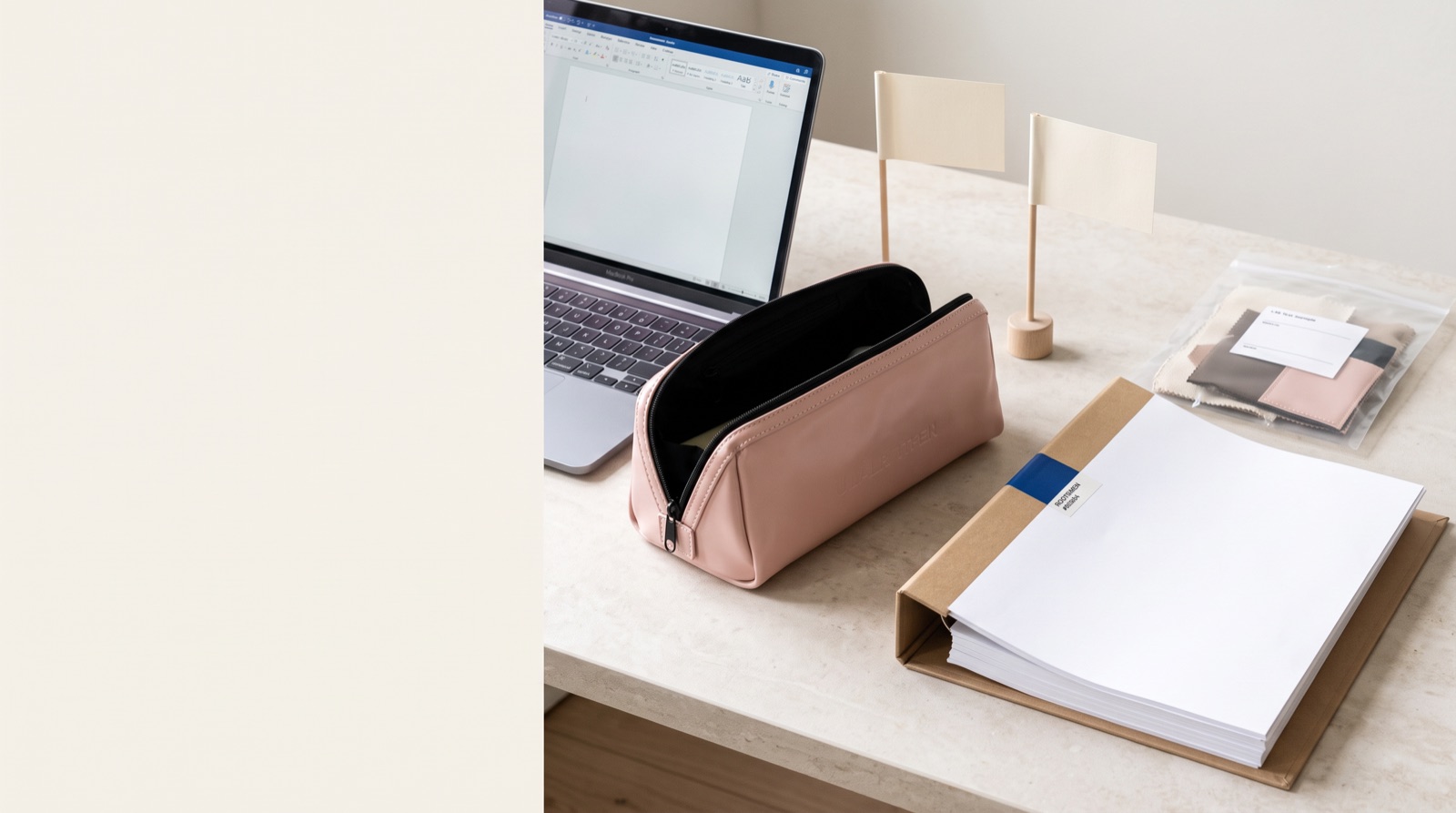
A credible supplier can name the stages and say who does what at each one. The usual route for a cosmetic bag or travel organizer is: brief and reference review; material selection and swatch approval; a first prototype to prove pattern and proportions; pattern correction and a second prototype; colour and trim approval against physical standards; then a PPS (pre-production sample) built with the exact bulk materials, hardware and construction sequence, which becomes the reference every production unit is measured against. What a PPS actually confirms covers that last stage in detail.
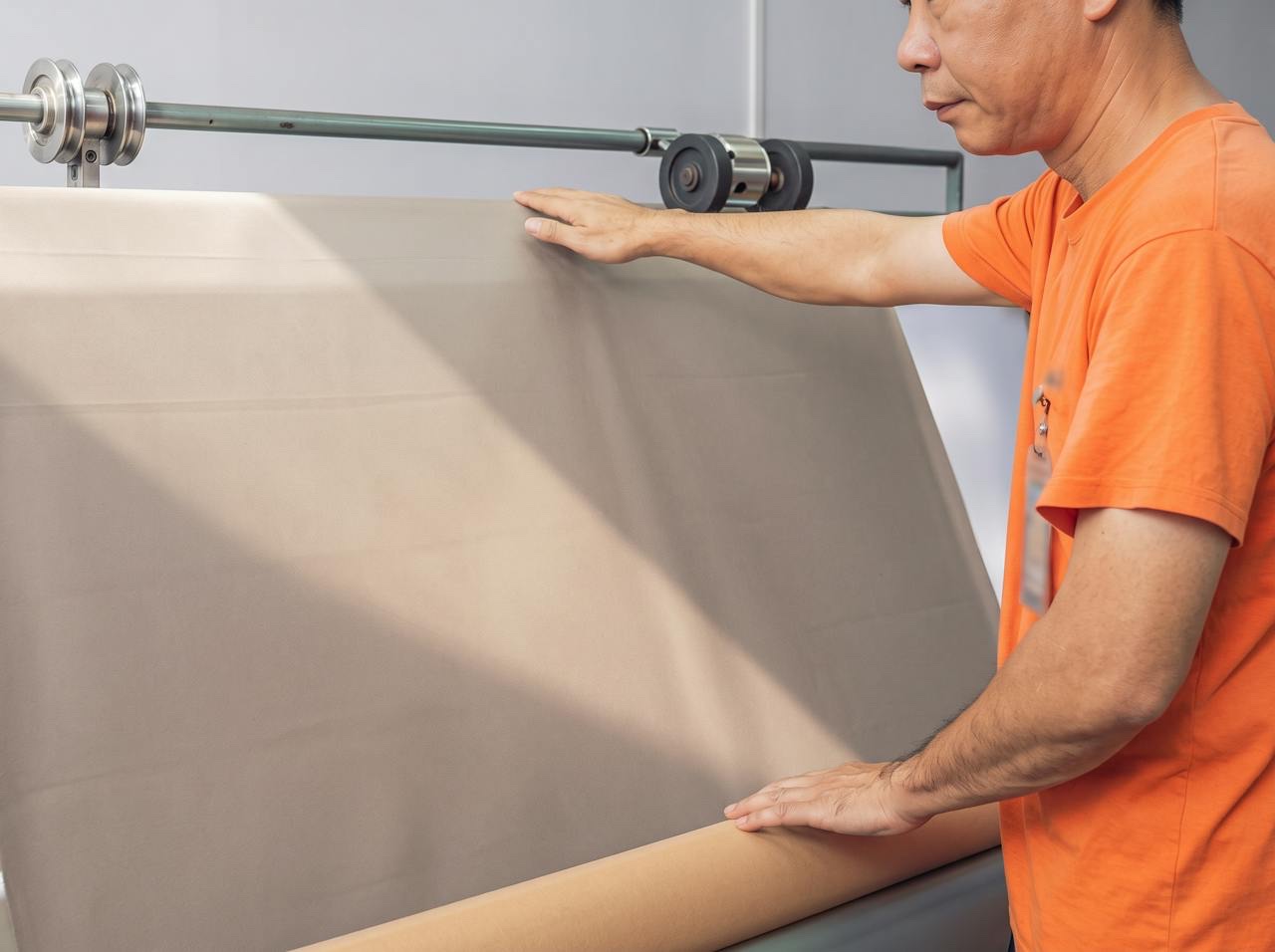
Timelines slip in two predictable places. The first is material sourcing: a shell fabric agreed by photograph rather than physical swatch produces a colour argument three weeks later, and a lining or hardware that must be dyed or plated to match adds lead time nobody scheduled. The second is the sample loop — every extra prototype round is real calendar time, and the usual cause is an incomplete brief: no finished dimensions, no decision on lining colour.
Should you choose OEM, ODM, or a stock item with your logo printed on it?#
There is a third option buyers dismiss too early, and sometimes it is right: take an existing catalogue item and apply your branding. For a trade-show giveaway or a low-value gift-with-purchase, six weeks of development to save a few cents is a bad trade; for a product sitting on shelf next to your packaging it is usually the wrong call, because you inherit someone else's proportions. The table compares the three routes on the dimensions that actually differ.
What are the red flags when vetting a bag supplier?#
Four warning signs are worth more than any factory photo. First, no in-house sampling: if prototypes come from somewhere else, development control is somewhere else too. Second, a quotation with no written specification behind it — a price for "cosmetic bag, nylon, with logo" is not comparable to anything, and the cheapest of three such quotes is usually the one that assumed the least. Third, no defect definitions: if nobody agrees what counts as a major versus a minor fault before production, the argument happens after shipment. Fourth, unwillingness to name the factory — a trading company is not automatically a bad partner, but you should know whether the person quoting also controls the line, because that determines how quickly a problem gets fixed.
A supplier who cannot explain what drives their own minimum — usually fabric minimums, dyeing lots and setup charges rather than sewing capacity — is a softer version of the same signal; for background on an unfamiliar sourcing market, the US Commerce Department's Country Commercial Guides, prepared at US embassies on market conditions, regulations and business customs, are one starting point.
What should you send ROOTSMEN to start?#
ROOTSMEN develops and manufactures custom cosmetic bags and pouches, travel accessories and promotional/GWP soft goods, with offices in New Taipei City and Zhaoqing and the factory in Gaoyao, Zhaoqing. The stated range for minimum order quantity is 300–500 pcs; the figure for a given construction, along with pricing, tooling charges, sample fees and production lead times, is confirmed at quotation.
To get a first quote worth comparing, send: a sketch or reference image with the three finished dimensions you care about; the target shell material and whether a recycled-content position is required; lining and hardware preferences; branding method and vector artwork; quantity and colourway breakdown; the destination market; and your in-store date. If part of that is undecided, say which part. What to send us so the first quote is accurate is the full checklist, and the product range and cosmetic bag pages let you point at a construction rather than describe one.
Send it through contact and the reply will tell you which parts are quotable as specified and which need a decision first.
Sources#
SMETA Audit — Sedex
The ETI Base Code — Ethical Trading Initiative
Trademarks — World Intellectual Property Organization (WIPO)
Industrial Designs — World Intellectual Property Organization (WIPO)
Trademark basics — United States Patent and Trademark Office
Country Commercial Guides — International Trade Administration, U.S. Department of Commerce
| OEM | ODM | Stock item + logo | |
|---|---|---|---|
| Design control | Full — you own the tech pack | Shared — you own the look, factory owns construction | None beyond the branding area |
| Development effort | High on your side: tech pack and BOM required | Moderate: brief plus review rounds | Minimal |
| Lead time to first shipment | Longest — pattern, prototypes, PPS | Shorter than OEM where a similar construction exists | Shortest |
| Tooling | Custom tooling likely; agree ownership | Custom tooling possible; agree ownership | None |
| MOQ pressure | Driven by fabric and trim minimums | Driven by fabric and trim minimums | Lowest |
| Best for | Shelf products with an owned design | Brands with a look but no engineering | Giveaways and short campaigns |