Canvas is one of the most asked-for fabrics for cosmetic bags. It feels natural, takes print well and looks good with a woven label and a contrast zipper. It is also a fabric where two samples described the same way can feel completely different, because "cotton canvas" covers a wide range of weights, weaves and finishes.
This note explains how canvas weight is described, the difference between duck and plain canvas, raw, washed and dyed finishes, coated and "PU canvas", shrinkage, printing and lining, and what to specify and check on samples. It is written for brand buyers and developers working on a custom canvas makeup bag or pouch; our cosmetic bag range shows some of the shapes canvas is used for.
Canvas weight: what "oz" really tells you#
Canvas is usually described by weight in ounces, and buyers often talk about it simply as lighter or heavier canvas, or by the number, such as asking for a "10 oz" or "12 oz" canvas. The figure is useful, but only if both sides read it the same way: some mills quote ounces per square yard and others per linear yard of a given width, and the two do not match. Many suppliers also quote grams per square metre. Always say which basis you mean.
Weight is a rough guide to feel, not a guarantee. A lighter canvas is soft and drapes, suits flat pouches and prints well, but may need interlining to look substantial. A heavier canvas stands up on its own and wears well, but makes thick seams and stiff corners on a small bag. The yarn, the weave and the finish change the hand as much as the weight, so choose from a physical swatch rather than a number.
Duck canvas and plain canvas#
Plain canvas is a simple over-under weave in cotton, often with single yarns. Duck canvas is woven more tightly, typically with two yarns together in the warp, which gives a smoother, denser and firmer cloth. In practice, buyers use "duck" to mean a tight, hard-wearing canvas and "plain canvas" for a lighter, softer one, and the terms overlap between mills.
For a cosmetic bag, duck canvas gives crisper shapes, cleaner print edges and better resistance to wear at the corners. Plain canvas is easier to sew into small, soft pouches and feels more relaxed in the hand. If you have a reference bag you like, send it, because it describes the fabric better than either word. For how cotton canvas compares with recycled polyester, see RPET vs cotton canvas.
Natural, washed and dyed white#
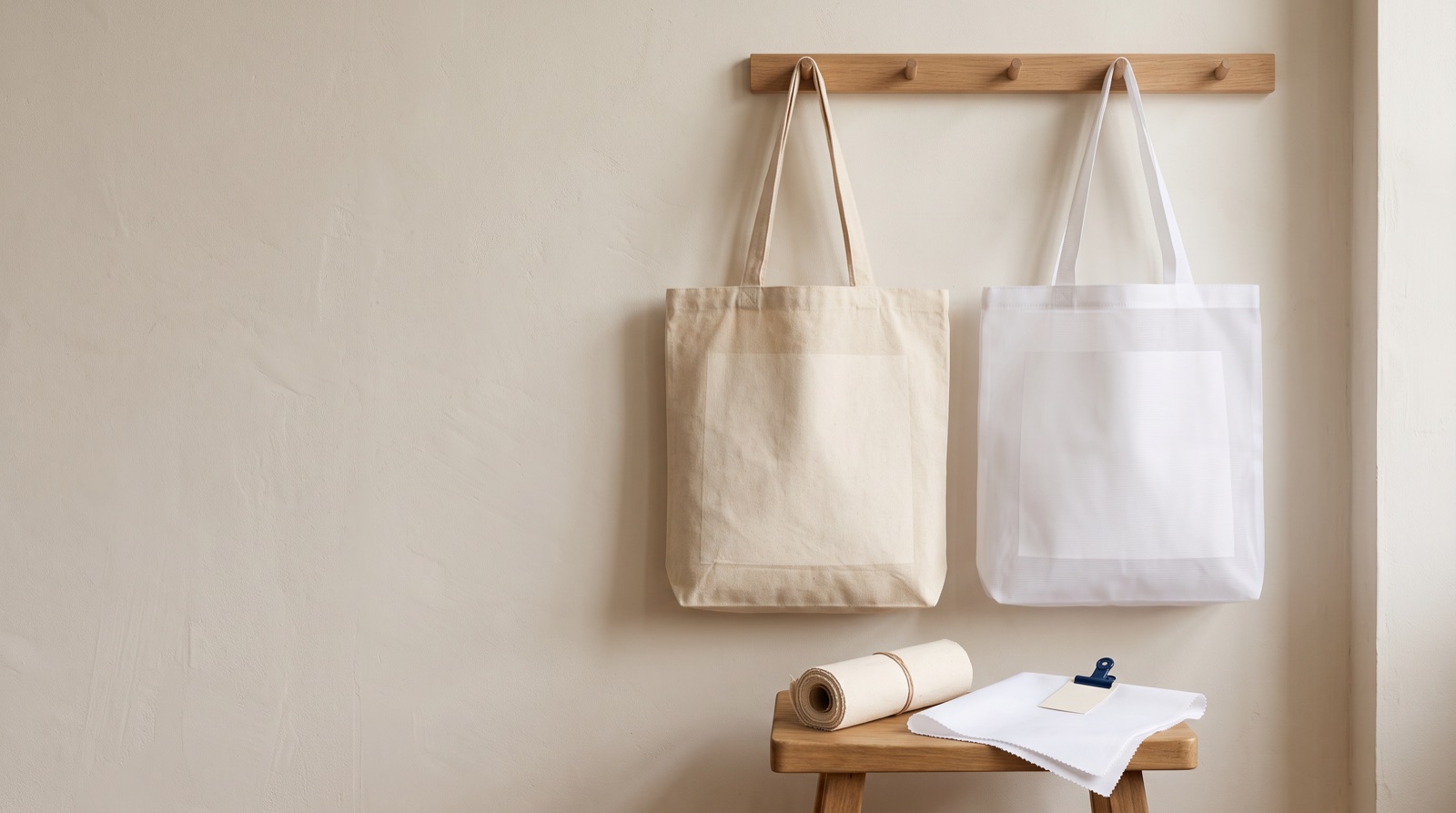
Natural or ecru canvas is unbleached cotton. It has a warm, off-white tone and small dark flecks from the plant, which many brands like for a natural look. Those flecks and the base shade vary from lot to lot, so natural canvas should be approved as a look rather than an exact colour.
Washed canvas has been washed or softened after weaving or after sewing, which makes it softer, slightly crumpled and less likely to shrink later, at the cost of some crispness. Bleached or dyed white canvas gives a cleaner, brighter base for prints and brand colours, but it shows dirt quickly and whites can differ between lots or yellow over time. Say which you want, and whether "white" means natural, bleached or a dyed white.
Coated, laminated and waxed canvas, and "PU canvas"#
Plain cotton canvas absorbs liquid, which is a real concern in a bag that holds foundation, serum and toothpaste. The usual answers are a coating or lamination. A PU coating on the back of the canvas slows water passing through; a laminated or coated face makes the outside wipe-clean while keeping some of the canvas texture. Waxed canvas is impregnated with wax for a matte, water-repellent finish that marks and creases with use.
"PU canvas" is a loose trade name. It may mean canvas with a PU backing, canvas with a PU film on the face, or a PU-coated synthetic fabric made to look like canvas. Ask what the base fabric is and which side is coated. Coatings make the fabric stiffer and can crack at folds or lift at the seams, and water resistance depends on the seams and zipper too, so agree on the level you need and test it on the sample.
Shrinkage and washing#
Cotton shrinks, and canvas is no exception. An unwashed canvas bag that the customer puts in a washing machine may come out smaller, twisted or with puckered seams, and the lining, which may be a different fibre, will not shrink with it. Prewashed or preshrunk canvas reduces this, and coated or waxed canvas should not be machine-washed at all.
Decide early whether the bag is meant to be washable, and agree an acceptable shrinkage on the sample rather than quoting a figure from elsewhere. Then make the care instructions match the material: our note on care labels and washing instructions explains what to put on the label.
Printing and decorating canvas#
Screen printing is the classic choice on canvas: the ink sits in the weave and gives a matte, slightly textured print that suits logos and bold graphics. A tighter, smoother canvas gives sharper edges; a coarse or washed canvas softens fine lines. Heat transfer allows detailed or full-colour artwork, but it sits on top of the fabric, feels like a film and needs to be tested for adhesion on the actual canvas, especially after washing.
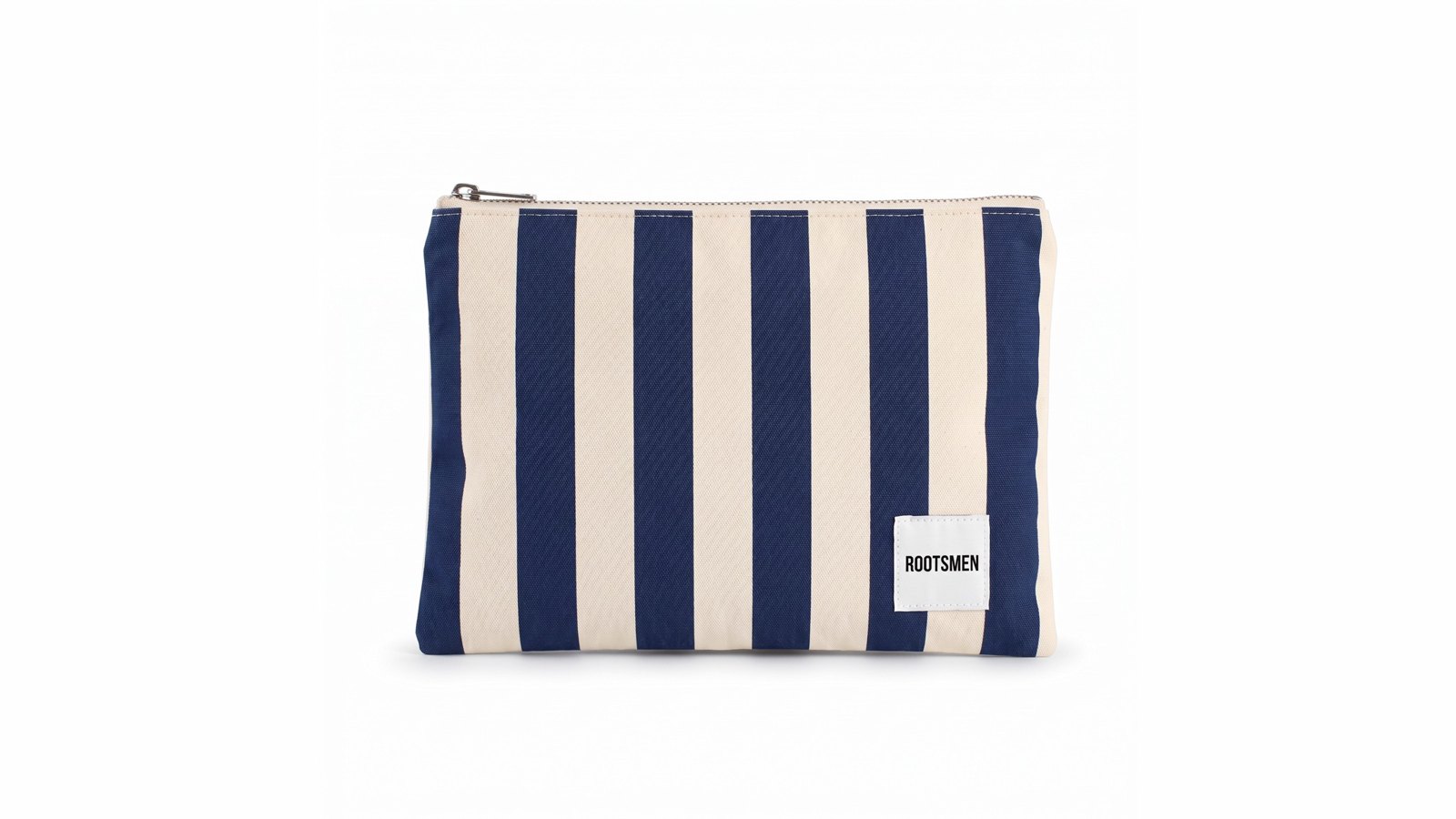
Embroidery works well on heavier canvas, which supports the stitches without puckering; on light canvas it may need a backing. A woven label or patch stitched into a seam is a simple way to brand a natural canvas without fighting its texture. Our notes on woven labels, printed labels and patches and embroidery vs debossing cover those options in more detail.
Lining a canvas cosmetic bag#
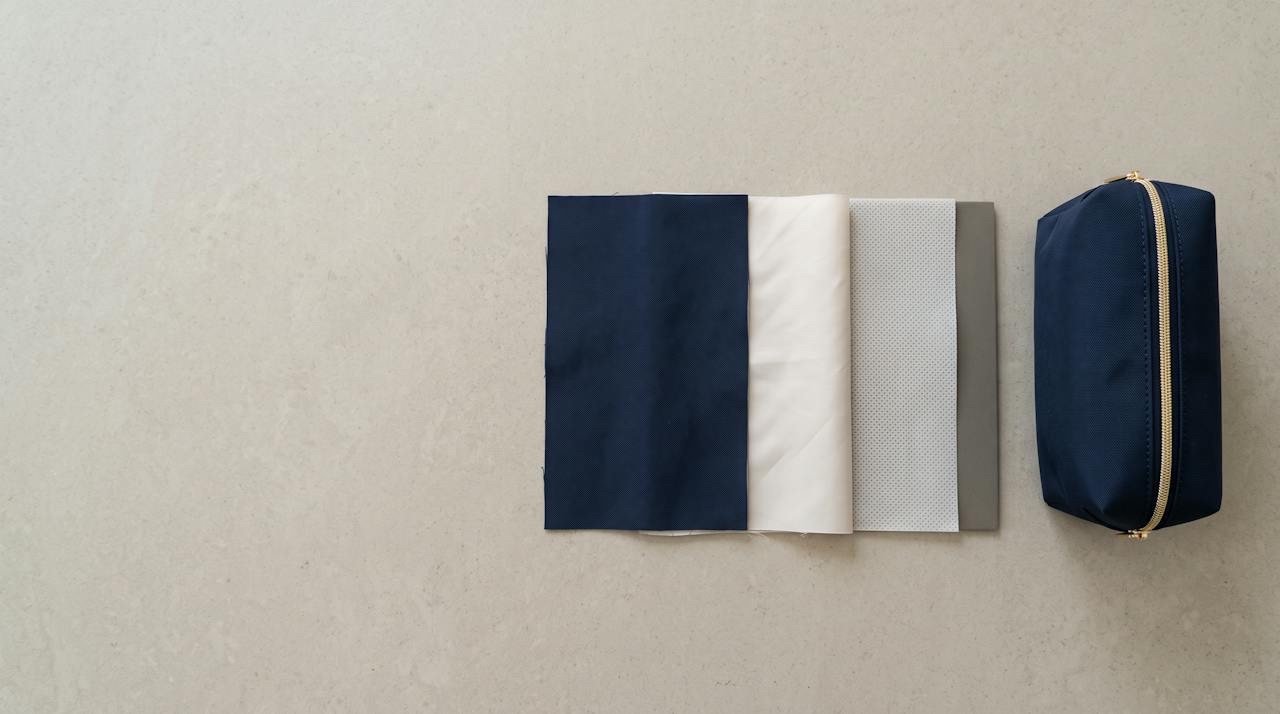
Most canvas cosmetic bags are lined, both to hide the seams and to protect the canvas from spills. A cotton lining keeps the bag all-natural but absorbs liquid; a polyester or nylon lining is smoother and dries faster; a PU-coated, PEVA or TPU-type lining gives a wipe-clean inside. An interlining between shell and lining can give a light canvas more body.
Think about how lining and canvas behave together: a lining that does not shrink inside a canvas that does will bag or pull after washing. Our guide to lining and interlining for cosmetic bags compares the main choices.
Colour consistency in natural cotton#
Cotton is a natural fibre, and its colour varies between crops, spinning lots and dye lots. Natural canvas varies in its base tone and fleck; dyed canvas varies in shade, and dark or bright colours can look different on a heavy duck than on a light plain weave. Washing after dyeing adds another variable.
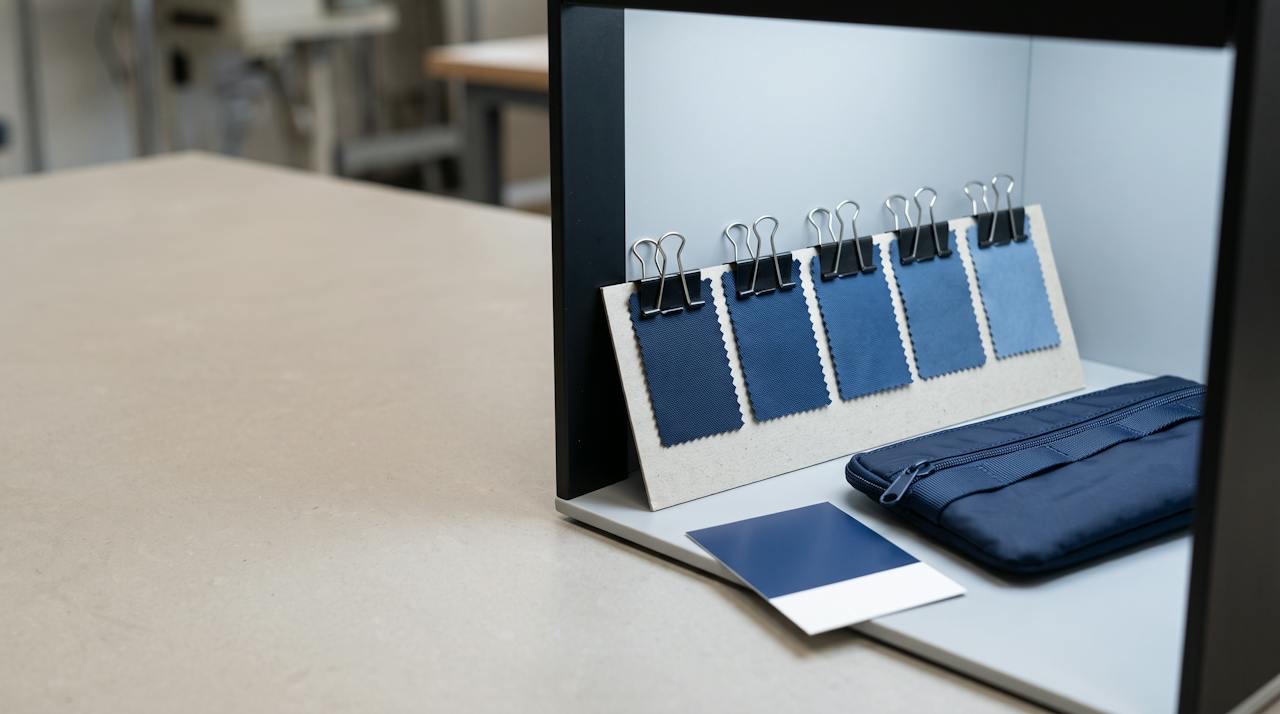
If colour matters, ask for a lab dip or a strike-off on the actual canvas, approve it under agreed lighting, and keep a signed swatch as the reference for bulk. Agree in advance how much variation between lots is acceptable. Our note on colour matching and lab dips explains why colours shift.
What to specify and what to check on samples#
In the brief or tech pack, give the fibre, weave (duck or plain), weight with its basis, finish (natural, washed, bleached or dyed), any coating and which side it is on, colour reference, print or decoration method and position, lining and interlining, and whether the bag is meant to be washable. How to write a tech pack shows where each of these belongs.
On the sample, compare the canvas with your approved swatch for weight, hand and shade. Check that print edges are clean and the ink or transfer does not crack when the fabric is folded. Check coated canvas at the folds and seams. If the bag is meant to be washable, wash it as the care label will say and look at shrinkage, twisting and the print afterwards. Pour a little water inside a lined or coated bag and see where it goes. Then approve a sample made from the same canvas lot, or a lot you have approved, that will go into bulk.
| Canvas option | Look and feel | Good for | Watch for |
|---|---|---|---|
| Light plain canvas | Soft, flexible, smooth face | Flat pouches, printed designs, lined bags | Can look thin unless lined or backed with interlining |
| Heavier duck canvas | Dense, firm, holds a shape | Standing pouches, boxy makeup bags, everyday wear | Thick seams, stiff corners, harder to turn right side out |
| Natural (ecru) raw canvas | Unbleached, flecked, honest look | Natural-look and minimal ranges | Visible specks and lot-to-lot shade variation |
| Washed canvas | Softer, slightly crumpled, lived-in | Relaxed, casual collections | Less crisp; shade and texture vary more |
| Bleached or dyed white | Clean, brighter, even colour | Bright prints, brand colours | Shows dirt; white may yellow or differ between lots |
| PU-coated or laminated canvas | Canvas face, sealed back or face | Wipe-clean and splash-resistant bags | Stiffer hand, cracking at folds, coating peeling at seams |
| Waxed canvas | Matte, slightly tacky, ages with use | Heritage looks, outdoor-style pouches | Marks and creases show; cannot be machine-washed |