A brand label is small, but customers notice it. It is the flag at the side seam of a pouch, the patch on the front of a tote, the tape inside the lining that says who made the bag. Get it wrong and a well-made product looks generic; get it right and the label does quiet work every time the bag is picked up.
This guide covers brand labels and patches: the main types, how each looks and wears, where it sits, how it is attached, and how to specify it. Care and content labels are a separate subject with their own rules; they are covered in care labels and washing instructions for bags.
Woven and printed labels#
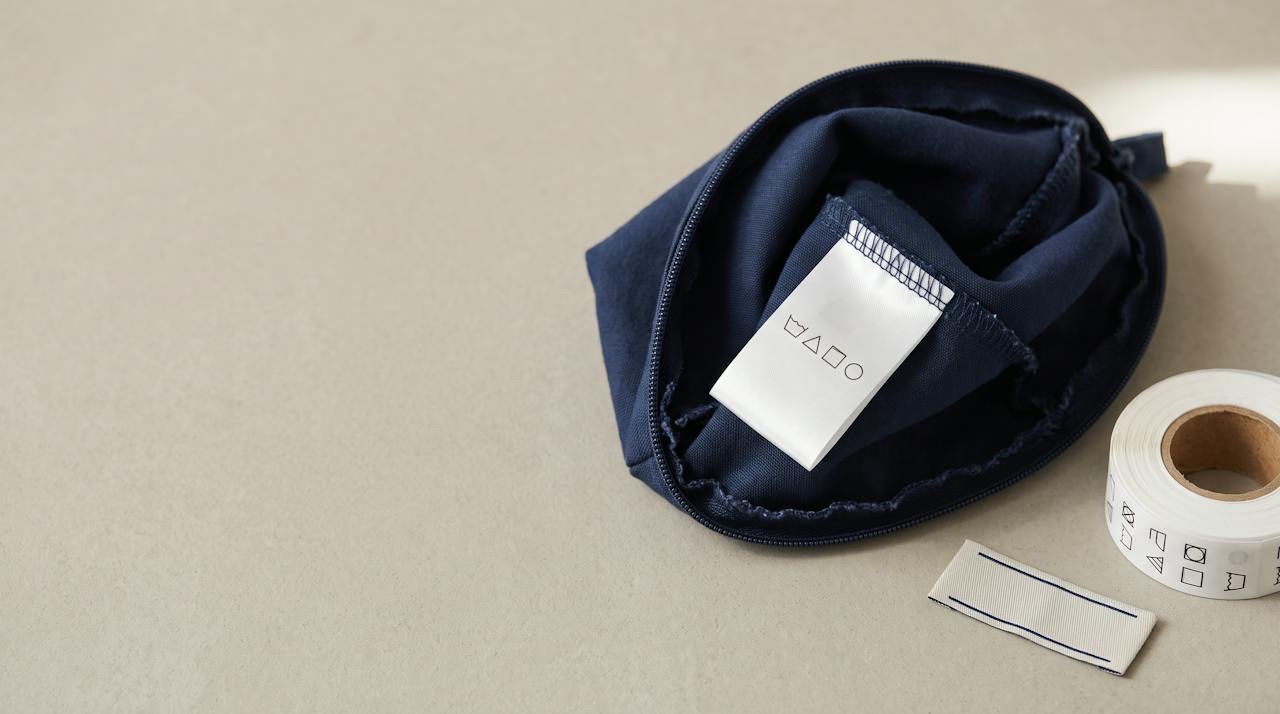
A woven label is made on a loom: the logo is built from coloured threads, so it has texture and lasts as long as the bag. The trade-off is detail. Because the image is made of threads, very thin lines, small type and soft gradients blur or disappear. Damask weaves use finer threads and hold more detail than taffeta; ask the factory which weave they recommend for your artwork.
A printed label is a tape, usually satin or cotton, with the logo printed on it. It holds finer lines and more colours, and it feels softer against the hand, which suits inside labels. The print sits on the surface, though, so on a label that is rubbed or washed often it can fade sooner than a weave. Satin gives a slight sheen; cotton reads more natural and matte.
Patches, badges and branded pullers#
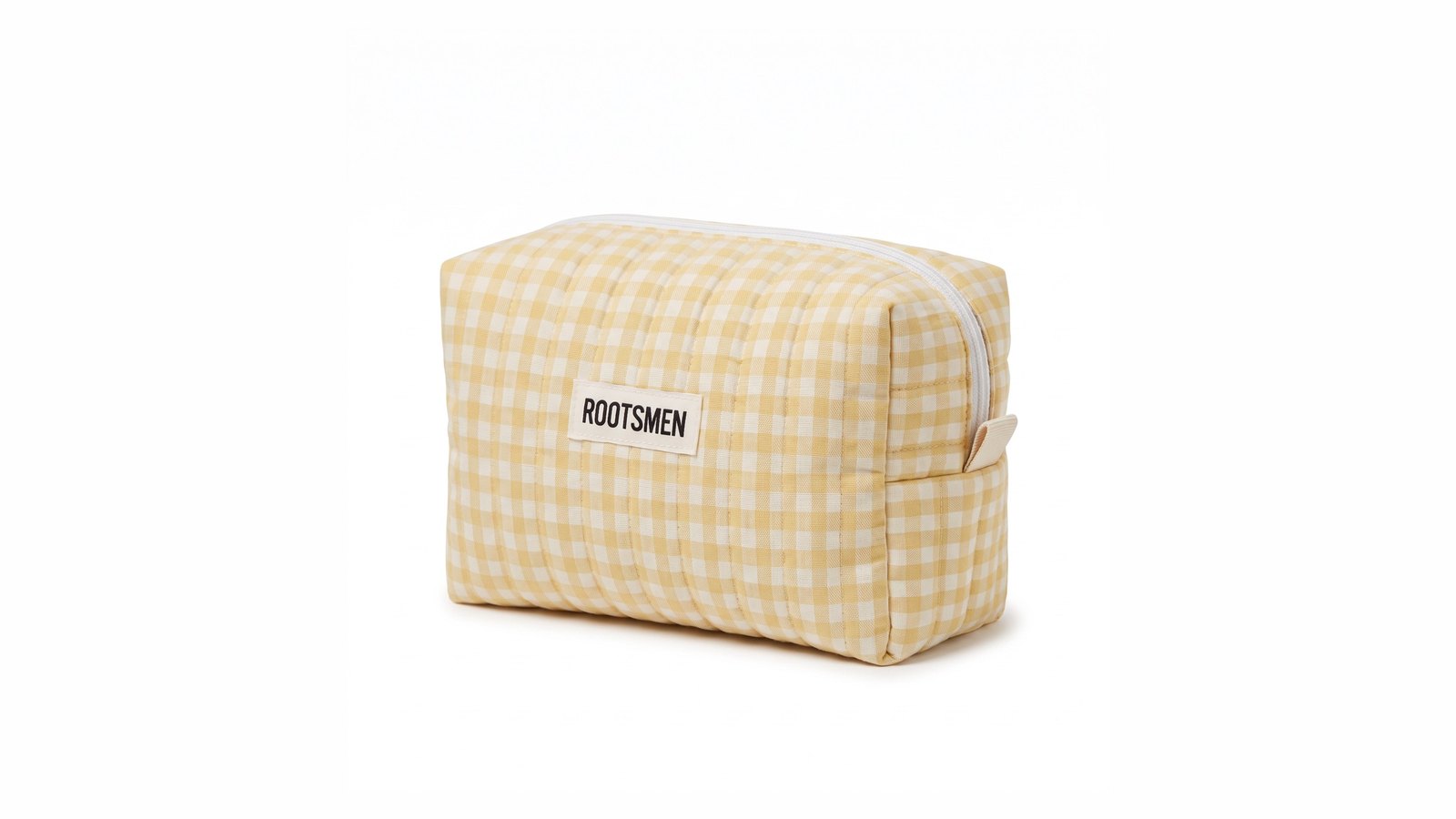
A PU or leatherette patch gives a front-of-bag logo with weight. The logo can be debossed, embossed, printed or a combination, and the patch is usually top-stitched round its edge. Debossing works best with bold shapes; fine type tends to fill in. The trade-offs between pressing a logo and stitching one are covered in embroidery vs debossing on soft goods.
Rubber and silicone patches are moulded, so the logo is raised and the colours are part of the material. They flex with the bag and wipe clean, which suits sporty and outdoor styles. Metal badges read as hardware and need a firm panel behind them. A branded zipper puller puts the logo where the hand goes every time; it has to be agreed with the zipper and slider, because the puller must fit that slider.
Where the label sits#
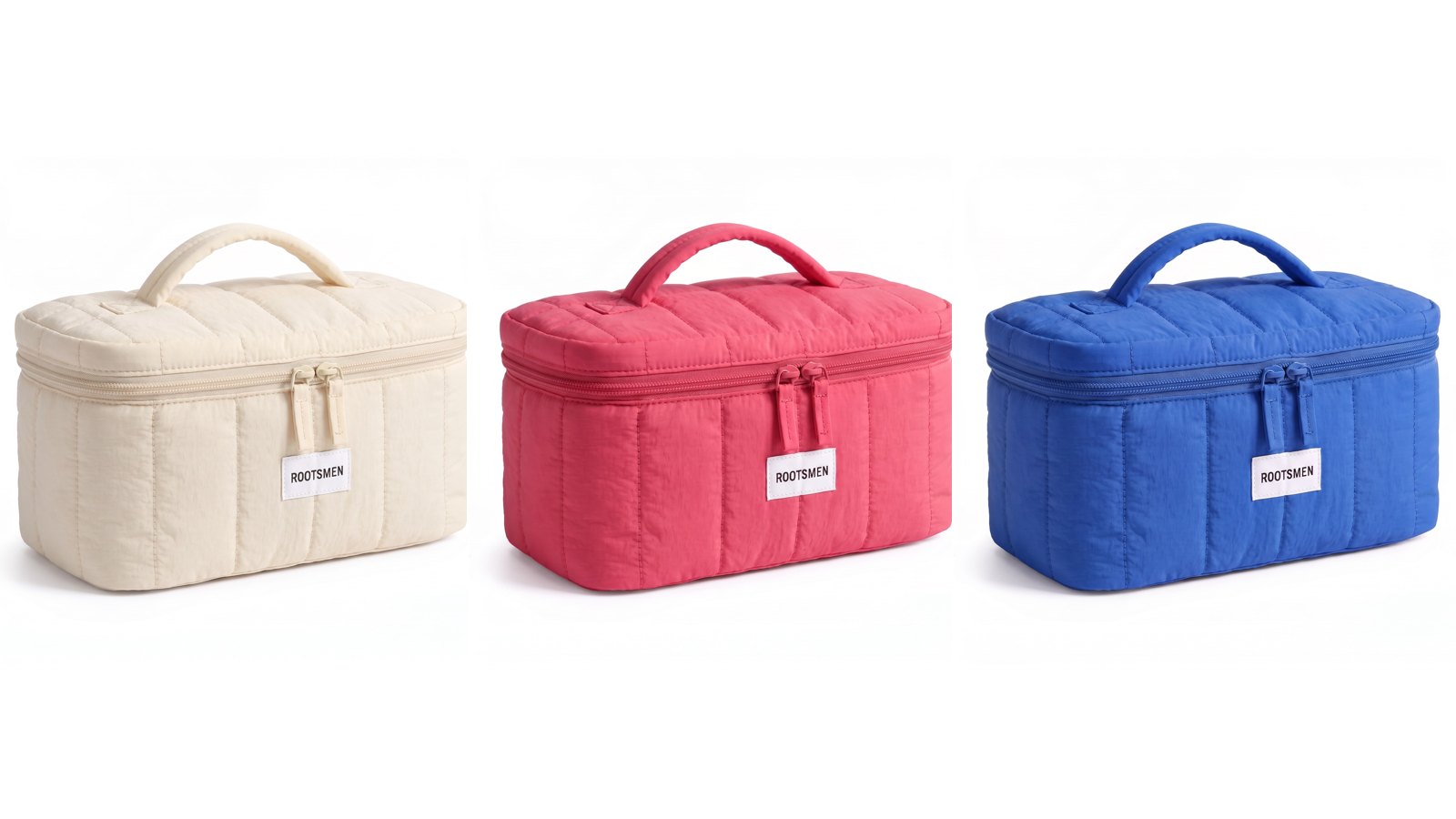
On a pouch, the most common brand position is a small flag label folded and caught in the side seam, sitting at the zipper end or partway down the side. It is visible on the shelf, costs no front panel space and is held by the seam itself. A front patch makes the brand the feature of the design. An inside label, sewn into the lining seam, is discreet and often carries the brand alongside a size or style name.
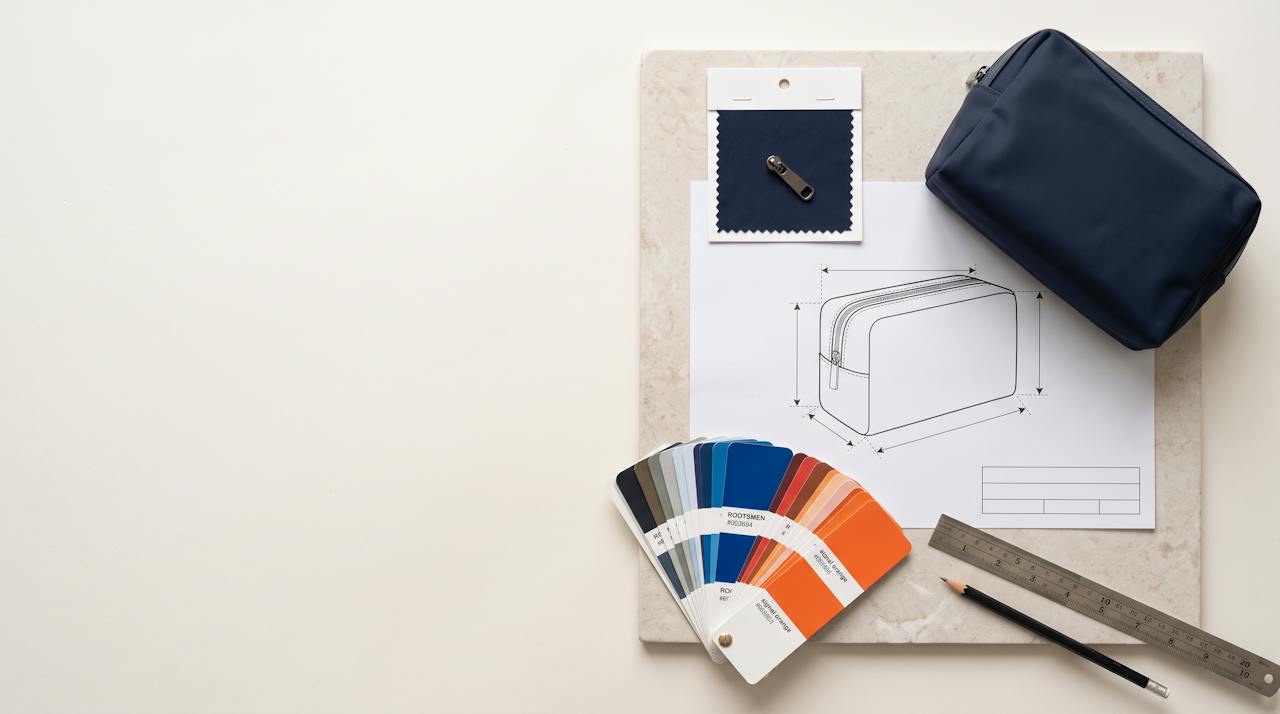
Position should be drawn, not described. "Side seam, near the top" can be read several ways; a drawing that shows the label on the pattern, with its distance from a fixed point such as the zipper end or the bottom seam, cannot. If the bag has a gusset or a curved seam, show which side of the seam the label faces and whether it should be seen with the bag closed.
How it is attached, and why glue alone is risky#
The strongest attachment is a seam: a flag label folded and caught between two panels is held by the construction of the bag. Next is top-stitching, where the label or patch is stitched round its edge on to the panel; agree the stitch colour, since it frames the logo. Rivets and prongs suit firm patches and metal badges, but they pierce the panel, so check that nothing inside the bag will catch on them.
Glue on its own is the weak option. Bags flex, get carried in warm places and are wiped or washed, and an adhesive-only patch can lift at a corner and then peel. If a design really calls for a bonded patch with no visible stitching, ask the factory to test it on your actual material and treat it as a point to check on the sample, not an assumption.
Detail limits and colour matching#
Every label method has a smallest line and a smallest letter it can show cleanly, and it depends on the weave, the print method or the mould. Send the artwork early and ask the factory to say what will hold and what will not. A simplified label version of the logo, with thicker strokes and fewer details, often looks better than a shrunk copy of the full mark.
Colour on a label is matched separately from the bag. Woven labels use thread colours, printed labels use ink, and PU or rubber patches are coloured in the material, so the same logo colour can land differently on each. Quote the colour references the way you would for the bag itself; Pantone colours for custom bags explains which library fits which material, and approve the label colour on the sample, next to the fabric it sits on.
Fold types and finishing#
How a label is cut and folded decides how it sits on the bag. A straight cut label is cut to size and sewn flat or top-stitched on all sides. An end fold label has both ends folded under so it can be stitched flat with no raw edges. A centre fold label is folded in half with both ends caught in a seam, showing one face on each side. A loop label is folded so both ends go into the seam and the label stands out as a flag.
Edges matter too. Woven labels can be cut with heat to seal the edge, or finished with a woven edge that feels softer; ask what each will look like on your label. For a side seam flag, agree how much of the label is hidden in the seam allowance, so the visible part is the size you designed.
How to specify labels in a brief#
For each label, give: the type (woven, printed, PU, rubber, metal or puller), vector artwork, the finished size, the fold type, the colour references for the ground and the logo, the attachment method, and a position drawing on the pattern. If there is more than one label on the bag, number them and keep one sheet per label.
Ask for a label proof or strike-off before bulk where the detail or colour matters, and approve labels on the full sample, not on their own. A label sheet fits naturally into a tech pack for a cosmetic bag, and keeping logo artwork under clear terms is covered in protecting your design when working with a factory.
| Label type | Look and wear | Typical position | Usual attachment |
|---|---|---|---|
| Woven label | Textured, durable; artwork built from threads, so very fine detail softens | Side seam flag, inside label, front of a tote | Sewn into a seam or top-stitched |
| Printed label (satin or cotton tape) | Smooth and soft; holds finer lines and more colours; print can wear with heavy rubbing | Inside label, lining seam | Sewn into a seam |
| PU or leatherette patch | Debossed, embossed or printed; a premium, tactile look | Front patch on a pouch or tote | Top-stitched round the edge, sometimes riveted |
| Rubber or silicone patch | Raised, flexible and moulded in colour; wipes clean | Front patch, sporty or outdoor styles | Top-stitched through a sewing channel |
| Metal badge | Hard, polished or plated; reads as hardware | Front panel or strap | Prongs, screws or rivets through the panel |
| Branded zipper puller | Logo on the puller itself, in metal, rubber or tape | On the main zipper | Fitted to the slider during assembly |