ナイロンも RPET も化粧ポーチの表地として成立し、紙の上では互換に見えます。ところが開発段階では挙動が十分に違い、選択が遅れるとたいてい試作が1周増えます — しかもそれは微調整ではなくパターンの引き直しです。

短く言えば、構造のある形をつくるにはナイロンのほうが扱いやすく、実際に証憑を出せるサステナビリティ訴求ができるのは RPET です。どちらが重要かは技術ではなくポジショニングの判断であり、最初のサンプルの後ではなく前に決める価値があります。
- プリント:RPET は転写と昇華に向く。シルクスクリーンは該当ロットでの試作が必要
- 手触り:同じ重さでは RPET のほうがやや乾いた質感で、落ち感が少なめ
- 色:再生糸は染色のロット差が出やすい
- コスト:数量が出れば同等。小ロットでは差が開く
何であるか、そして名前が語らないこと#
ナイロンはポリアミドです。この品目では 210D・420D・600D の織物として届くことが多く、張りと撥水のために裏面へ PU コーティングを施し、引き裂き強度のためにリップストップに織ることもあります。
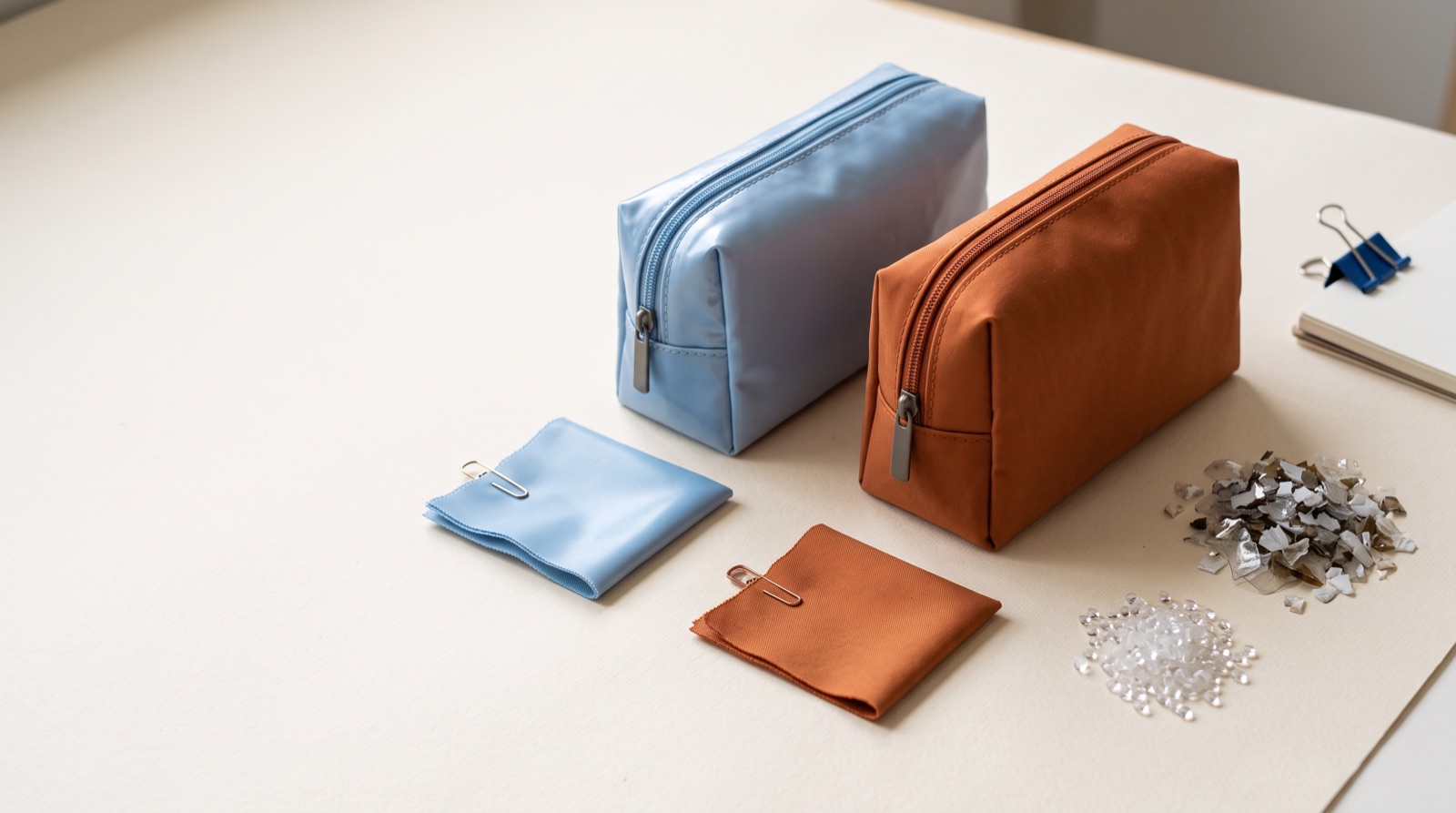
RPET は再生 PET から作るポリエステルで、この名前は原料の出どころを指し、織り方や目付を指しません。まずここを押さえるべきで、210D ナイロンと 600D RPET を比べる見積りは、素材ではなく重さを比べています。デニールか仕上がり重量の目標を固定してから比べてください。デニールの読み方で一般的な水準を整理しています。
どちらも通常はコーティングと裏地を伴い、その2つは表地の繊維より手触りを大きく左右します。柔らかい RPET にしっかりした芯地を合わせれば、芯のないナイロンより構造的に感じられます。
構造をつくるときの挙動の違い#
ナイロンは折り目を保ち、内部補強が少なくても箱型の構造が出ます。「空の状態で棚に自立すること」が要件なら、ナイロンはパーツを足さずにそこへ到達でき、重量と単価の両方を抑えられます。
RPET は一般に手触りが柔らかく、ロット間の一貫性もわずかに劣ります。原料が再生フィードストックだからです。これは欠陥ではなく素材の性質ですが、構造のあるシルエットには厚い目付か底板の追加が必要になり、どちらもコストを動かします。裏地と芯地で、どの層が何を担うかを整理しています。
縫い目では針への反応が違います。コーティング生地は針穴が残りやすく、それはパイピングやステッチの入った角で目に見えます。片方でちょうどよい針目が、もう片方では生地を切ってしまうこともあります。これはサンプル上で素材ごとに決めるもので、表地の変更が遅れるとパターンの引き直しになる理由のひとつです。
色とプリント#
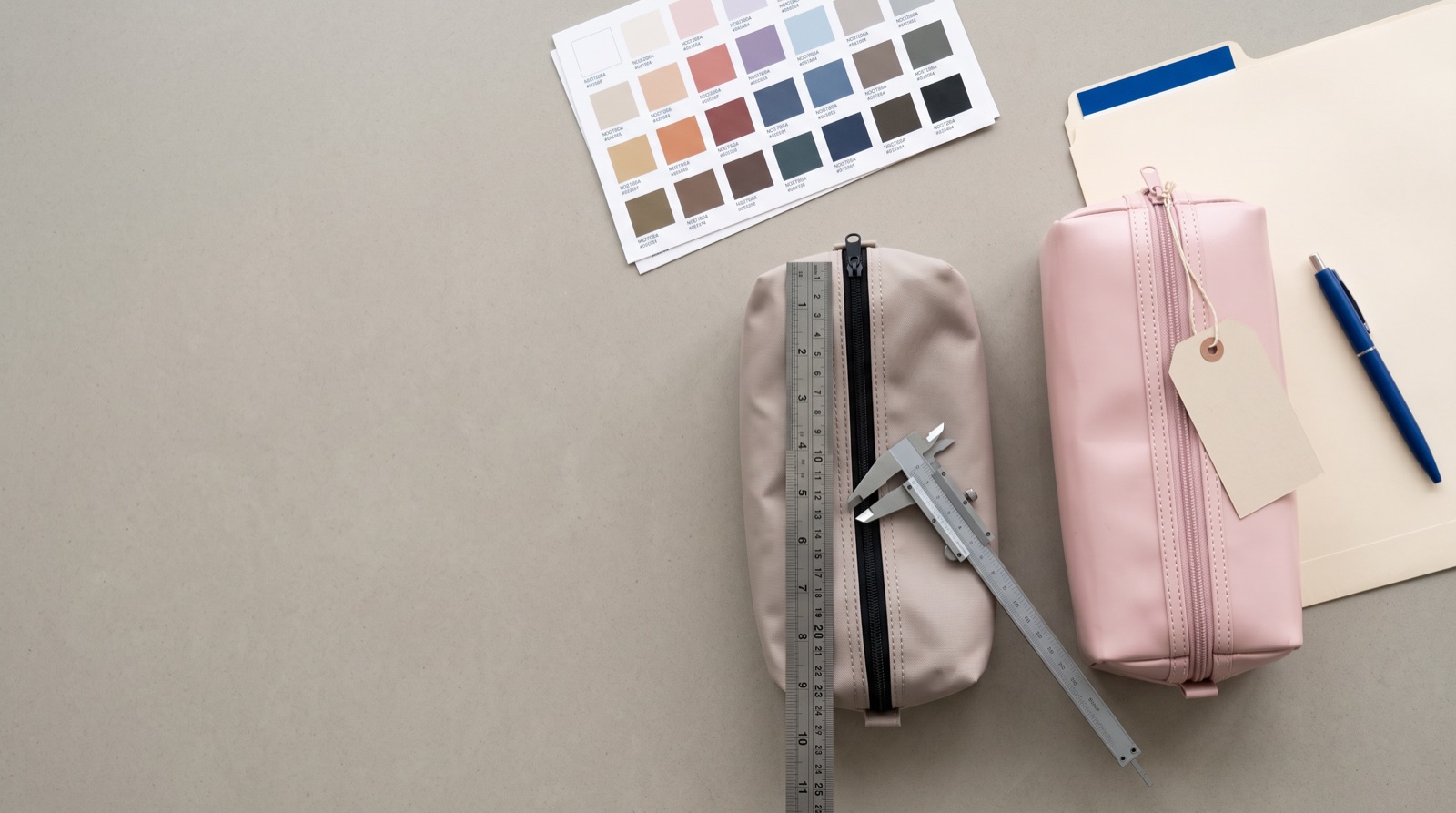
ナイロンは彩度の高い色が予測どおりに出て、細かいプリントの再現もよい。RPET は染色ロット間でわずかにずれることがあり、淡色・中間色で最も目立ちます — 並べるとわかる程度です。
シリーズでの実務上の含意はこうです。同じ色の複数品番を店頭で並べるなら、発注時に同一染色ロットで固定するか、ばらつきに寛容な色を選ぶ。これは最終検品ではなく素材選定の段階で決めることです — 承認の進め方はラボディップと色がずれる理由をご覧ください。
プリントでは、RPET は転写と昇華の乗りがよく、シルクスクリーンはコーティングがインキの定着に影響するためそのロットでのテストが必要です。どちらの素材でも濃色の表地には通常下刷りが必要で、それは版代でいえば1色分の追加になります — プリント工法の選び方をご覧ください。
水、手入れ、そして経年#
ポリエステルはナイロンより吸湿が少ないため、RPET のポーチは乾きが速く、湿った匂いも残りにくい — 濡れたまま仕舞われるトイレタリーポーチでは実質的な利点です。同目付ではナイロンのほうが摩耗に強く、それはハンドバッグの中で裸のまま暮らす製品に効いてきます。
どちらも繊維そのもので防水にはなりません。耐水性はコーティング、縫い目、ファスナーから来るもので、正直に言える範囲は防水と撥水の違いで整理しています。
撥水加工を入れるなら仕様段階で決めてください。一部のフッ素系処理剤は規制市場が増えており、化粧ポーチはそのいくつかで名指しされています。対象市場はPFAS 規制は及ぶかをご覧ください。
どちらを選ぶにせよ、製品が実際に耐えられる条件と一致した取扱表示が必要です — ケアラベルと洗濯表示をご覧ください。
表地ではない部分#
化粧ポーチで「安っぽい」と言われたときに真っ先に疑われる部品はファスナーで、その選択は表地と独立しています。務歯の種類、スライダー、引き手、テープ幅のどれもが、この2つの生地の違いより品質の印象を左右します — ファスナーの選び方で詳しく扱っています。
裏地がもうひとつです。裏地のないポーチは縫い代と刺繍の裏を見せ、裏地があれば両方隠れますがコストは上がります。ガラス容器を入れる製品では、裏地は中身を表地の内側から守る層でもあります。
「この表地は頼りない」と「この製品には構造がない」は分けて考える価値があります。対処が違い、素材の変更が必要なのは片方だけだからです。
コストと、差が実際にどこにあるか#
目付と仕様を揃えれば、2つの表地はたいてい「単価を決めるのは素材ではない」と言えるほど近い。単価を決めるのは仕様です — パーツの数、裏地の有無、底の有無、ファスナーの本数、そしてロゴの入れ方。
軽いナイロンと同じ構造に到達するために RPET を厚くしたり底板を足したりすると、総額ではかえって高くなることがあります。これがまさに「サステナブルなポジションに実費がかかる」具体例で、見積りで発見するより先に知っておく価値があります。
全項目を、数字が実際に動く順に並べたものは単価を決めるものにあります。
サステナビリティ訴求が立つ根拠#
RPET は再生含有のポジションを支えますが、それを生み出すわけではありません。訴求はその特定素材の証憑 — 取引証明書と流通経路の記録 — に立ち、下げ札を刷った後ではなく素材選定の段階で請求します。
再生ナイロンも存在します。仕様上どうしてもナイロンの挙動が必要で、なお案件として再生ポジションも要る場合は聞いてみる価値があります。在庫は潤沢ではなく素材リードタイムも長めで、それは技術ではなく日程の問題です。
何を、どの順で請求するかは再生素材の訴求を検証する方法に整理しています。EU 向けの案件では、製品単位の文書化が標準になる方向に進んでいます — ESPR とデジタル製品パスポートの意味をご覧ください。
決め方#
構造があり、店頭に並び、色がシビアな製品ならナイロンのほうがリスクは低い。検証に耐える必要のあるサステナビリティのメッセージを掲げる案件なら RPET で、訴求はどんな文言に載る前に、その特定素材の証憑と突き合わせて確認してください。
いずれにせよ、この判断は仕様段階のものです。最初のサンプルの後で表地を変えればパターンの引き直しになります — 2つの素材は縫い目での挙動が違い、たいてい1周まるごと余計にかかります。
表地、目付、裏地、想定する構造を仕様書(テックパック)にまとめて書いてください。化粧ポーチのラインナップで各表地の使われ方をご覧いただけます。
| ナイロン | RPET | |
|---|---|---|
| 構造 | 少ない補強で箱型が出る | 柔らかく、厚い目付か底板が必要 |
| 色の安定性 | ロット間で予測可能 | 淡色・中間色でロット差が出ることがある |
| プリントの細部 | 細部の再現がよい | 良好。濃色には下刷りが必要な場合あり |
| 再生ポジション | なし | 可。ただし証憑が前提 |
| 主な用途 | 構造のある店頭向けポーチ | サステナビリティを掲げる案件 |