ノベルティ案件は数量が出るため、1個あたりのわずかな差が急速に積み上がります。RPET とコットンキャンバスの選択が、目標数量での着地コストで決まることが多いのはそのためです。ただし2つは発するメッセージも生産上の挙動も異なり、そのどちらも数字を動かします。
どちらも「当然こちらがサステナブル」ではありません。それは何を証憑として出せるか、そして製品が実際にどう使われるかによります。名前の響きではありません。
2つの素材は実際には何か#
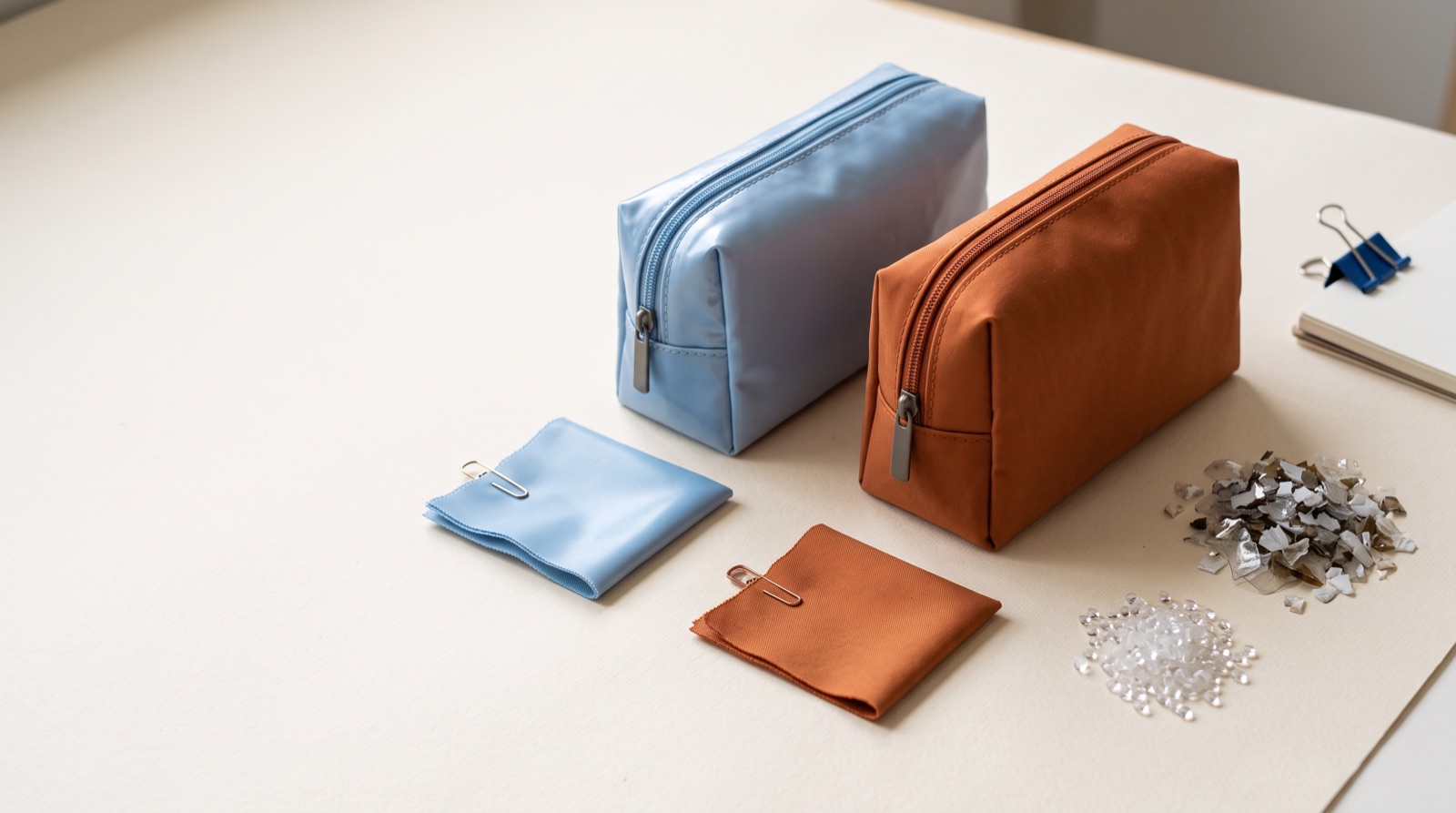
RPET は再生 PET(多くは使用済みボトルのフレーク)から紡いだポリエステルです。ノベルティバッグでは軽量の平織 — 210D と 600D が一般的 — で、張りと撥水のために裏面へコーティングすることが多い素材です。
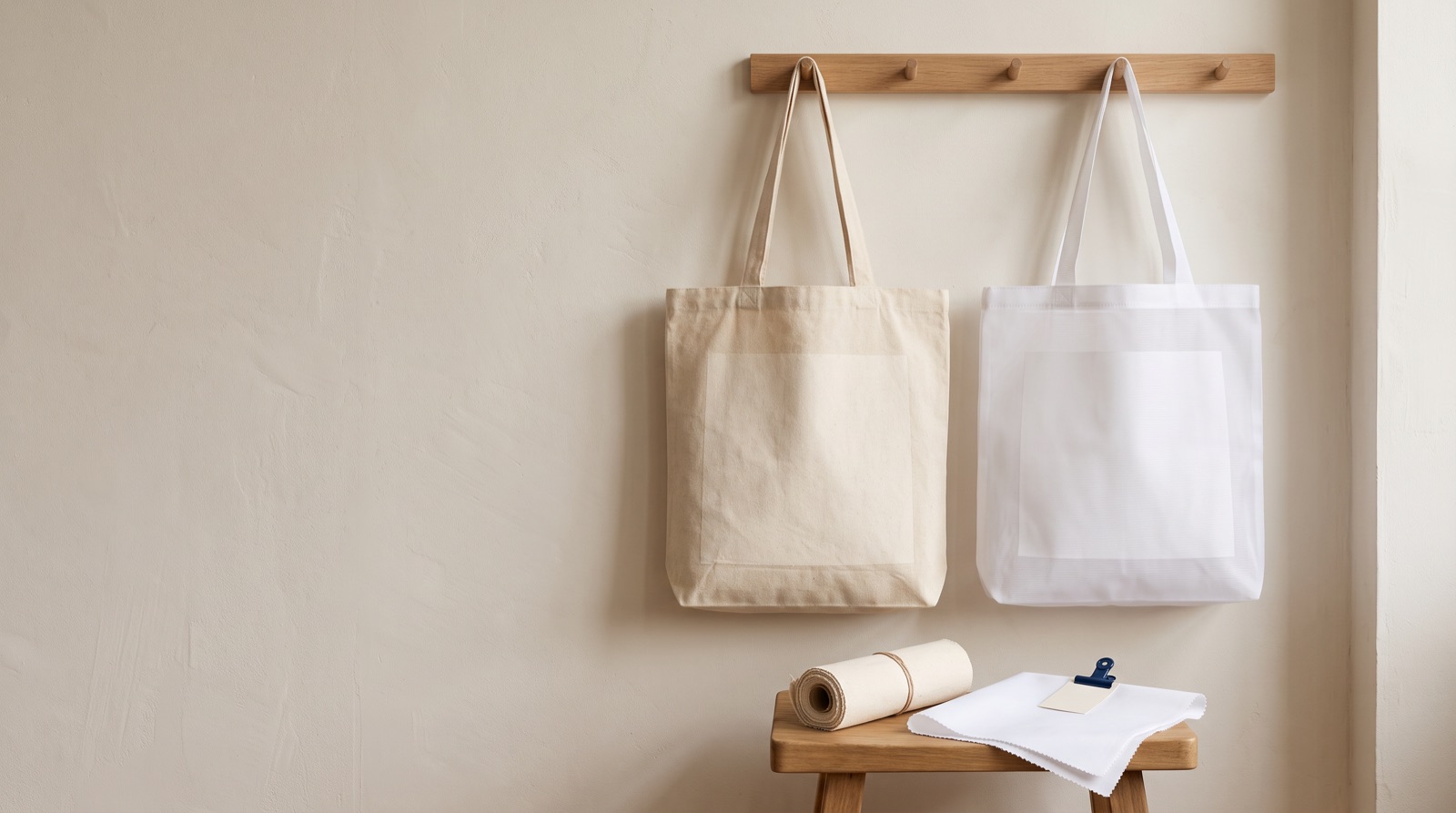
コットンキャンバスは平織の天然繊維で、重さは1平方ヤードあたりのオンス(oz)で表します。ノベルティトートは軽い 5〜6 oz から、「取っておいてもらう」ための 12 oz 以上まで幅があります。この両端の差は微妙ではありません。「梱包材に見えるもの」と「商品に見えるもの」の差です。
ほかにコットンドリルがあり、そしていわゆる「エコバッグ」の多くが実際には不織布ポリプロピレンです。不織布は3つの中で突出して安く、検討範囲に入っているなら明記する価値があります。12 oz キャンバスと同列に比べると、誤解を招く見積りになるからです。
数量が増えたときのコストの挙動#
RPET は軽く、素材費と輸送重量の両方を下げます。2つめは見落とされがちですが、ノベルティの数量では実際に効きます。コンテナは容積か重量のどちらかが先に尽きた時点で満載で、キャンバストートは重量側に先に当たります。海上・航空・クーリエで、その計上のされ方を説明しています。
コットンキャンバスは単価が高く相当に重い一方、具体的なものを買っています — 受け取った人が取っておき、また使う可能性の高さです。案件が「配布数」ではなく「一定期間の露出」で測られるなら、計算式は丸ごと変わります。そしてこれが、コスト査定に耐える唯一のキャンバス擁護論です。
2つの交点は数量と仕様に依存するので、抽象的に数字では言えません。安定しているのは曲線の形です。ほぼどの数量帯でも着地コストは RPET が勝ち、「取っておかれること」で測るならキャンバスが勝ちます。
そして単価の大半は表地ではありません。持ち手、マチ、底板、裏地、ポケット、ロゴ加工がそれを動かし、しばしば表地より大きく動かします — 単価を決めるもので、より小さな製品を題材に同じ算数を追っています。
生産現場での挙動の違い#
RPET は寸法が安定し、転写や昇華プリントの乗りがよく、縮みません。コーティングされた RPET へのシルクスクリーンは、コーティングがインキの定着に影響するためそのロットでのテストが必要ですが、一度決まれば全数にわたり安定します。
コットンは縮みます。洗われる製品なら、これは検品時ではなく素材段階で処理すべき事項です。防縮加工生地は試作の前に指定します。後から要求すれば裁断し直しです。一方でコットンはシルクスクリーンの乗りが極めてよく、インキが表面に乗るのではなく繊維に入ります。プリントされたキャンバストートがあの見え方をする理由の多くはこれです。
色の挙動も違います。コットンは反染めや先染めでロット差が出ることがあり、RPET は再生原料由来のばらつきを抱えます。どちらにせよ、同色の複数点を並べるなら発注時にロットを固定してください — ラボディップと色がずれる理由の規律は両方に当てはまります。
それぞれが発しているメッセージ#
RPET は「考えられている」「現代的」と読まれます。特にビューティやライフスタイルの文脈では、再生素材の表地がブランドの立ち位置と揃います。製品そのものではなく製品に付随する一品であるときは、より安全な選択です。
厚手のキャンバス — 軽量ではなく 12 oz — は手に取った瞬間に耐久性が伝わり、それが「また使われるトート」と「使われないトート」を分けるものの大半です。トートが付属品ではなく施策そのものなら、目付は削るところではありません。12 oz の価格で 5 oz のトートを買って満足する人はいません。
どちらも安っぽく作ることは可能です。よくある兆候は、始末されていない裁ち端、かんぬき1本だけのテープ持ち手、縫い目の手前で終わっているプリントです。予算が本当に厳しいなら、作りの質を落とすよりサイズかプリント色数を減らしてください。前者は気づかれず、後者は受け取った人が最初に気づきます。
ロゴ加工 — 素材より先に工法を決める#
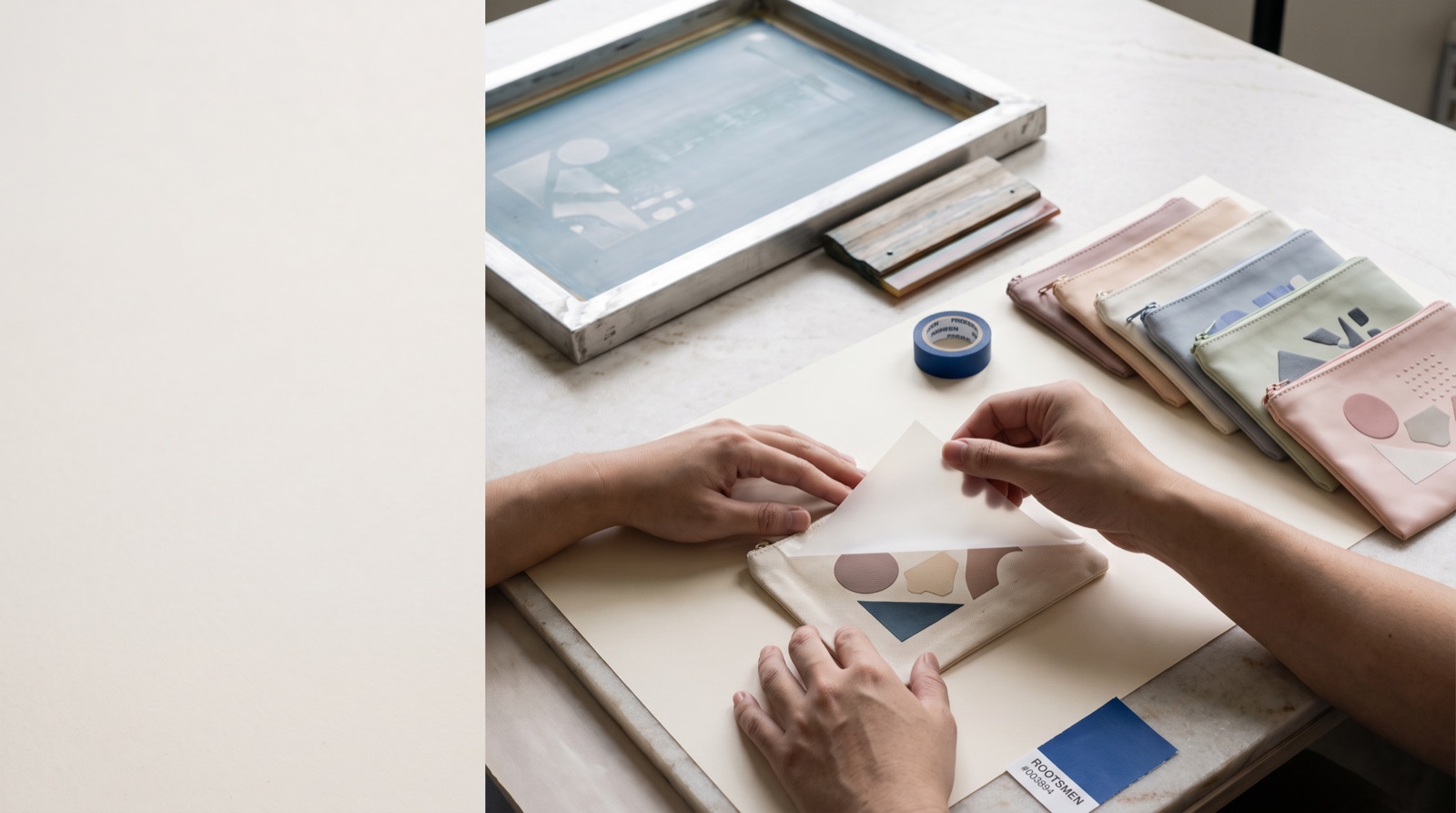
ノベルティの数量帯では、どちらもシルクスクリーンが既定です。版代は色数で課金され、単価は低く、全数の色の安定性は優秀です。デジタルプリントは色数ごとの版代がなく、グラデーションや写真的な図案に向きます。購入特典向けのプリント工法の選び方で交点を説明しています。
キャンバスなら刺繍も選択肢に入り、プリントとはまったく違う読まれ方をします。RPET でも可能ですが一般的ではありません。軽い表地には芯地が要り、仕上がりがつれることがあるためです。
ロゴが複雑な場合は、素材より先に工法を決めてください。6色のロゴはデジタルか転写へ強く寄せ、それが今度はその工程をきれいに受ける表地を選ばせます — 図案から素材を逆算するということで、その逆ではありません。
梱包と、この案件が一緒に運んでくるプラスチック#
ノベルティバッグは1点ずつポリ袋に入ることが多く、大ロットではサステナビリティのメッセージを刷った製品と一緒に大量のプラスチックが届くことになります。カートン単位のバルク梱包にできないか、再生材や紙の代替に替えられないかを早めに決める価値があります。
これは以前より重要になっています。買い手側のコンプライアンス部門が実際に尋ねてくる部分だからです。プラスチック梱包を減らす方法で、輸送上のリスクを冒さずに現実的な選択肢を整理しています。
イベント会場ではなくフルフィルメントセンターへ入る場合、梱包規定は任意ではなく強制です — FBA の梱包要件をご覧ください。
訴求 — 刷る前に成立していること#
どちらの素材もサステナビリティ訴求を支えられますが、どちらも自動的には成立しません。RPET の訴求は、その特定素材について文書化された再生含有率 — 取引証明書と流通経路の記録 — に立ちます。コットンに訴求があるとすれば、通常はオーガニック認証か、耐久性と再利用です。そして耐久性は繊維ではなく作りについての訴求です。
最も問題になりやすいのは「エコ」という一語だけの訴求です。検証できる内容が何もないからです。具体的で証憑のある記述のほうが、守りやすく、説得力もあります。再生素材の訴求を検証する方法で必要なものを整理しています。
これは仕様段階で決めてください。訴求が後からデザインに足されると、証憑なしで刷るか刷り直すかの二択になります — そしてデザインは誰もが最も再開したくないものです。
決め方#
お問い合わせの際は、単一の数字ではなく想定数量の幅をお知らせください。どちらが有利になる分岐点は数量に依存します。幅がわかれば、一般論ではなく御社の実際の仕様について分岐点をお伝えできます。
そして、この案件が何で評価されるのかをお書きください。「当日の配布数」と「今後1年の露出」では、向く素材も目付も仕様も変わります。この一文で片づく仕様は、どんな素材の質問より多いのです。
キャンペーン文言にサステナビリティ訴求が入るなら仕様段階でお知らせください。証憑をサンプルと同時に確認でき、後追いになりません。ノベルティ・購入特典のラインナップで各素材の使われ方を、発売カレンダーに合わせた購入特典の設計で日程の組み方をご覧いただけます。
| RPET | コットンキャンバス | |
|---|---|---|
| 数量時の単価 | 低い | 高い |
| 輸送重量 | 軽い | 重い — ノベルティの数量では効く |
| 耐久性の印象 | 実用的 | 12oz 以上で確かな手応え |
| 再利用される可能性 | 中程度 | 高い |
| 向く場面 | 商品に付随する場合 | バッグ自体が施策の場合 |