購入特典において、ロゴ加工は見た目の判断であると同時にコストと日程の判断です。この種の案件の数量では、1個あたりのわずかな上乗せが総額で大きくなり、段取りが2日延びれば発売の枠をまるごと失いかねません。
刺繍と型押しと同様、たいていは図案が決めます。ファイルを仕様書と一緒に送れば議論の大半はひとりでに片づきます — 色数、細部の量、ロゴが現れる最小サイズ。この3つが、見積り前に問いの4分の3に答えます。
シルクスクリーン#
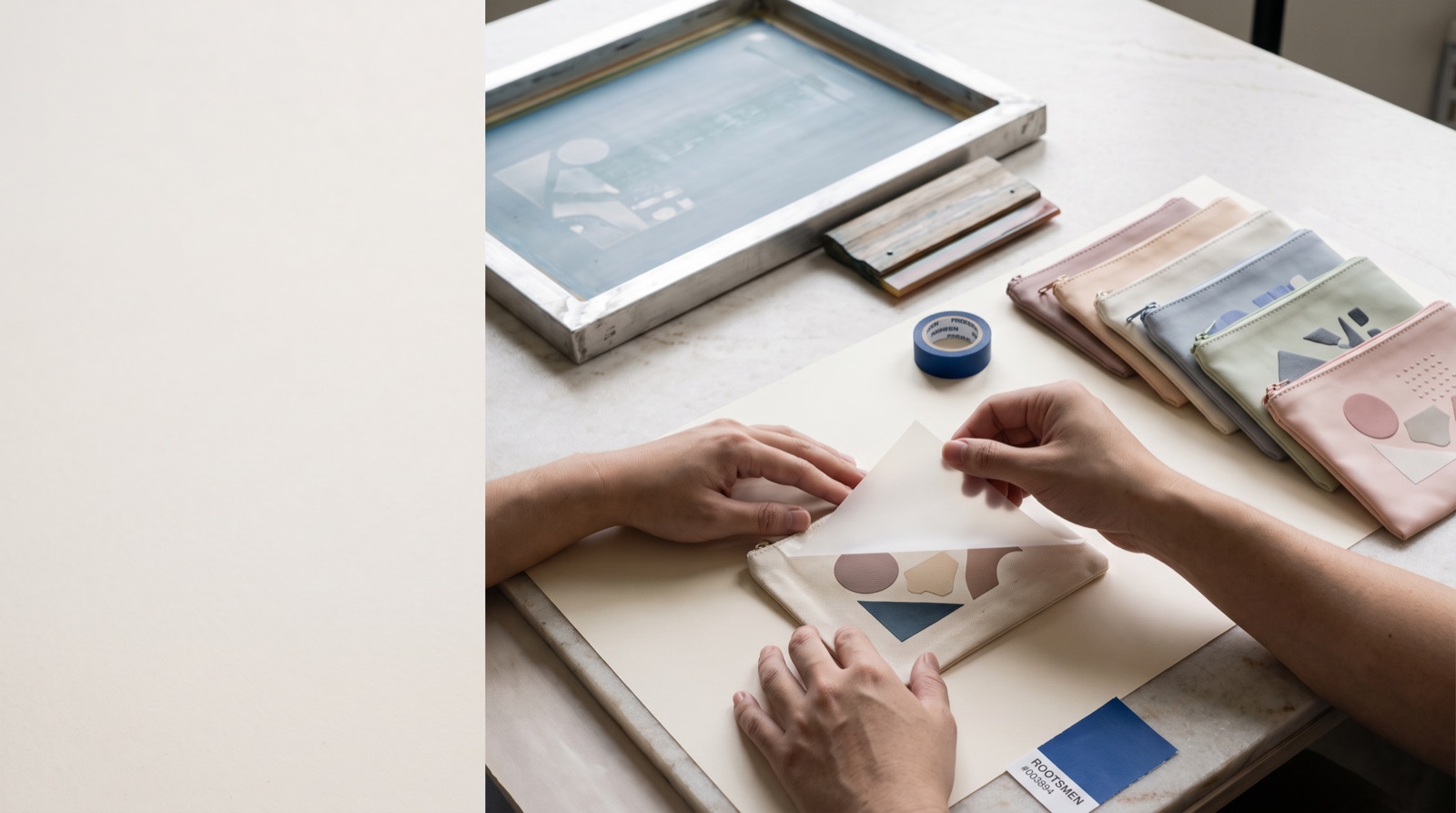
シルクスクリーンは、平面・ベタ・大ロットのロゴに対する既定の工法です。図案の色ごとに版を製作し、インキを版から製品へ刷り込むため、版代は色数で課金されます。1〜2色は安く、6色はそうではありません。走り出せば単価は低く、全数の色の安定性は優秀です。
グラデーションや写真的な細部は扱えません。繊細な混色に依存するロゴは、この工法のために簡略化するか、工法を変えるかです。網点でグラデーションを近似できますが、凹凸のある表地では粗くなり、結果は選択というより妥協に見えます。
実務上の制約が2つ。各色は1回の見当合わせ — 版と版の位置合わせ — であり、色が増えるたびにずれる機会も増えます。柔らかく伸びるパーツへの4色刷りが、硬いパーツより難しいのはそのためです。そしてプリント範囲は「平らにできる部分」に限られます。縫い目・マチ・ファスナーをまたぐロゴは、通常1回では刷れません。
濃色の表地では、インキの下にまず白の下刷りが必要です。そうしないと色が地に沈みます。これは版代でいえば1色分の追加であり、見積りの中にあるべきもので、見積りの後に発覚するものではありません。
デジタルプリント#
デジタルプリントは色数ごとの版代がないため、細部の多い図案、グラデーション、フルカラーの画像に向きます。シルクスクリーンでは高くつく、あるいは不可能なロゴにとっての正解であり、同じロットの品番ごとにデザインが変わる場合には唯一まともな選択肢です。
数量が増えても単価の下がり方は緩やかです。つまり、シンプルなロゴの大ロットではシルクスクリーンに負け、複雑なロゴならどの数量でも余裕で勝ちます。交点は色数と数量の両方で決まり、片方だけでは決まりません — 「どちらが安いか」に両方の数字が出るまで答えがないのはそのためです。
素材の影響はシルクスクリーンより大きく出ます。コーティング、凹凸、起毛のある面への直接デジタルプリントは安定せず、ポリエステルには専用工程か転写が必要です。直接プリントを受けつけない表地に対する現実的なデジタルの道筋は「印刷した転写フィルムを熱圧着する」ことで、それはまた別のコスト構造になります。
熱転写#
熱転写は両者の中間にあります。細部の再現はよく、段取りコストは中程度で、直接プリントしにくい表地にもきれいに乗ります。コーティングや凹凸のある素材では実務上の答えになることが多く、素材によっては唯一の答えです。
代償は手触りです — ロゴは素材の中ではなく表面に乗り、大きなベタ面ではパッチのように見えます。ロゴの部分が頻繁に触られる、あるいは曲げられる製品では、確定前にサンプルで確認する価値があります。見るべき不具合は繰り返しの屈曲による縁の浮きで、それは平置きのサンプルより、圧縮したサンプルではるかに早く出ます。
この分類の中でも差は大きい。カッティングシートは色フィルムから切り出すもので、輪郭は鋭いがベタ形状に限られます。デジタル転写は印刷したもので、写真的な内容を運べます。昇華転写は繊維そのものを染めるため手触りがまったくありません — ただし淡色ポリエステルにしか使えず、綿の大半と濃色の表地はすべて対象外になります。
プリントではない選択肢#
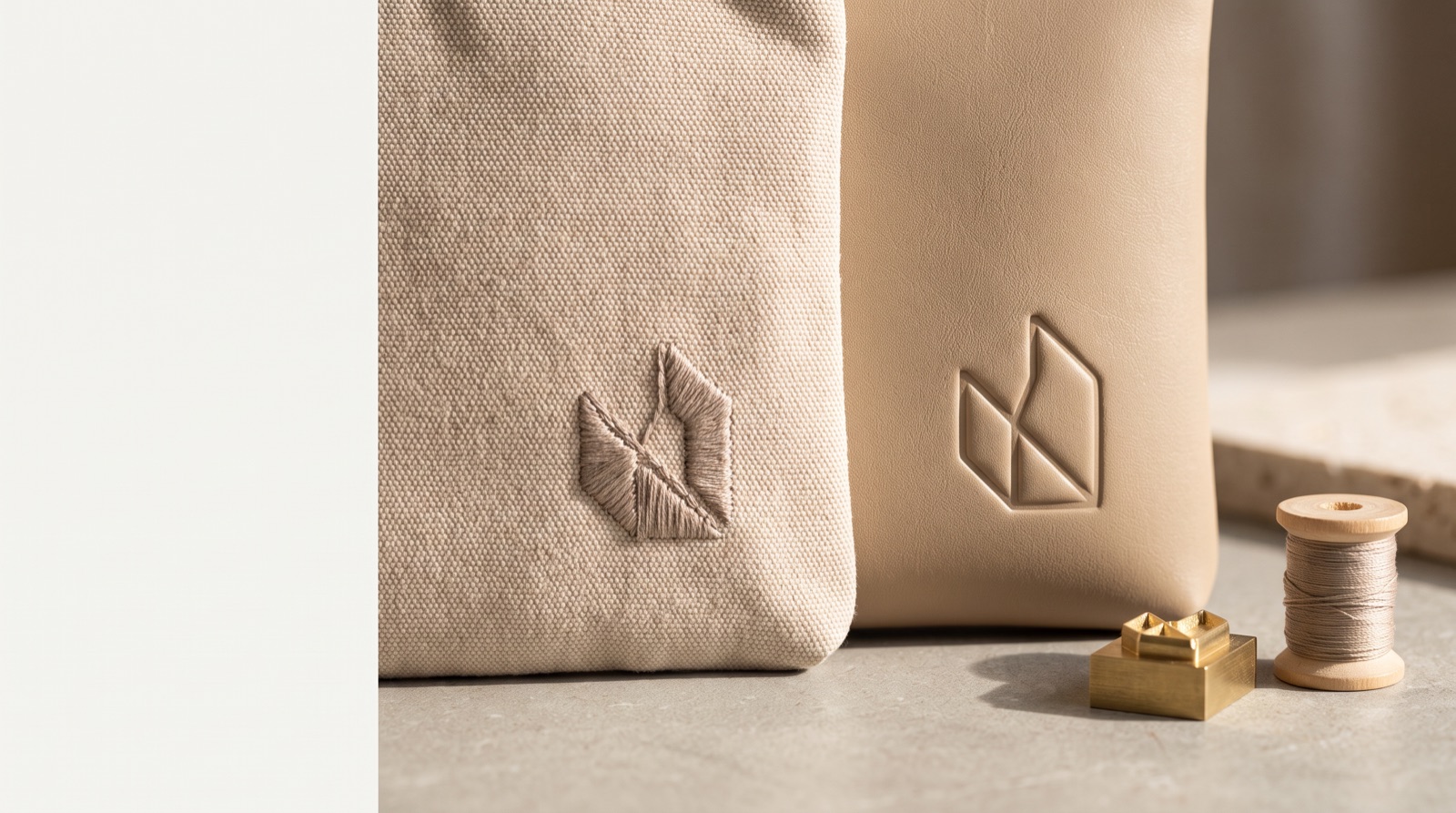
ロゴを「プリントされたもの」ではなく上質に見せたいなら、ほかの選択肢も並べて見積る価値があります。織ネームは小さいサイズでも細部を保ち、縫い目に挟むのでパーツを歪ませず、数量が出れば製品上で最も安いブランド要素であることも珍しくありません。
PU や厚手キャンバスへの型押しは一度きりの型代と非常に低い単価なので、数量が増えるほど有利になります。大ロットでは、置き換える予定だった凝ったプリントより安く収まることがあり、しかも表面に何も乗っていないので擦り減ることがありません。
ラバー/シリコンパッチとメタルプレートはどちらも型代がかかり厚みが出て、どちらも意図的に見えます。これらは代替案ではなく別の答えです。工程名を指定するのではなく、望む効果を書いた仕様書のほうが最良の答えにたどり着きます。
図案 — 何を送り、それが何を決めるか#
アウトライン化したベクターデータを、色は形容ではなく標準色番で指定し、ロゴを使う最小サイズを添えてお送りください。この3点で工法・段取り費・細部に関する論点の大半が一度に決まります。
どの色が動かせないブランドカラーで、どの色が動かせるかを明記してください。インキは標準色に調色し、承認した試し刷りに対して確認しますが、表地の色そのものがプリント色をわずかにずらします — ラボディップと色がずれる理由で説明しているのと同じ物理です。許容のある色とない色がわかっていれば、誰も守っていなかった色味のために承認を往復せずに済みます。
位置は「中央」ではなく、縫い目・ファスナー端・底など固定の基準からの寸法で指定してください。平面のパーツ上の中央と、曲面になった完成品の中央は違う場所であり、この差は初品が差し戻される最も一般的な原因のひとつです。
コスト — 本当に数字を動かすもの#
支配的なのは3つ — 色数、プリント位置の数、そして同一ロット内で図案が変わるかどうか。1色・1か所・1デザインが、作りうる最も安いブランド製品です。追加はすべて独立した段取りであり、段取り費は素材のようにはロット全体で薄まりません。
プリント位置が1か所増えるほうが、同じ位置で色が1つ増えるより高くつくことがよくあります。製品を2回扱うからです。予算が厳しいときは、小さなロゴ2つを1つにまとめるほうが、色数を削るより効きます。
図案にバリエーションが必要な場合 — 1つの案件で6デザイン — 段取りを6倍にしない工法はデジタルだけです。この一点だけで決着する購入特典案件は非常に多いのです。
法規制 — プリント工法がぶつかるルール#
プリントインキも素材のひとつで、中身を規制する市場があります。EU や米国の複数州で販売・配布される場合、制限物質リストは生地の加工剤だけでなくプリントの化学物質にも及び、その証憑は供給者の宣誓書です。
対象が子どもである場合、または子ども向け商品と一緒に展開される場合は要求が大幅に厳しくなり、検品時ではなく仕様段階で提起すべきです。米国・EU で必要になる適合文書で、通常求められるものを整理しています。
製品に刷るサステナビリティ訴求には、それ自体の立証要件があります — 再生素材の訴求を検証する方法をご覧ください。訴求はデザイン確定の前に決めるほど、支えやすくなります。
発売日から逆算する#
購入特典の日程はたいてい発売日やイベント日に紐づき、その日付は動きません。仕様書と一緒にお知らせください。実際にどれだけ修正の余地があるかを決めるのはその日付で、ロゴ加工は構造と同じくらい日程に影響します。
収めるべき順序は、図案承認 → 製版または転写フィルム製作 → 実際の表地での試し刷り承認 → 量産。それぞれが実日数です。量産前サンプルには、量産工法で施した最終のロゴ加工が乗っている必要があります — 写真用に手作業で貼ったロゴは、量産について何も確認していません。
日程が厳しいとき、本当に時間を買える手は2つだけ — 色数を減らすことと、図案をより早く凍結することです。オーダーバッグの納期と発売カレンダーに合わせた購入特典の設計で、残りの時間がどこへ行くかを整理しています。
手早く決めるには#
平面・ベタ・1〜3色・大ロットならシルクスクリーン。グラデーションや写真、あるいはロット内で図案が変わるならデジタル。直接プリントを受けつけない表地、凹凸を越える必要があるロゴなら転写。小さいサイズで細部が要るなら織ネーム。静かで永続的に見せたいなら型押しです。
図案・発売日・数量の幅を一緒にお送りください。この3つの入力は、好みの議論より速く工法の問いに答えます。そして同じ3つが、確定前にロゴ加工の費用をお伝えできるようにします。
| シルクスクリーン | デジタル | 熱転写 | |
|---|---|---|---|
| 段取り費 | 色ごと | なし | 低い |
| 向く図案 | 平面・ベタ・少色 | グラデーション、写真、フルカラー | 難しい表地への細部表現 |
| 大ロットでのコスト | シンプルなロゴで最安 | 下がり方が緩やか | 中程度 |
| 手触り | 生地の中 | 生地の中 | 表面に乗る |
| 注意点 | 色数がコストを決める | シンプルなロゴではスクリーンに負ける | よく触れる部分の感触 |