トラベルオーガナイザーの表地は、詰め込まれ、圧縮され、空港の床を引きずられ、また取り出される — それを何度も繰り返されます。棚の上で一生を終える店頭向けポーチとは、素材比較の前提がまるで違います。
リップストップナイロンも RPET もどちらも成立し、この品目ではどちらも大量に指定されています。違いは「壊れ方が違う」ことで、選ぶ前に知っておくと役に立つのはそこです。一方は織り構造、もう一方は繊維の由来 — このずれが、この比較がしばしば噛み合わない原因です。
一方は織り、もう一方は原料#
リップストップは織り方であって繊維ではありません。太い補強糸を一定間隔で織り込み、名前の由来である格子が生まれます。この格子が引き裂きの伝播を止めます。一マスで始まった裂けが次の補強糸で止まり、パーツ全体に走らないということです。
RPET はポリエステルの原料 — 多くは使用済み PET ボトルのフレーク — を指すのであって、織り方や目付ではありません。RPET 自体をリップストップに織ることもでき、実際に増えています。ですから誠実な比較はたいてい「リップストップナイロン対 平織 RPET ポリエステル」であり、見積りもその形で出ます。仕様書ではどちらを指しているか明記する価値があります。
そこが片づくと、独立した2つの判断が現れます。繊維(ナイロンかポリエステルか、バージンか再生か)と構造(平織、リップストップ、あるいはより厚手の組織)です。この2つは別々に決められます。
摩耗・引き裂きと、実際に起きる壊れ方#
詰め込まれ、縫い目を引っ張られる製品にとって、引き裂き強度は最も関係の深い性能です。リップストップがこの品目で主流である理由もそこにあります。裂けは応力点 — たいていは角、ファスナー端、持ち手の付け根 — から始まりますが、走らずにその場で止まります。
同目付ならナイロンのほうが摩耗・引き裂きに強く、ポリエステルは長時間の紫外線に強く吸水も少ない。スーツケースの中で暮らすオーガナイザーで日々試されるのは摩耗と引き裂きで、紫外線はほぼ無関係です。ですから他に優先事項がなければ、繊維の選択はナイロンに傾きます。
同目付の RPET は摩耗には十分耐えますが、平織では同じ止裂挙動を持ちません。軽い使い方ならまず表面化しませんが、想定容量を超えて詰め込まれるパッキングキューブでは表面化します — しかも走るので目立ちます。
重さ、デニール、同条件で比べる方法#
生地の重さはデニール(D)で表されます。糸 9,000 m あたりのグラム数で、強度そのものの指標ではありませんが、同じ組織の中では実用上の目安になります。70D と 210D は軽量、420D と 600D が主力、1680D はラゲージ級です。デニールの読み方で各水準を整理しています。
210D のリップストップナイロンと 600D の RPET を比べるのは素材比較ではなく重さ比較です — この2つの表地をめぐる議論の多くは、実はこれです。デニールか仕上がり重量の目標を先に固定してから比べてください。
リップストップナイロンには「軽いのに強い」領域があり、オーガナイザーのセットが「荷物をほとんど重くしない」ことを売りにするときに効いてきます。同等強度の RPET はたいてい重くなり、5〜6点のセットではその差が手に取ってわかり、輸送費としても計算に出ます。
コーティング、防水性、正直に言える範囲#
どちらの表地も裏面にコーティング — PU が一般的 — を施すことが多く、表面には撥水加工も可能です。ただし繊維も織りも、それ自体でバッグを防水にはしません。防水性を決めるのは縫い目とファスナーで、防水と撥水の違いで範囲を整理しています。
撥水加工は法規制の入口でもあります。一部のフッ素系処理剤は規制市場が増えており、トラベル用品はそのいくつかで明示的に名指しされています。撥水が必要なら仕様段階で決め、処理剤とその証憑を一緒に選んでください — PFAS 規制はトラベル用品と化粧ポーチに及ぶかで対象市場を整理しています。
ポリエステルはナイロンより吸湿が少ないため、RPET の表地は乾きが速く、濡れたものを入れても匂いが残りにくい。乾物用のオーガナイザーではなくトイレタリーポーチなら、これは RPET の実質的な利点です。
色・プリントとロット差#
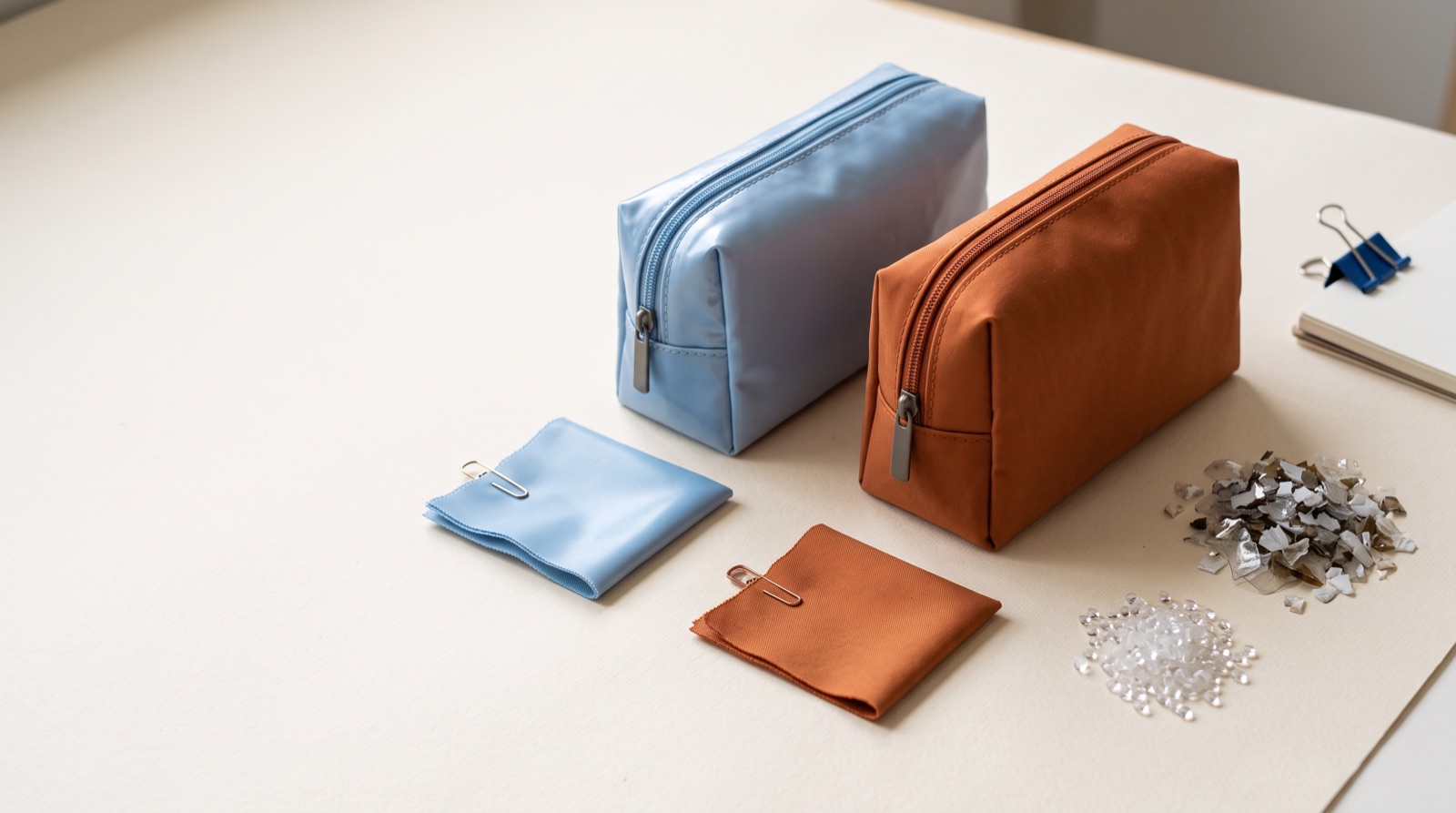
ナイロンは彩度の高い色が安定して出ます。RPET は再生原料由来のばらつきがあるため染色ロット間でわずかにずれることがあり、淡色・中間色で最も目立ちます — 2点並べるとわかる程度です。
セット商品 — トラベルオーガナイザーはたいていセットで売られます — では、これが実務上のリスクです。5点のキューブは色標準に合っているだけでなく、互いに揃っている必要があります。対策は2つ、発注時に同一染色ロットで固定するか、ばらつきに寛容な色を選ぶか。承認の進め方はラボディップと色がずれる理由と同じです。
メッシュ部分があるとさらに複雑になります。メッシュの上面と無地の本体を別々に染めた場合、意図的に合わせない限り完全には一致しません。「揃えるのか、あえて対比させるのか」を試作段階で決めてください。
収納性と、開けたときの見え方#
どちらも平らに畳めます。リップストップのほうが圧縮後の形状回復が速く、これは顧客が最初に開けたときの見え方に効きます — 小さなことですが、品質の印象の多くを担い、写真にもはっきり出ます。
製品に張りが必要な場合 — 自立する底、つぶれない開口部 — その張りは表地ではなく芯材や底板から来ます。同じ芯材はどちらの素材の裏でも使えます。ですから「この表地は柔らかい」と「この製品には構造がない」を分けて考えてください。対処法が違います。
この品目で実際に使われる機能 — 圧縮ファスナー、持ち手、メッシュ上面、ID窓 — はほぼ表地に依存しません。バイヤーが本当に求める機能で、どれがコストに見合うかを整理しています。
サステナビリティ訴求が立つ根拠#
案件がサステナビリティのメッセージを掲げるなら、それを支えられるのは RPET です。ただし他と同じ but が付きます — 訴求が立つ根拠は素材カテゴリーではなく、その特定ロットの証憑です。再生含有率は取引証明書と流通経路の記録で裏づけ、それは素材選定の段階で請求します。下げ札を刷った後ではありません。
再生ナイロンも存在します。引き裂き性能が決め手だが案件としては再生ポジションも要る、という場合は聞いてみる価値があります。RPET ほど在庫は潤沢でなく、素材のリードタイムも長めになるのが通例です — 技術ではなく日程の問題です。
何を、どの順で請求するかは再生素材の訴求を検証する方法に整理しています。
詰めてみる検証 — 試作段階でやること#
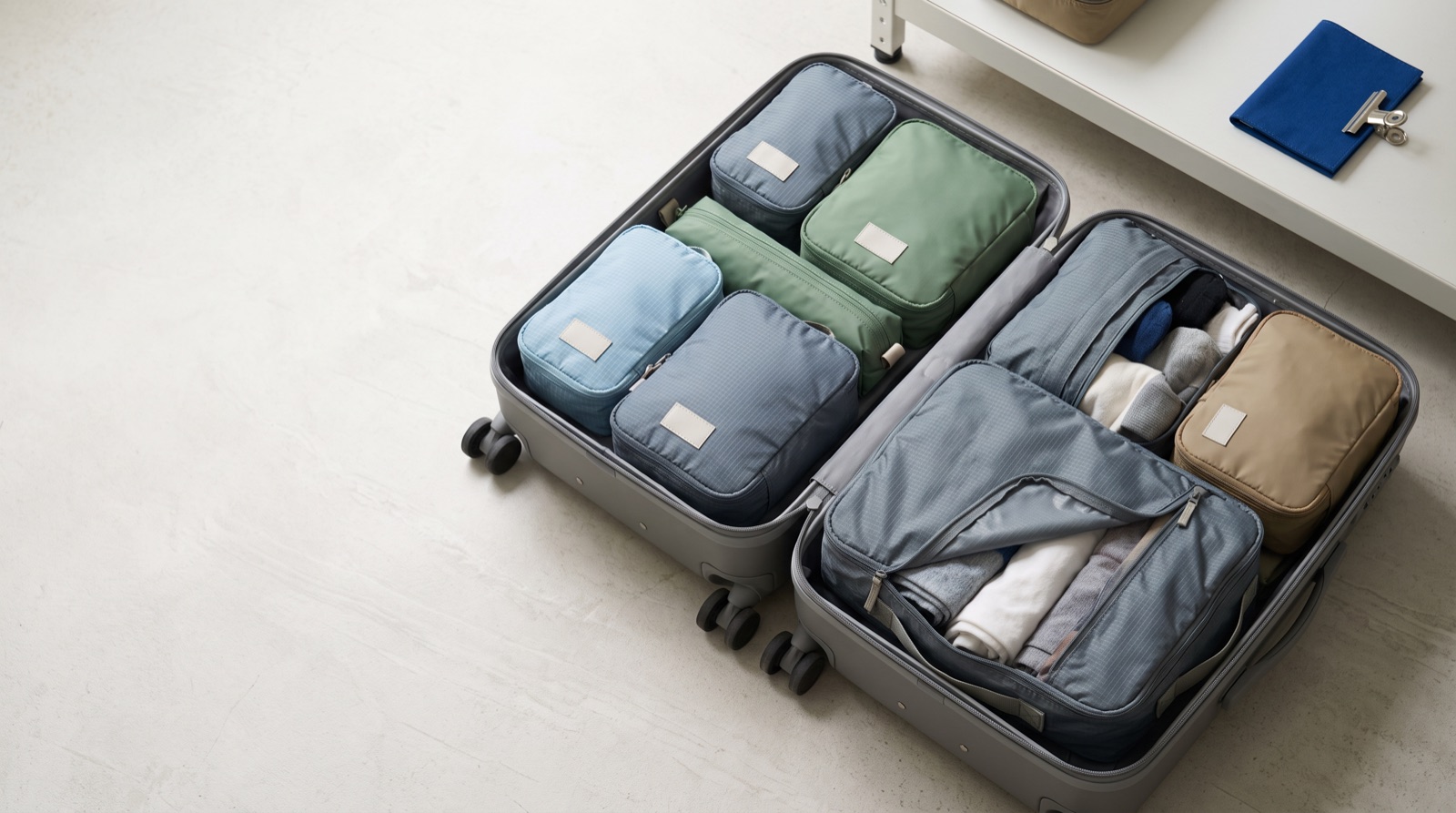
どの表地を選ぶにせよ、旅行用品には日程に組み込む価値のある検証がもう1つあります。実際に入れる想定の中身をサンプルに詰めてみることです。机の上で寸法が正しいキューブでも、詰めると破綻することがあります — ファスナーの経路がきつくなり、角で生地が重なり、メッシュが膨らむ。それを試作段階で見つけるほうが、量産後よりはるかに安上がりです。
1回詰めるだけでなく、圧縮と解放を数回繰り返してもらってください。見るべきは、角の縫い目がまだ直角に収まっているか、荷重下でもファスナーが素直に走るか。この2点で、良く作られたオーガナイザーと2か月目に壊れるものの差の大半を拾えます。
残りの確認項目は最初のサンプルが届いたら確認すること、次の関門は量産前サンプルが確認することをご覧ください。
選び方#
ハードに使われ、軽さと引き裂き強度が優先ならリップストップナイロン、仕様書でデニールを固定してください。証憑のある再生ポジションが必須の案件なら RPET、できればリップストップ組織で — 繊維と引き換えに止裂性まで手放さないために。濡れたまま仕舞われるトイレタリーポーチなら、乾きの速いポリエステルです。
いずれにせよ、目付と組織を見積り比較の前に文章で固定し、表地は最初のサンプルの後ではなく仕様段階で決めてください。試作後の表地変更はパターンの引き直しです — 2つの素材は縫い目での挙動が違います。トラベル用品のラインナップで、各表地の実際の使われ方をご覧いただけます。
| リップストップナイロン | RPET | |
|---|---|---|
| 引き裂き挙動 | 格子組織が裂けをその場で止める | 荷重下で裂けが走る |
| 同強度での重さ | 軽い | 重い |
| 圧縮後の形状回復 | 速い | 遅い |
| プリント面 | 淡色のベタでは格子が透ける | 均一。全面プリント向き |
| 再生ポジション | なし | 可。ただし証憑が前提 |