Most pouches are made from a short list of fabrics: nylon, polyester, canvas, PU. Tyvek, cork and washable kraft paper sit outside that list, and that is the point — they look and feel different the moment someone picks the product up. They also behave differently on the sewing table, under a print screen and in a washbasin.
This note is for buyers and product developers weighing one of the three. It covers what each material is, how it decorates and sews, how it copes with water and wear, and what to look for in samples. It ends with the part brands most often get wrong: what can honestly be said about sustainability.
Tyvek: a plastic sheet that behaves like paper#
Tyvek is the widely used brand name of a flashspun high-density polyethylene sheet. Very fine polyethylene fibres are spun and bonded into a nonwoven sheet that looks like matt white paper, is surprisingly hard to tear, and is very light. Fresh, it is crisp and rustles; after crumpling or washing it softens into something closer to fabric, with a fine crinkle that many brands want as the look.
That crinkle is also its main ageing pattern. Creases do not come out, and a pouch will look lived-in quickly. Pale sheets show dirt and handling marks, and the material softens when heated, so it should be kept away from hot irons and from heat processes that run too warm.
Cork fabric and washable kraft paper#
Cork fabric is a thin layer of cork, harvested from the bark of the cork oak, bonded to a backing — commonly a cotton or polyester textile, sometimes a PU layer. The surface is warm to the touch, lightly grippy and naturally varied: no two sheets have the same grain, and colour shifts from piece to piece. It bends well along a gentle curve but can crack or show the backing if folded sharply, particularly when cold.
Washable kraft paper is a cellulose paper treated so that it can be sewn and survive washing. Out of the roll it is stiff and smooth; after washing or hand-crumpling it develops a soft, creased, almost leathery texture. It comes in natural kraft brown, dyed colours and different thicknesses, and it wears gradually at corners and folds rather than tearing.
Printing and decorating#
All three take a logo, but not all methods suit all three. Tyvek accepts screen print and some digital processes, though ink adhesion and flexing should be tested, because the sheet moves a lot and a stiff ink film can crack. Heat transfers need a temperature the sheet tolerates. Cork is usually debossed, foil-stamped, laser-marked or screen-printed; its texture breaks up fine lines, so keep artwork bold.
Washable kraft paper debosses and foils well and takes screen print. Test any print after a wash and a crumple, not only on a flat sheet, because the crease pattern runs straight through the artwork. For the trade-offs between methods, see choosing a print method.
Sewing: edges, needle holes and binding#
None of the three frays, so a raw cut edge is a legitimate design choice rather than a shortcut. The catch is that they do not heal around a needle either. Every hole is permanent, and a dense line of stitches behaves like a perforation: it is where the material will tear first. A longer stitch, a suitable needle and stitching that is right first time matter more here than on woven fabric.
Binding or folding the edge adds strength and hides cork's backing, but adds bulk and makes tight corners harder. Stress points — zipper ends, handle joins, the base of a strap — usually need a reinforcing patch or a textile layer behind them. Ask to see the inside of a sample as well as the outside.
Water, durability and care#
Tyvek itself resists water, so a Tyvek pouch shrugs off splashes, but seams and zippers still let water in; water-resistant material does not make a waterproof bag, as waterproof versus water-repellent explains. Cork's surface sheds water and wipes clean, while its backing may absorb it. Washable kraft paper tolerates gentle washing, but is weaker while wet, can shrink and may change colour.
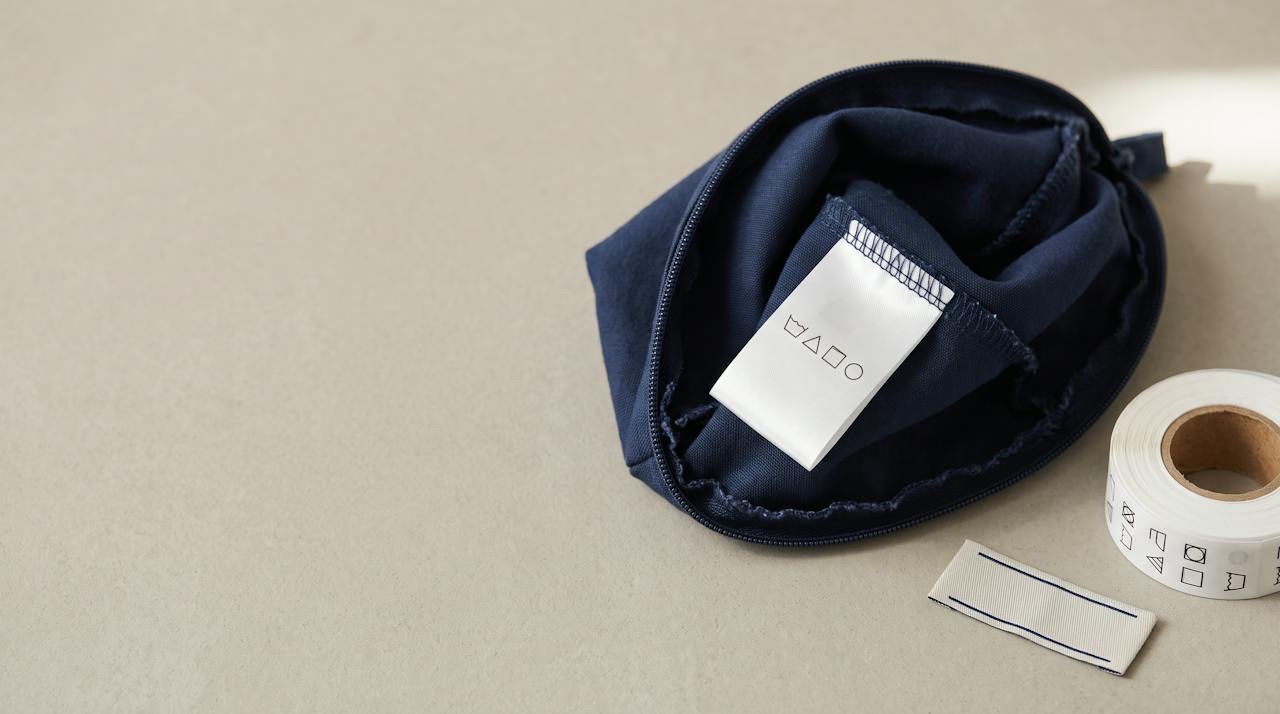
Care instructions should follow the material, not the category: wipe clean for cork, gentle hand wash and air dry for washable paper, no hot ironing for Tyvek. Whatever goes on the label must be tested on the finished bag; our guide to care labels and washing instructions covers how.
What to check in sampling#
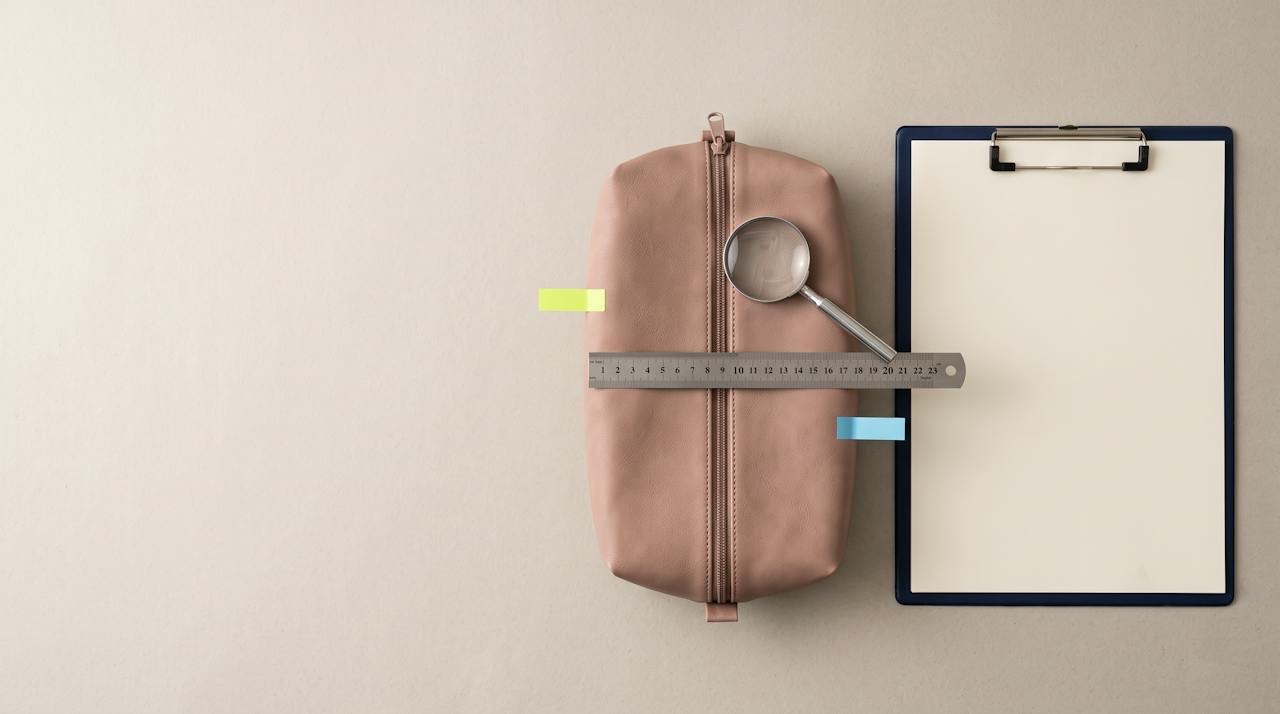
Judge each material on a made-up sample, not a flat swatch. Fold and unfold the bag many times; open and close the zipper repeatedly; look closely at stitch lines for early splitting. For cork, compare several panels side by side to see how much grain and colour vary, and decide whether that variation is acceptable. For washable paper and Tyvek, wash or crumple one sample to see the finished texture.
Check decoration after that handling, not before. Then measure the washed sample against the original to see whether size has moved. Our first-sample checklist lists the general checks that apply on top.
Sustainability: what you can and cannot say#
Unusual materials attract green language, and none of the three is automatically a lower-impact choice. Tyvek is a plastic; whether it is accepted for recycling depends on local schemes and on what it has been sewn, printed or bonded to. Cork fabric depends on its backing and adhesive. Washable paper may contain synthetic binders, so "paper" alone does not tell you how it can be disposed of.
Before any word such as recyclable, biodegradable or eco-friendly goes on a hangtag, ask for the material composition and supporting documents, check them against the market's rules, and describe exactly what is true. How to verify a material claim sets out the process.
| Material | What it is | Look and feel | Watch for |
|---|---|---|---|
| Tyvek | Flashspun high-density polyethylene sheet | Matt white, paper-like, crinkles and softens with handling | Permanent needle holes, heat sensitivity, ink adhesion |
| Cork fabric | Thin cork layer bonded to a textile or PU backing | Warm, grainy, every sheet slightly different | Cracking at sharp folds, visible backing at edges, grain matching |
| Washable kraft paper | Cellulose paper treated so it can be sewn and washed | Kraft brown or dyed, crumpled, leather-like after washing | Shrinkage and colour change on washing, wear at corners |