Handles are usually drawn last and discussed least, yet they are the part of the bag the customer touches every time and the part that carries the whole load. A handle that looks right on the sketch can still pull out of the shell after a week of daily use.
This note covers the main handle and strap types for totes, vanity cases and pouches, the hardware that goes with them, how handles are anchored, and what to check on the first samples. It is written for brand buyers and product developers who want to specify handles clearly rather than leave them to chance.
Webbing: polyester, nylon and cotton#
Webbing is a woven tape and the default handle for totes and shoulder straps. Polyester webbing is strong, holds its shape and takes colour evenly, which is why it is the common choice for promotional and everyday bags. Nylon webbing feels smoother and has a little more give, which suits straps that run through sliders and travel bags that are handled roughly.
Cotton webbing has a softer hand and a matte, natural look that sits well on canvas, but it frays, it can shrink when washed, and it is generally less strong at the same width. Thickness and weave matter as much as fibre: a thin, loose webbing will roll and dig into the hand. Our note on denier for bags explains how yarn weight affects the feel of both shell and tape.
Self-fabric, padded and PU handles#
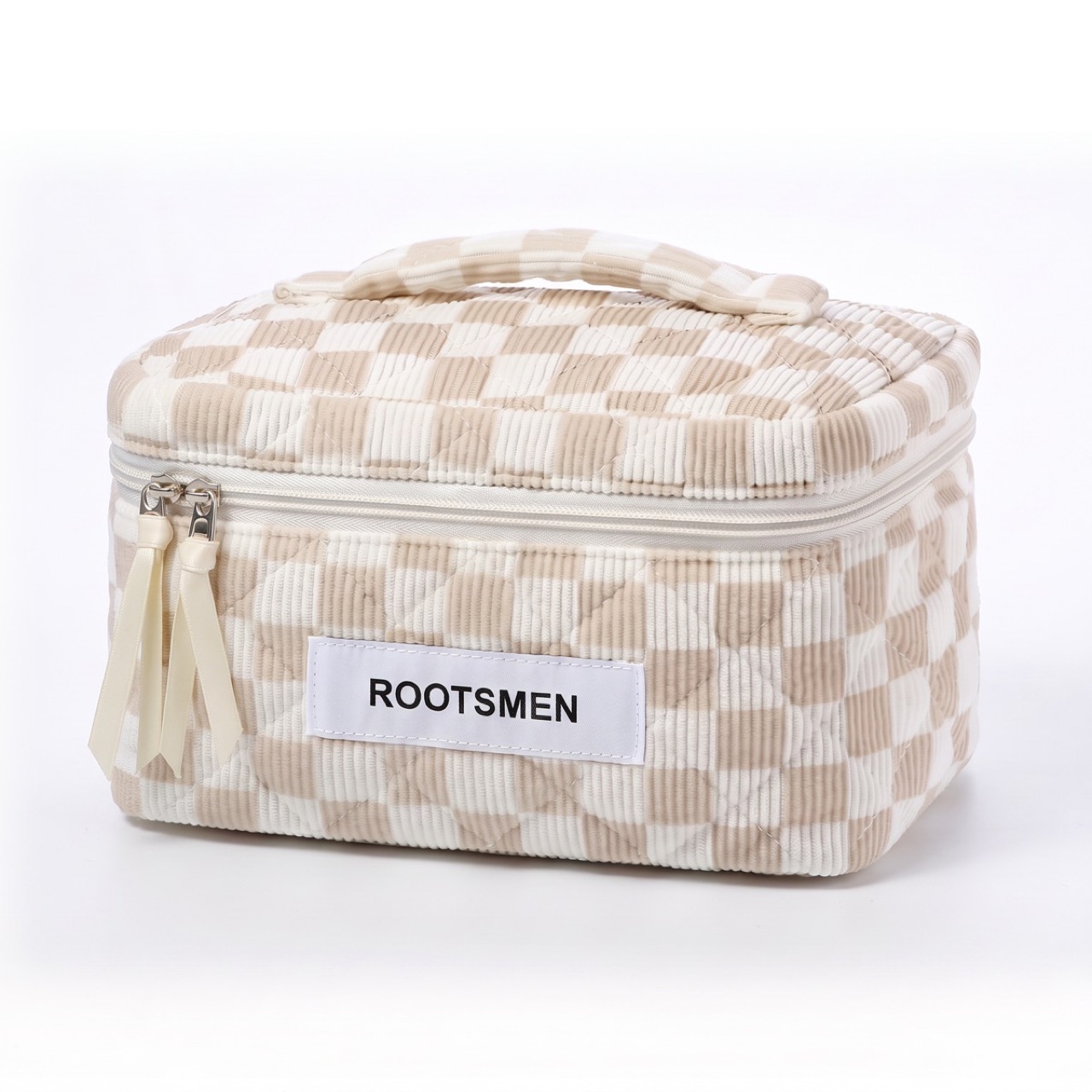
A self-fabric handle is made from the shell material, folded and stitched into a strip, or rolled around a cord or foam core to give a round, padded grip. It matches the bag exactly and suits pouches and coordinated sets. Its strength comes from the fold, the stitching and whatever is inside it, so say what the core should be and how firm the handle should feel.
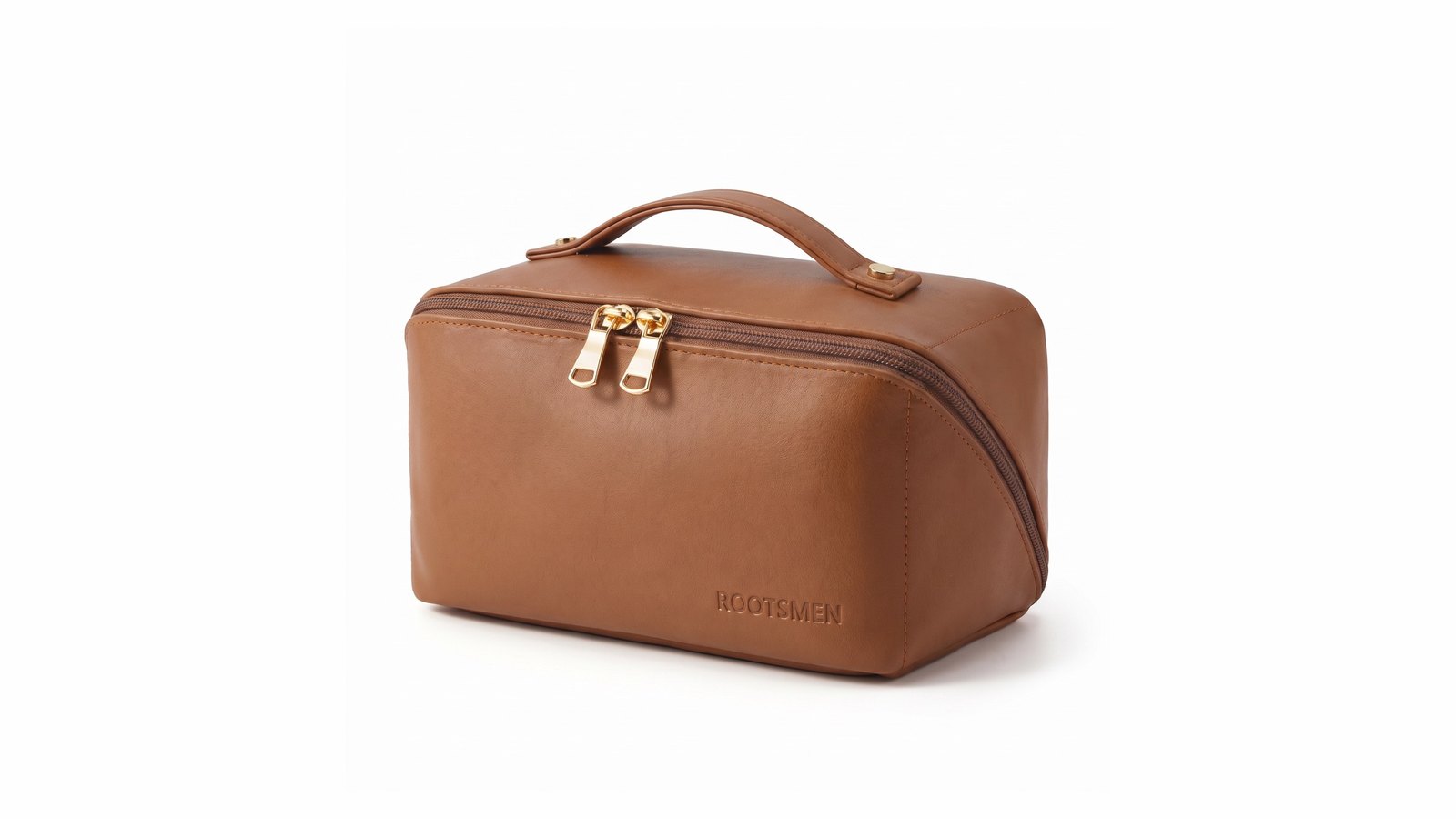
PU and leatherette handles give a cleaner, more finished look and are common on vanity cases. They are usually built in layers, with a backing or webbing inside for strength. Check the edge finish, which may be folded, bound or painted, and flex the handle where it bends at the anchor, because that is where coated materials crack first.
Rope, wrist straps, shoulder straps and hardware#
Rope and cord handles suit beach totes, gift bags and drawstring styles. They are comfortable to hold but harder to anchor: knots work loose and cut ends unravel, so agree whether the rope is knotted through eyelets, stitched under a tab or sealed at the ends. Wrist straps on pouches are small, but they are pulled sideways and swung, so treat their anchor as seriously as a tote handle.
Detachable shoulder straps bring in hardware: D-rings stitched into the bag, swivel hooks on the strap, and a slider to adjust the length. Check that the hook gate closes firmly, that the swivel turns freely, that the D-ring is closed or welded rather than an open bend, and that the slider is sized for the webbing so it does not slip under load. Ask for the plating colour to match the zipper pullers.
How the handle is anchored, and why the anchor fails first#
Handles rarely snap. What fails is the join: the stitches pull through the shell, or the shell tears along the row of needle holes. A dense row of stitches on a thin fabric can act like the perforation on a sheet of stamps. The answer is to spread the load over a larger area of the bag, not simply to add more stitches.
The common methods are a box-X stitch (a stitched square with a cross through it), a bar-tack (a short, dense zigzag), and sandwiching the handle end into a seam or binding. On anything that carries weight, add a reinforcement patch or backer inside the bag behind the anchor. Structured cases often anchor the handle through a tab into a stiffened panel; our guide to vanity cases covers how those panels are built.
Drop length, carry and load#
Drop length is the height of the handle above the top of the bag when it is held up, and it decides how the bag is carried. A short drop is held in the hand, a longer one goes over the forearm, and a longer one still goes over the shoulder, ideally over a coat. Decide which carry you intend before you draw the handle, and state the drop and the measuring method in the brief.
For load, describe what the bag will realistically hold rather than quoting a figure from elsewhere: a full set of skincare bottles, a laptop, a day at the beach. If you do want a number, treat it as a test condition you agree with the factory for your design, not a universal standard. A bag that will be overfilled should be built for that.
Edges, fraying and colour#
Synthetic webbing is usually cut with heat so the ends melt and seal; cotton webbing and fabric handles need their ends folded under, bound or hidden in the seam. A visible raw end will fray in use. Along the length, check that edges are straight, that folded handles do not twist, and that PU edges are evenly sealed or painted.
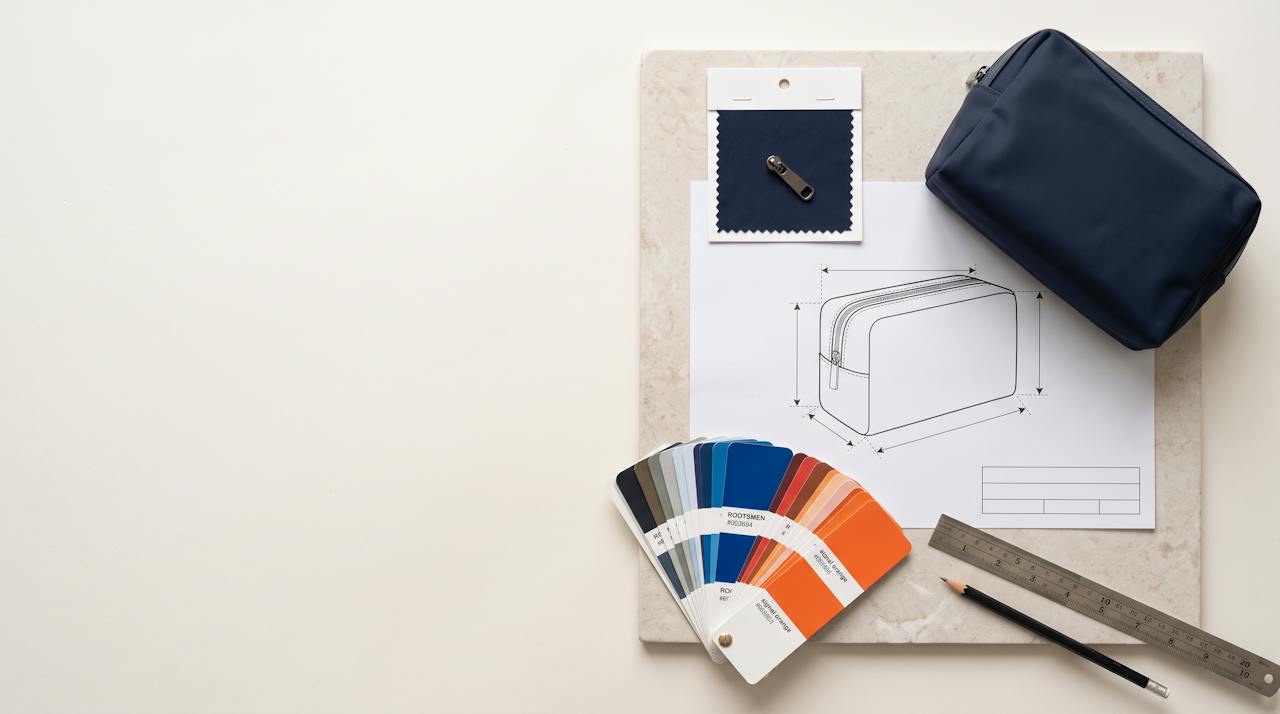
Handle colour is matched separately from the shell. Webbing may be dyed to order or chosen from a stock colour card, and PU comes in its own range, so the nearest standard shade may differ slightly. Say whether the handle must match the shell, can be the nearest standard colour, or should contrast on purpose, and name the thread colour too.
What to test on samples#
Fill the sample with a realistic load and hang it by its handles for a period you agree, then look closely at the anchors: lifted stitches, stretched needle holes, puckered shell, or a patch pulling away. Then pull and jerk each handle repeatedly, at an angle as well as straight up, because real use is never a steady vertical pull. Do the same with hooks, D-rings and sliders.
Record what you tested and how, so bulk can be checked the same way. Our note on what to check when your first samples arrive covers the rest of the sample review, and how to write a tech pack shows where the handle material, drop, anchor method and test belong in the specification.
| Handle type | Typical use | Strengths | Watch for |
|---|---|---|---|
| Polyester webbing | Totes, shoulder straps, promotional bags | Strong, holds its shape, takes colour well | Cut ends need heat-sealing; can feel stiff on small pouches |
| Nylon webbing | Travel bags, straps that run through sliders | Smooth, hard-wearing, slightly more give | Can stretch under long loads; slider grip on a slippery surface |
| Cotton webbing | Canvas totes, natural-look ranges | Soft hand, matte look | Frays and shrinks; ends must be folded under or bound |
| Self-fabric or rolled handle | Pouches, vanity cases, matching sets | Matches the shell exactly; can be padded or corded inside | Depends on the filling and the seam; edges can twist |
| PU or leatherette handle | Vanity cases, premium pouches | Clean, finished look; easy to wipe | Edge finish, cracking at folds, colour of the edge paint |
| Rope or cord | Beach totes, gift bags, drawstring styles | Casual look, comfortable round grip | Knots and ends work loose; anchoring needs thought |