A PU or PVC cosmetic bag can look perfect on the day it is approved and start peeling, flaking or cracking months later in a customer's bathroom. That is one of the most common complaints about synthetic leather, and it is the main reason buyers ask what the real difference between PU and PVC is, and whether one is more likely to fail.
Our earlier note on PU leather vs PVC vs microfiber compares the three materials. This one goes a step further: how synthetic leather is built, why PU peels and PVC cracks, what makes a better material and a better-made bag, and how to test and specify it. It is written for brand buyers and developers working on custom cosmetic bags and vanity cases in synthetic leather.
How synthetic leather is built#
Almost all synthetic leather has two parts: a backing fabric, usually a knitted, woven or non-woven textile, and a coating or film on top that gives the colour, grain and surface. Many materials add a finishing top coat that sets the gloss, the hand and some of the scratch and rub resistance. Most quality problems start in one of these layers or in the bond between them.
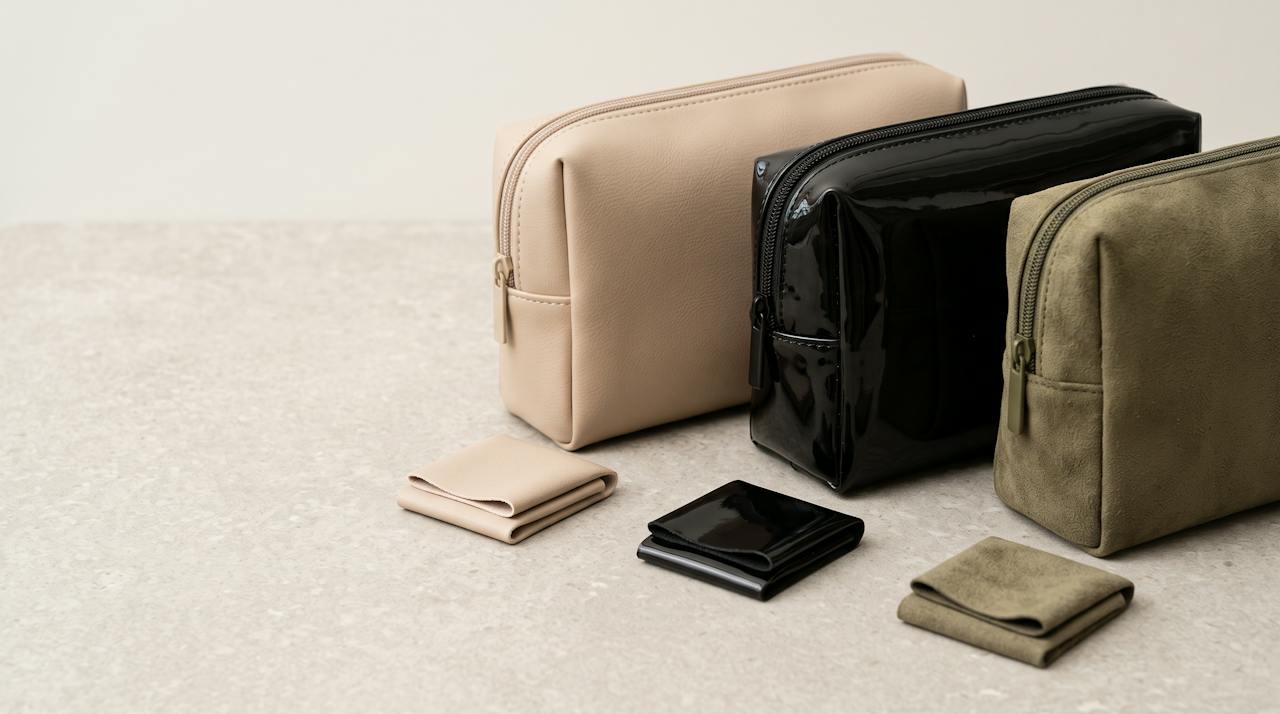
PU leather is made in broadly two ways. In the dry process, a PU layer is cast onto a textured release paper, dried and bonded to the backing, and the paper is peeled off to leave the grain. In the wet process, a PU solution is coated onto the fabric and set in a water bath, which forms a softer, porous layer; many materials combine a wet-process base with a dry-process skin. PVC leather is PVC compound, softened with plasticiser, coated onto a backing, often with a foamed middle layer, and then embossed. Microfiber leather uses a dense non-woven base of very fine fibres impregnated with PU, which behaves more like the structure of real leather than a film on a plain fabric.
Why PU leather peels#
The best-known cause is hydrolysis: moisture, helped by heat, slowly breaks down the polyurethane. Some PU chemistries resist this much better than others, but none are immune. A cosmetic bag lives in exactly the wrong place, often in a warm, steamy bathroom or a hot car, so a PU that seems fine at first can turn tacky, brittle and then flake away over time, usually first where it is handled most.
The second cause is adhesion. If the PU layer is not well bonded to the backing, or the backing is smooth, thin or loosely made, the film can lift as a sheet, especially at cut edges and corners. The third is mechanical wear: every time the bag is opened, the same folds bend and the same edges rub against other things in a handbag. A thin coating wears through there first, and once the backing shows, peeling spreads.
Why PVC leather stiffens and cracks#
PVC on its own is rigid; it is made soft by adding plasticiser. Over time, and faster with heat, some of that plasticiser migrates out of the material, into the air, into the surface, or into whatever the PVC touches. The PVC gradually loses its softness, can feel greasy or tacky on the surface, and eventually cracks at folds and corners. This is the drawback most people mean when they ask about the disadvantages of PVC leather.
Cold makes it worse. PVC stiffens noticeably at low temperatures, so a bag that bends happily indoors can crack in winter or after shipping in a cold container. PVC generally does not peel the way PU does, because the coating is thicker and more solid, but when it fails, it tends to split rather than flake.
What makes a better synthetic leather#
Start with the backing. A stable, well-made fabric with enough surface for the coating to grip will hold the top layer far better than a thin, slippery one, and it keeps the material from stretching and stressing the coating at folds. Then agree the coating on a physical sample, not a description: total thickness and the thickness of the PU or PVC layer both matter, and a very thin skin over a heavy backing can feel substantial and still wear through quickly.
For PU, ask the material supplier for a hydrolysis-resistant grade and what it is designed for; some types are made with more durable chemistries than standard fashion PU. A protective top coat improves scratch, rub and stain resistance and can be matte or glossy. For PVC, ask how the material is formulated to stay flexible and, for any regulated substances, request test reports suited to your destination market rather than relying on a general statement. Where durability matters most, microfiber leather is worth sampling alongside PU and PVC.
How construction affects peeling and cracking#
Edges are where synthetic leather fails first. A folded edge, where the material is turned over and stitched, hides the backing and is very durable, but it adds bulk and needs a material that folds cleanly. A bound edge, finished with binding tape or a strip of the same material, protects the cut edge well. A painted edge looks neat and slim, but the paint must suit the material and be applied in thin, even layers, or it cracks and lifts with use.
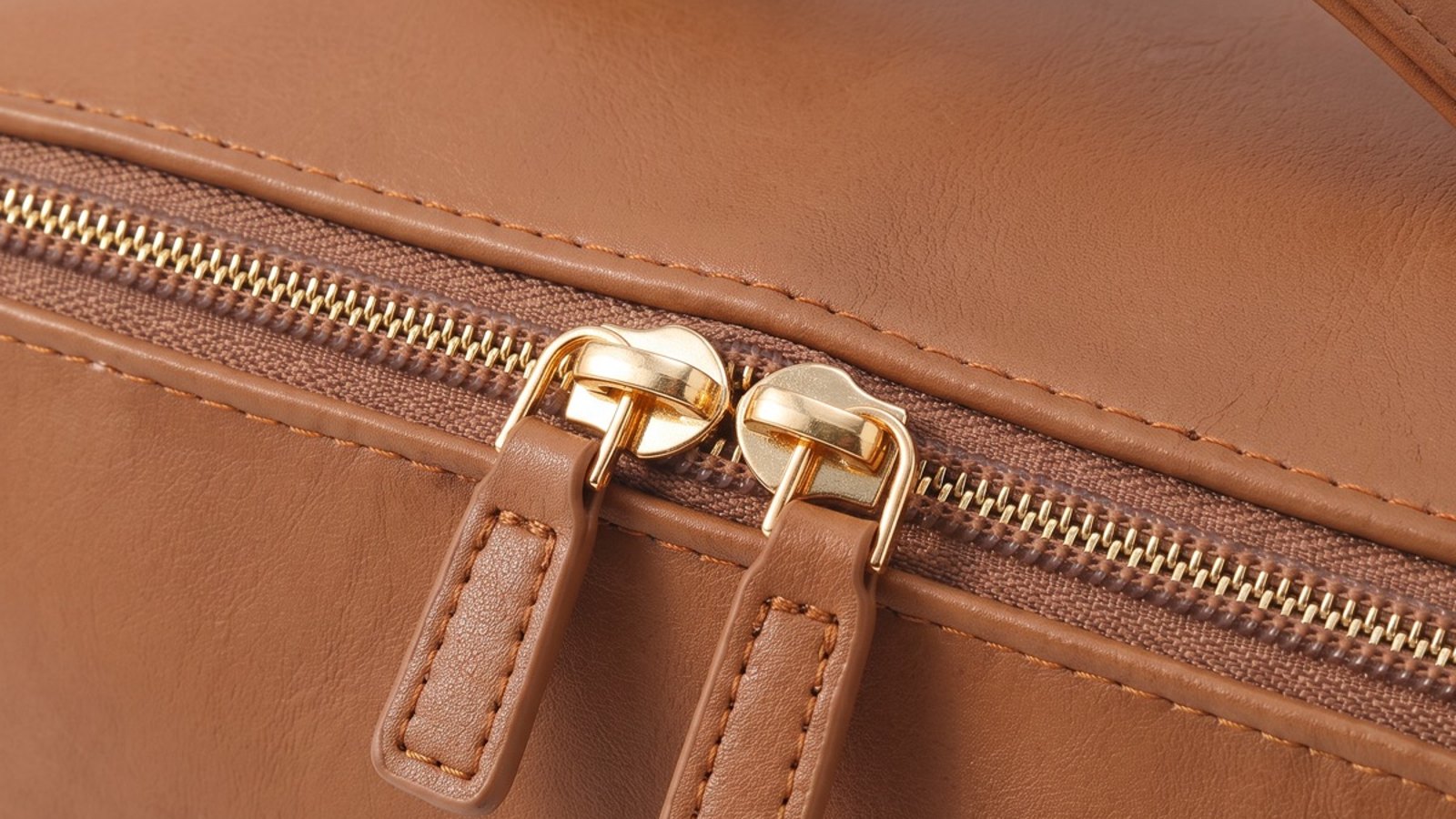
Stitching matters too. Very dense stitching perforates the material along one line and can make it tear or crack there; very open stitching lets the layers move and rub. Agree the stitch density on the sample. Finally, look at where the material folds. A tight fold at a zipper end, a gusset or a handle base bends thousands of times in use; a softer radius, a different panel line or a lining that supports the fold can stop cracks before they start. Structured vanity cases need particular care at corners and hinges.
Cosmetics, alcohol and oils#
A cosmetic bag is exposed to the very products that are hardest on synthetic leather. Alcohol-based sanitiser and perfume, nail polish remover and other solvents can soften, dull or mark a PU or PVC surface. Oils from cleansers, creams and hands can be absorbed by the surface or draw plasticiser out of PVC, leaving it tacky or stiff over time.
Think about the products the bag will actually carry, choose a top coat that copes with them, and consider a wipe-clean lining so spills stay inside. On the sample, wipe or dab a few of those products onto a hidden area and check it after it has dried and again the next day. Care instructions that say to wipe with a damp cloth and avoid solvents also help the bag last.
Storage and packaging#
Synthetic leather can start ageing before it reaches the shelf. Bags sealed in plastic and kept in a hot, humid warehouse or container are effectively sitting in an ageing test. Store finished goods somewhere cool and dry, rotate stock, and avoid leaving them in direct sun or next to heat.
In packaging, avoid packing PVC in tight contact with other plastics or printed surfaces, because plasticiser can migrate across and cause sticking or marks; tissue paper or a separate bag between items helps. Do not fold or crush bags at sharp angles in the carton, and keep stuffing or shape-keeping inserts in structured cases so the material does not set in a crease.
How to evaluate samples#
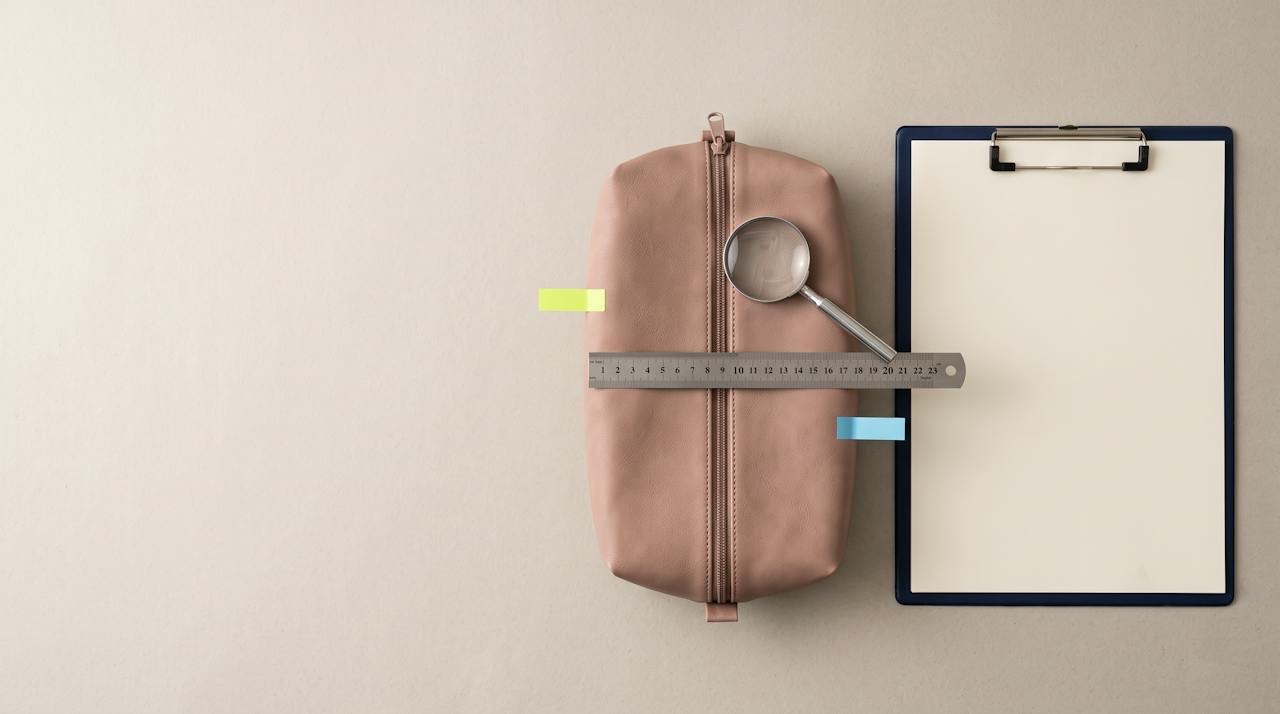
Some checks you can do on any sample. Flex the material by hand at the folds that will bend in use, many times, and look for whitening, fine cracks or lifting. Rub the surface with a dry and a damp white cloth to see if colour transfers, and scratch it lightly with a fingernail. Put a sample or a swatch on a warm, humid shelf, such as a bathroom, for a few weeks and compare it with one kept in a drawer. For PVC, chill a swatch and bend it. Our note on what to check when your first samples arrive covers the rest of the sample review.
For a more reliable picture, agree laboratory-style tests with the factory or a test lab: flex resistance (repeated bending), abrasion resistance, adhesion of the coating to the backing, hydrolysis or accelerated ageing in heat and humidity, colour fastness to rubbing, dry and wet, and cold flex for PVC. Ask which method each test follows and agree the conditions and pass levels for your product in advance; there is no single figure that suits every bag. Test the same material that will go into bulk.
How to write it in the spec#
In the tech pack, name the material type (PU, PVC or microfiber), the supplier's material reference, the backing, the total thickness agreed on the sample, any top coat and finish, the colour reference and, for PU, that a hydrolysis-resistant grade is required. Describe the edge finish for each edge, the stitch density and any reinforcement at folds, corners and handle bases.
Then list the tests you have agreed, the method for each, the conditions and the pass levels, and who will do them, whether the factory, the material supplier or an independent lab. Add any test reports you need for regulated substances in your destination market, and the storage and packing requirements. Keep the approved swatch and sample as the reference for bulk, and include the key checks in your inspection; see how to set an AQL inspection plan for a bag order.
| Problem | What it looks like | Common causes | What to agree or check |
|---|---|---|---|
| PU peeling or flaking | Surface film lifts in flakes, often at corners and handles | Hydrolysis with heat and humidity; weak bond to backing | Hydrolysis-resistant PU grade; ageing and adhesion tests |
| PU turning sticky or powdery | Surface feels tacky, then crumbles | Advanced breakdown of the PU layer over time | Ageing check on the sample; storage conditions |
| Cracks at folds | Fine lines, then splits where the bag bends | Thin or brittle coating; tight fold radius; repeated flexing | Flex resistance test; where and how the material folds |
| PVC stiffening and cracking | Material goes hard, then cracks, worse in winter | Plasticiser migration; cold | Cold flex test; keep PVC away from other plastics in storage |
| Edge fraying or edge paint cracking | Backing shows at the edge, paint splits | Raw or poorly finished edges; edge paint too thick or unsuited | Edge finish agreed on the sample: folded, bound or painted |
| Scuffing and colour rub-off | Shiny or pale patches, colour on hands or contents | Weak top coat; low abrasion resistance | Abrasion and colour fastness to rubbing tests |
| Marks from cosmetics | Dull, swollen or softened patches | Alcohol, solvents and oils from products inside or on hands | Wipe test with the products the bag will meet |