A fully clear cosmetic bag has nowhere to hide. There is no fabric shell and often no lining, so the film decides how the bag looks on the shelf, how it feels in the hand, how it behaves in a cold car or an air-conditioned bathroom, and how it looks after a year. Choosing between TPU, PVC and EVA is the first and biggest decision in the brief.
This note compares the three films for bags whose whole body is clear. If you only need a clear panel in a fabric bag, see TPU vs PVC clear windows; for a wider overview that also covers PEVA, see clear PVC, TPU, EVA and PEVA for bags. Our cosmetic bag range shows some of the clear shapes these films are used for.
Clarity and haze#
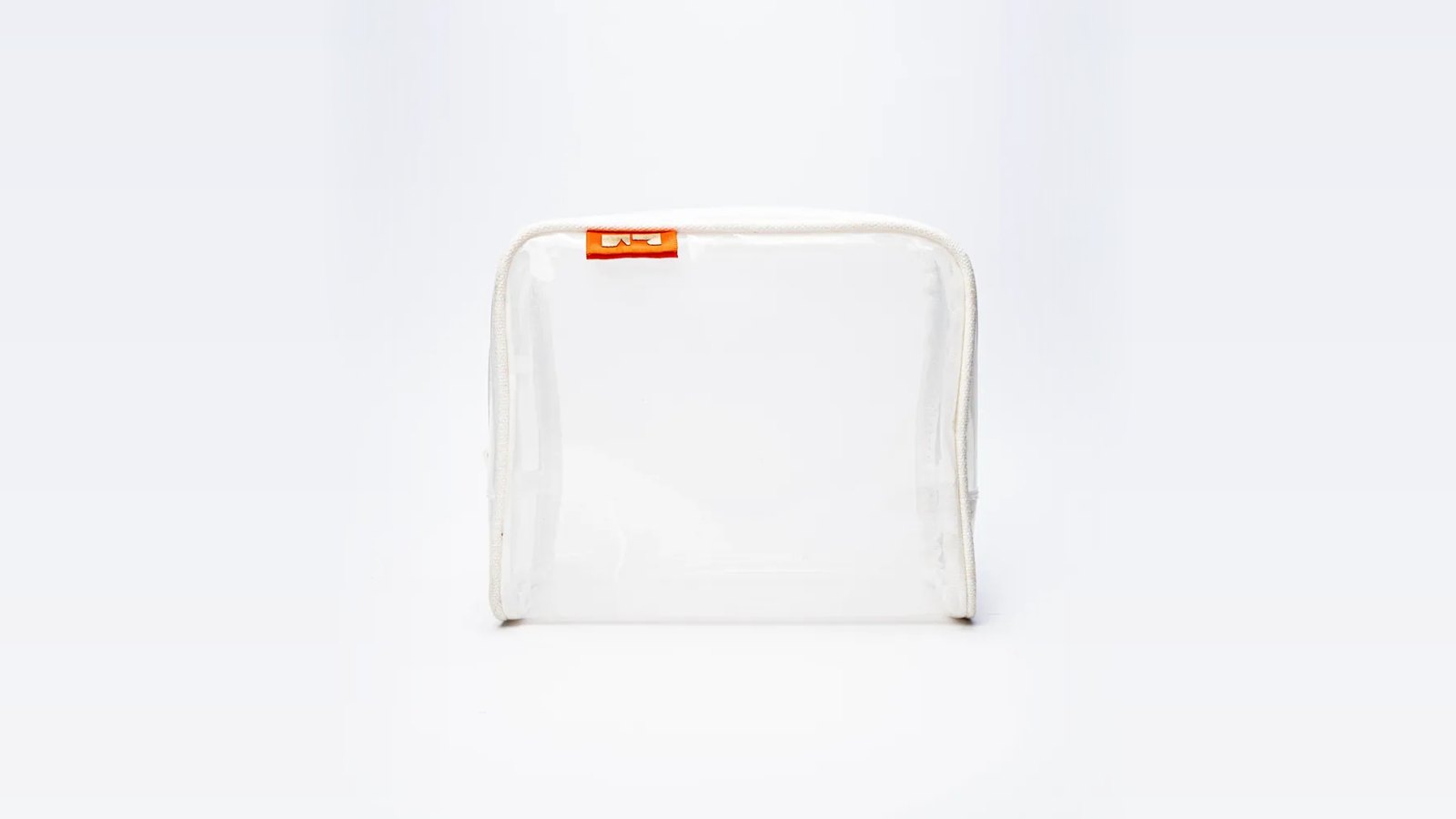
If the brief says crystal clear, PVC is usually the reference: it can be very transparent and glossy, with contents visible as if behind glass. Clear TPU can come close, though some grades carry a slight haze or a faint tint, especially in thicker film. EVA is usually translucent rather than truly clear, which many brands like for a soft-focus look that hides clutter inside the bag.
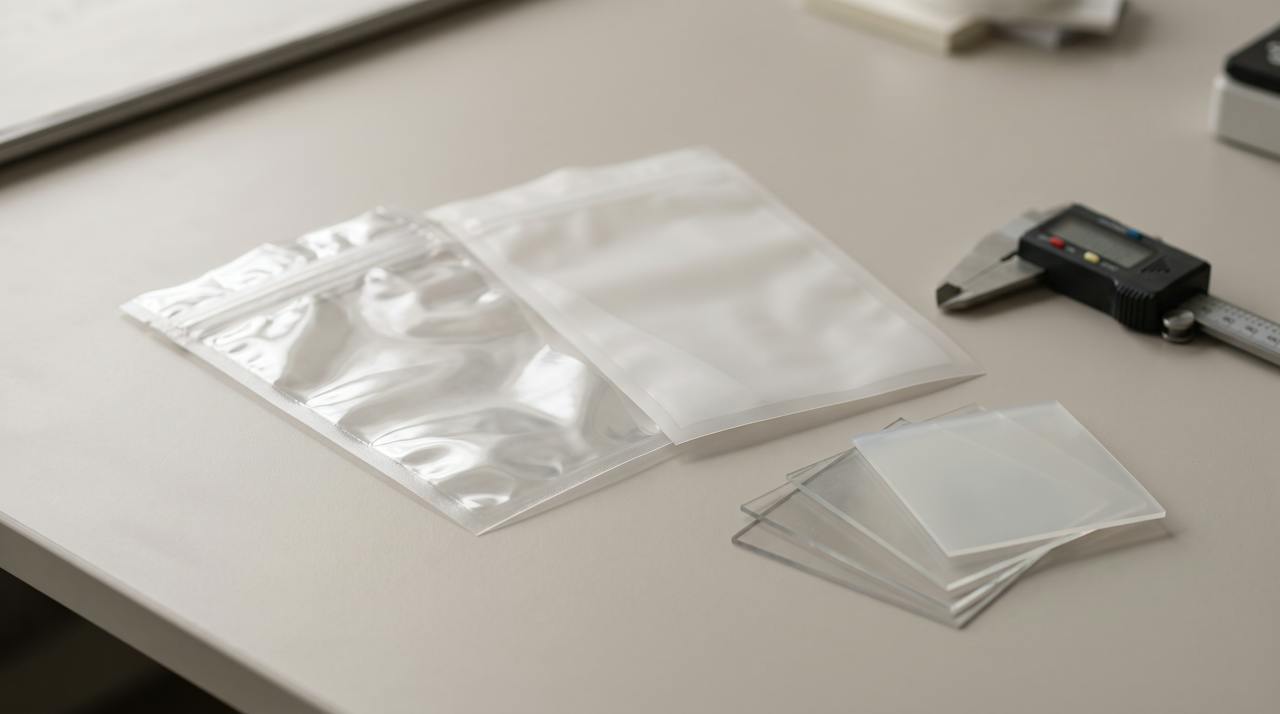
Clarity also depends on the surface finish, the thickness and how the film was handled. A matte or embossed surface reduces glare and fingerprints but also reduces clarity. Compare swatches side by side, laid over printed text and over a real product, rather than judging each one alone.
Softness, hand and smell#
PVC can be made firm or soft depending on its formulation. Firmer PVC gives a crisp, boxy bag that holds its shape; softer PVC feels more like a sheet of plastic and creases more. TPU feels soft, elastic and slightly rubbery and springs back after folding. EVA is light and soft with a slightly waxy, matte feel.
New PVC often has a noticeable smell, which a customer notices first in a closed bag freshly opened from its packaging. TPU and EVA are usually milder. Smell varies by grade and by how long the film and bags have aired, so check it on bulk-equivalent samples that have been packed the way production will be packed.
Cold weather: stiffness and cracking#
Flexible PVC becomes noticeably stiffer as the temperature drops. A bag that feels fine in a warm showroom can feel hard in winter, and repeated folding when cold can crack the film at creases, at the stitch line or along a weld. This matters for bags sold in cold markets, shipped in winter or packed in hold luggage.
TPU and EVA both stay flexible at lower temperatures, which is one of the main reasons brands move away from PVC for fully clear bags. If cold performance matters, say so in the brief and test the sample: chill it, then fold it along the seams and open and close the zip.
Yellowing and ageing#
Clear film shows any change in colour. Some TPU grades turn yellow over time with light and heat, which is far more obvious on a clear bag than on a coloured one. Grades formulated for clear, light-exposed use resist this much better, so ask for a TPU grade that is suited to clear applications and keep the approved swatch as a reference.
PVC ages differently: as plasticiser slowly migrates out, the film can stiffen, cloud or feel greasy, and it can mark printed materials it touches. EVA is generally stable in colour but can whiten where it is repeatedly stressed. No film stays new forever, so set expectations with retained samples kept in light and in the dark.
Surface tack, dust and scratches#
Glossy PVC and TPU can feel slightly tacky. Tack makes the bag pick up lint and dust, makes film panels cling to each other, and can leave a bag stuck to its neighbour in a carton. Matte, frosted or lightly embossed finishes, and anti-blocking treatments on the film, reduce tack noticeably.
TPU resists abrasion well, but any glossy film shows fine scratches and scuffs under light. PVC scratches more readily, and soft EVA marks easily. If the bag will be handled a lot in retail or rubbed against makeup tubes, a matte or frosted surface hides wear better than a high gloss.
Frosted, tinted and glitter film#
Fully clear bags do not have to be water-clear. Frosted or matte film gives a softer look, hides fingerprints and contents, and feels less sticky. Tinted film adds a brand colour while keeping the bag see-through. Glitter, iridescent and holographic films add a fashion element and are common in PVC and TPU.
Each effect changes the material: tints can shift between lots, glitter can feel rougher at the edges and may shed if the film is cut or welded badly, and iridescent effects look different under different light. Approve the actual effect film, not a photo, and agree on the shade or effect range between lots.
Thickness: agree it on the sample#
Film thickness changes everything: clarity, stiffness, how a bag stands up, how it behaves in the cold, and how easy it is to stitch or weld. Suppliers quote thickness in millimetres, microns or other trade units, and the same nominal figure can feel different in different materials.
Rather than picking a number from a chart, look at physical swatches or reference bags, choose the feel you want, and record the thickness that sample was made in as the agreed specification. A thicker film looks more premium but makes tighter corners and small pouches harder to construct, so choose it together with the shape.
Joining: stitching with binding or welding#
Clear film bags are usually joined in one of two ways. Stitching with a binding tape or piping around the edges is versatile and gives a defined, finished outline; the binding covers the raw film edge and spreads the load of the stitches. Needle holes in film can start a tear, so stitch length, binding and edge allowance matter.
Welding, such as high-frequency welding, fuses the film together without needle holes and can give clean, sealed seams. PVC welds readily this way; TPU can also be welded with suitable settings, while EVA may need a different joining approach. Ask which method suits the chosen film and shape, and check seam strength and appearance on the sample, including in the cold.
Printing on clear film#
Logos and patterns can be printed on clear film by screen printing and other methods, but the ink must be suited to the film: an ink that adheres well to PVC may rub off TPU or EVA. On a clear bag, print can sit on the outside, where it can scratch, or be reverse printed on the inside, where it is protected but reads through the film.
White or opaque ink often needs a backing layer to stay vivid on clear film. Test print adhesion by rubbing, folding and with tape, and check that the print does not transfer to the film it touches when bags are stacked.
Compliance: plasticisers and test reports#
Flexible PVC is softened with plasticisers, and some markets restrict certain phthalates and other substances in some product categories. TPU and EVA do not rely on these plasticisers, but they still need to meet the requirements of the market they are sold in. Requirements differ by country and by product type, and they change over time.
Specify compliant material for your destination market in the brief, and request test reports for the film, the print and the trims that apply to that market. If the bag is meant for travel, see clear toiletry bags and airline liquid rules for how size and closure fit in.
Packing clear bags so they arrive clear#
Clear film can arrive scratched, stuck together or printed with the pattern of its packaging. Interleaving tissue or film between bags, an individual polybag or sleeve, and avoiding heavy stacking all help. Print should not touch film directly, and bags should not be packed so tightly that panels press together in a warm container.
Trapped smell is another reason to agree packing in advance: a sealed bag of PVC film can smell strongly when opened. Agree the inner packing, how many bags go in each carton and how they are laid, and check a packed carton from the sample stage onwards.
What to specify and what to check on samples#
In the brief or tech pack, give the film type and grade, finish (glossy, matte, frosted, tinted or effect), the thickness agreed from a swatch or reference, joining method, binding and zipper, print method and position, the destination market and the test reports you need, and the packing.
On the sample, compare clarity and colour with the approved swatch over printed text. Smell the bag straight out of its packing. Chill it and fold it along the seams. Rub the print and test it with tape. Leave one sample in daylight and keep one in the dark to compare later. Then approve a sample made from the same film grade that will go into bulk.
| Property | PVC | TPU | EVA |
|---|---|---|---|
| Clarity | Very clear, glossy, glass-like | Clear; can show slight haze in some grades | Usually translucent or softly hazy |
| Hand | Firm to soft, depending on the formulation | Soft, elastic, rubbery | Soft, light, slightly waxy |
| Smell when new | Often noticeable | Usually mild | Usually mild |
| Cold weather | Stiffens; can crack at folds and seams | Stays flexible | Stays flexible |
| Ageing | Can harden or turn cloudy as plasticiser migrates | Some grades yellow with light and time | Generally stable; can whiten at stress points |
| Surface | Can feel tacky and attract dust | Can feel tacky; matte finishes help | Less tacky, can feel dry |
| Scratches and scuffs | Scratches show on glossy film | Good abrasion resistance; gloss still shows scuffs | Soft surface marks easily |
| Compliance point | Plasticiser content restricted in some markets | Confirm with test reports | Confirm with test reports |