Oxford is probably the most common fabric name on a bag spec sheet. Buyers ask for "600D Oxford" for a sturdy toiletry bag and "210D Oxford" for a lining, and suppliers quote it every day. But the word on its own says less than it seems: two fabrics both called 600D Oxford can differ in fibre, weave density, coating and finished weight, and so in hand and performance.
This note follows our guide to denier for bags and explains what Oxford means in bag fabric, how 210D, 420D and 600D Oxford differ, polyester and nylon Oxford, coatings and what labels such as "PU2" usually mean, water resistance, RPET and ripstop Oxford, colour and printing, and what to specify and check on the sample. It is written for brand buyers and developers working on pouches, toiletry bags and organisers; our travel accessories range shows some of the products Oxford is used for.
What "Oxford" means in bag fabric#
The name comes from Oxford cloth, a cotton shirting woven in a basket weave, where yarns are grouped in pairs so the surface shows a small, even checkerboard texture. Bag makers borrowed the name for a quite different fabric: a plain or basket weave of synthetic filament yarn, usually polyester and sometimes nylon, often with a coating on the back. A shirt made of Oxford cloth and a toiletry bag made of 600D Oxford share a word and a weave idea, not a material.
In bag fabric the word mainly tells you the weave. It does not tell you the fibre, the yarn thickness, how tightly the fabric is woven or what is on the back, so a specification needs more than "Oxford". The warp and weft yarns are sometimes quoted separately, for example 600D×600D, and a fabric with a finer yarn in one direction will feel and wear differently from one with the same yarn both ways.
210D, 420D and 600D Oxford: hand, thickness and typical uses#
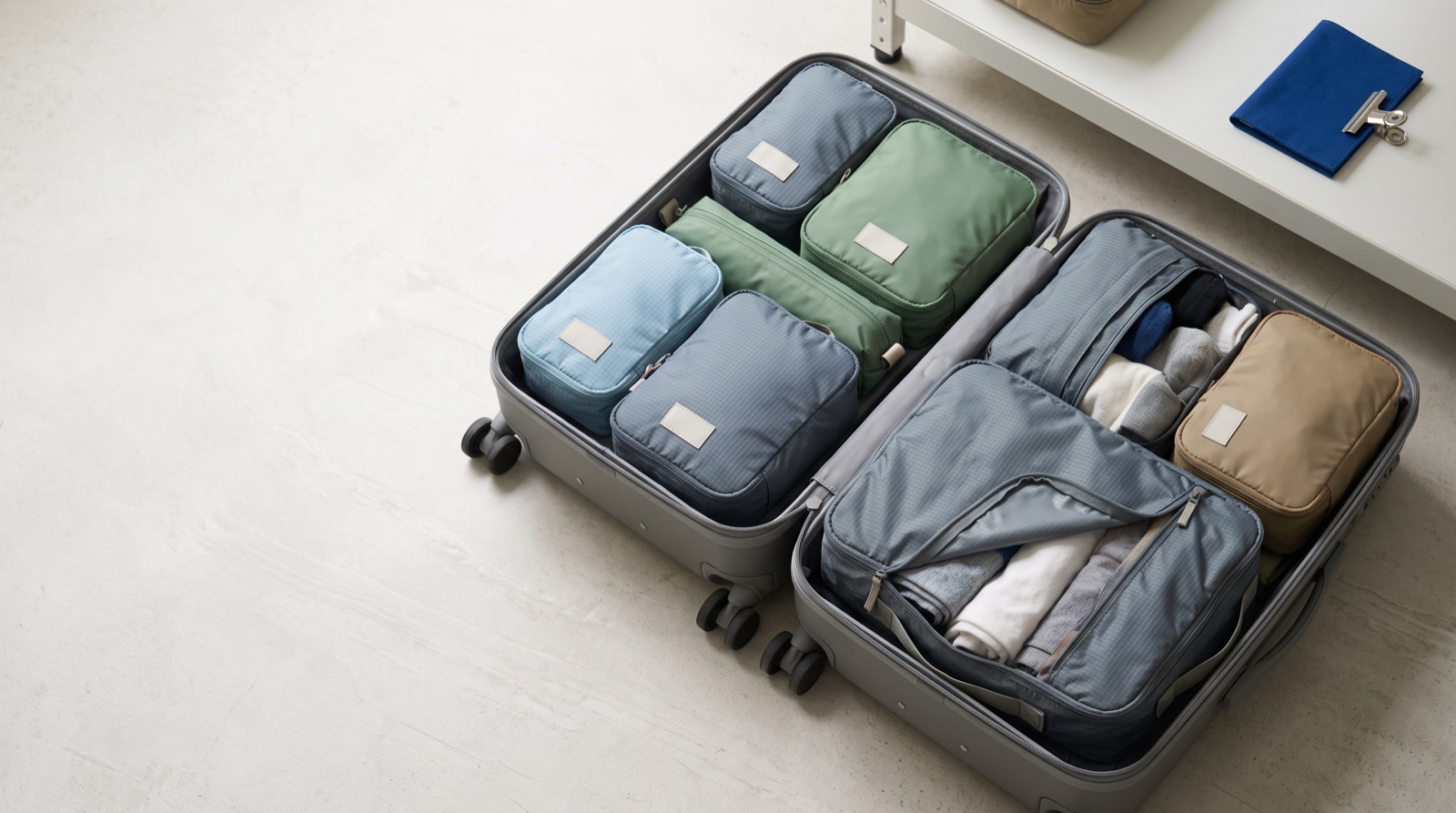
210D Oxford is woven from fine yarns. It is thin, light and smooth, folds easily and is a common choice for linings, small flat pouches and packing cubes. As an outer shell it can look and feel light, so it is often combined with an interlining or foam when the bag needs more body.
420D Oxford is a middle weight. It has a visible weave but still sews neatly into small shapes, and many pouches, toiletry bags and travel organisers use it. 600D Oxford is woven from thick yarns and has a coarser, clearly textured surface. It holds its shape, resists abrasion well and suits larger toiletry bags, totes, backpacks and cases, but on a small pouch it makes bulky seams and stiff corners. For a broader comparison of fibres for wash bags, see nylon, polyester or canvas for toiletry bags.
How thick is 600D Oxford?#
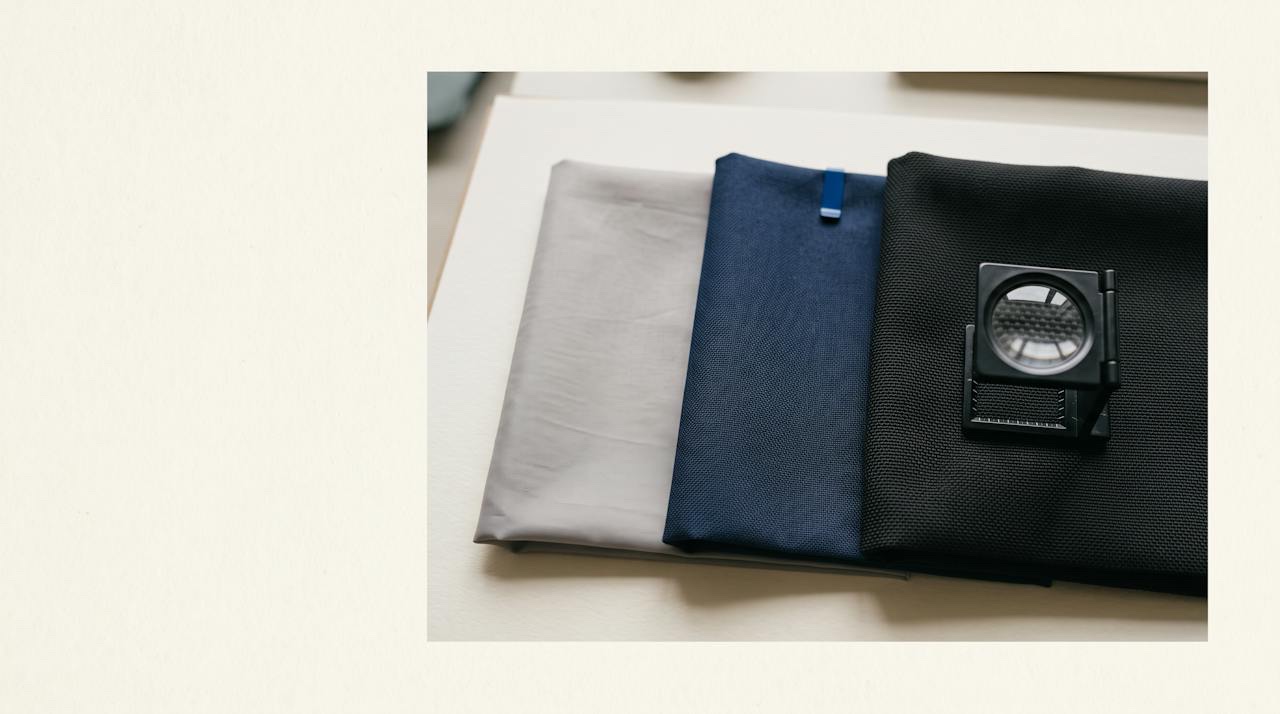
Buyers often ask how thick 600D actually is. In everyday terms, 600D polyester Oxford is the sturdy, slightly coarse fabric you find on many school backpacks, promotional bags and soft cases: clearly thicker and stiffer than a shirt or lining fabric, lighter and softer than heavy ballistic fabrics such as 1680D. Next to 210D it feels noticeably fuller, and you can see and feel the weave.
It is hard to give a single thickness figure, because denier describes the yarn, not the fabric. The weave density and the coating change the finished thickness and weight a great deal: a loosely woven, lightly coated 600D can feel thinner than a dense, heavily coated 420D. That is why the most reliable approach is to agree the finished fabric weight, usually in grams per square metre, and the hand on a physical swatch, rather than relying on the denier number alone.
Polyester or nylon Oxford#
Most Oxford used in bags is polyester. It is widely available in many colours, holds colour well, takes coatings and prints reliably, and is a practical choice for most pouches and toiletry bags. Nylon Oxford is usually smoother and softer, often with a slight sheen, and nylon is generally regarded as tougher for its weight, which is why it appears on lighter travel bags and products meant to feel more premium.
The two fibres also behave differently in production. They take dye differently, so a nylon shell and a polyester lining or trim dyed to the same reference can still look different side by side. Nylon can also absorb a little more moisture. If the bag mixes fibres, approve the colours on the actual fabrics together.
Coatings: PU, PVC and PA or acrylic, and what "PU2" means#
Much bag Oxford is coated on the back. A PU (polyurethane) coating is the most common: it is thin, flexible and adds some body and water resistance without making the fabric very stiff. A PVC coating is heavier and stiffer, often with a glossier back, and gives a strongly water-resistant, wipe-clean fabric, but it can crack in the cold and some brands restrict PVC in their material policies. A PA or acrylic coating is light and is mainly used to give the fabric body and a firmer hand, with some water resistance.
Labels such as "PU2", "PU×2" or "double PU" are trade shorthand that usually means the coating was applied in two passes, so it is generally heavier and more water-resistant than a single pass. The exact meaning, and how much coating each pass adds, varies between mills, so treat the label as a description to confirm, not a standard. You may also see silver or white-backed coatings, which are a colour choice for the coating rather than a different fabric. Every coating makes the fabric stiffer, so choose it together with the shape and hand you want.
Water resistant is not waterproof#
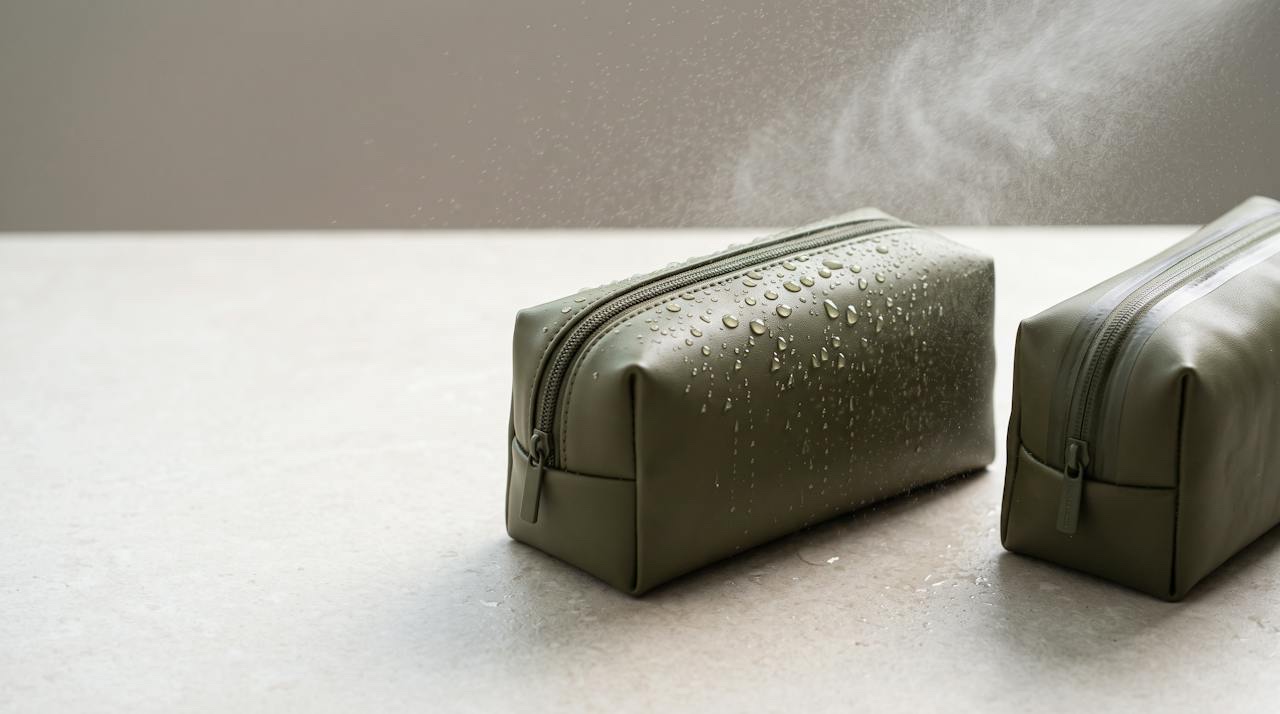
A coated Oxford fabric can resist water well, but a bag made from it is not automatically waterproof. Water can pass through needle holes along the seams, through the zipper and around trims, and a coating that cracks at a fold lets water through as well. A water-repellent finish on the face makes water bead up and run off, which is different again.
Decide what the bag really needs to do: survive splashes on a bathroom counter, hold a leaking bottle, or stay dry in rain. Then agree that level with your supplier and test it on the sample. Our note on waterproof vs water-repellent wash bags explains the differences and what seam sealing, welded construction and zippers add.
RPET Oxford and ripstop Oxford#
RPET Oxford is woven from recycled polyester yarn and, in use, looks and behaves much like virgin polyester Oxford of the same construction. It is available in the common deniers and can be coated and printed in the same ways. Shades may vary a little more between lots, and any recycled-content claim on the product or hangtag needs supporting documents from the material supply chain, so ask for them before you print the claim.
Ripstop Oxford has heavier yarns woven in at regular intervals, forming a small grid that helps stop a tear from spreading. It gives a more technical, outdoor look and suits travel organisers and active-style pouches. The grid shows through solid colours and prints, which can be part of the look or a distraction, so judge it on a swatch.
Colour and printing on Oxford#
Polyester Oxford is usually piece-dyed, so a wide range of solid colours is possible, and custom colours are matched with lab dips on the actual fabric. A coloured coating on the back can show at cut edges and inside the bag, so say whether the coating should be clear, matched or a contrast colour such as silver or white.
Screen printing works well for logos and simple graphics on the face of Oxford; the coarser the weave, the softer fine lines become, so a 600D surface suits bolder artwork than 210D. Heat transfer allows detailed or full-colour designs but should be tested for adhesion and cracking. All-over prints are usually done by sublimation on white polyester before the fabric is coated, which does not work the same way on nylon. Embroidery suits heavier Oxford, while light 210D may pucker without a backing.
How to specify Oxford and what to check on the sample#
In the brief or tech pack, specify the fibre (polyester, nylon or RPET), the denier, including warp and weft if they differ, the weave (plain, basket or ripstop), the coating type, number of passes and colour, any water-repellent finish, the colour reference, and the print or decoration method. Then agree the finished weight and the hand on a physical swatch, and keep that approved swatch as the reference for bulk.
On the sample, compare the fabric with the approved swatch for weight, stiffness and shade. Fold the fabric sharply and rub the folds to see whether the coating cracks, whitens or peels, especially at corners and along seams. Look at the needle holes: on coated fabric they stay visible and can let water through, and a needle or stitch density that is too heavy can weaken the fabric along the seam. Check that cut edges are bound or finished so the Oxford does not fray. Pour a little water into the bag and see where it goes. Then approve a sample made from the same fabric and coating that will go into bulk.
| Oxford option | Look and feel | Good for | Watch for |
|---|---|---|---|
| 210D polyester Oxford | Thin, light, smooth, fine weave | Linings, small flat pouches, packing cubes | Can look flimsy as a shell; may need interlining |
| 420D polyester Oxford | Medium body, visible but tidy weave | Pouches, toiletry bags, travel organisers | Hand varies a lot with weave density and coating |
| 600D polyester Oxford | Thick, coarse, clear basket texture | Larger toiletry bags, totes, backpacks, cases | Bulky seams on small pouches; frays at cut edges |
| Nylon Oxford | Smoother, slight sheen, softer hand | Lighter travel bags, premium-feel pouches | Dyes differently from polyester; colour matching across parts |
| Ripstop Oxford | Small grid of heavier yarns in the weave | Travel organisers, outdoor-style pouches | Grid shows through prints; looks more technical |
| RPET Oxford | Similar to virgin polyester Oxford | Ranges with a recycled-content story | Recycled claims need supporting documents; shade may vary |
| PVC-backed Oxford | Stiffer, heavier, glossy back | Wipe-clean, splash-resistant bags | Stiffness, cracking in cold, brand material policies |