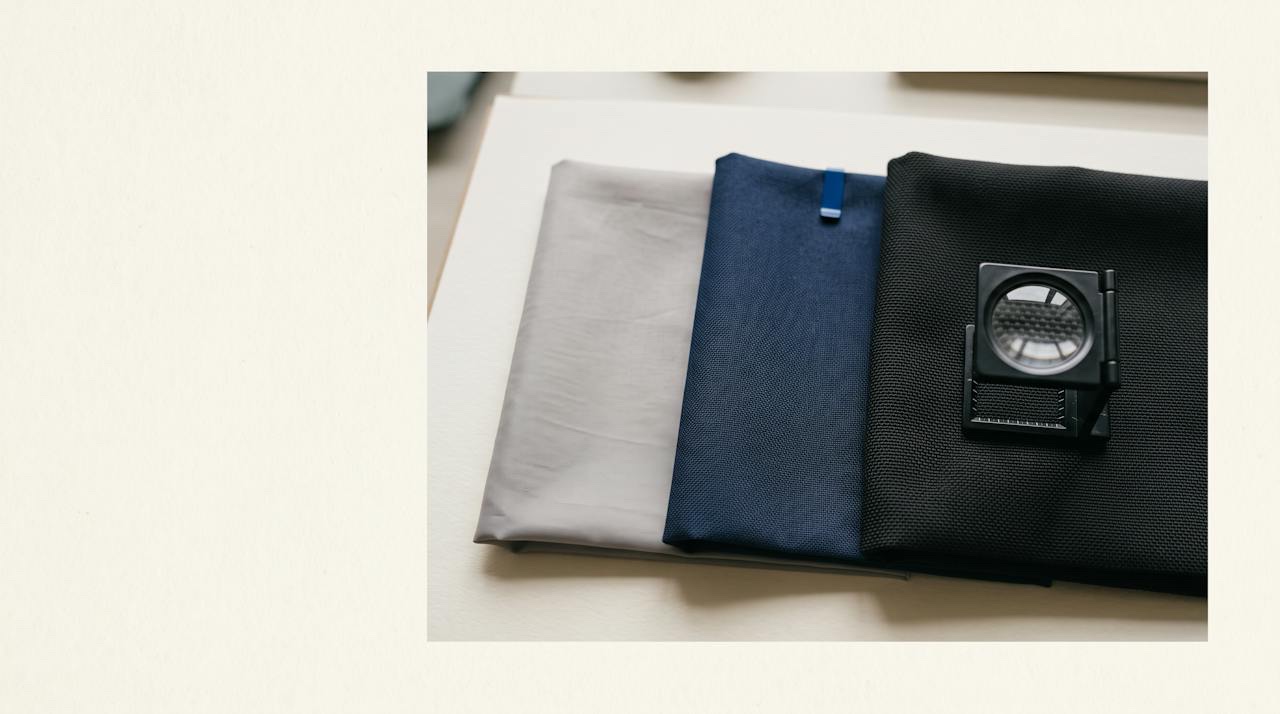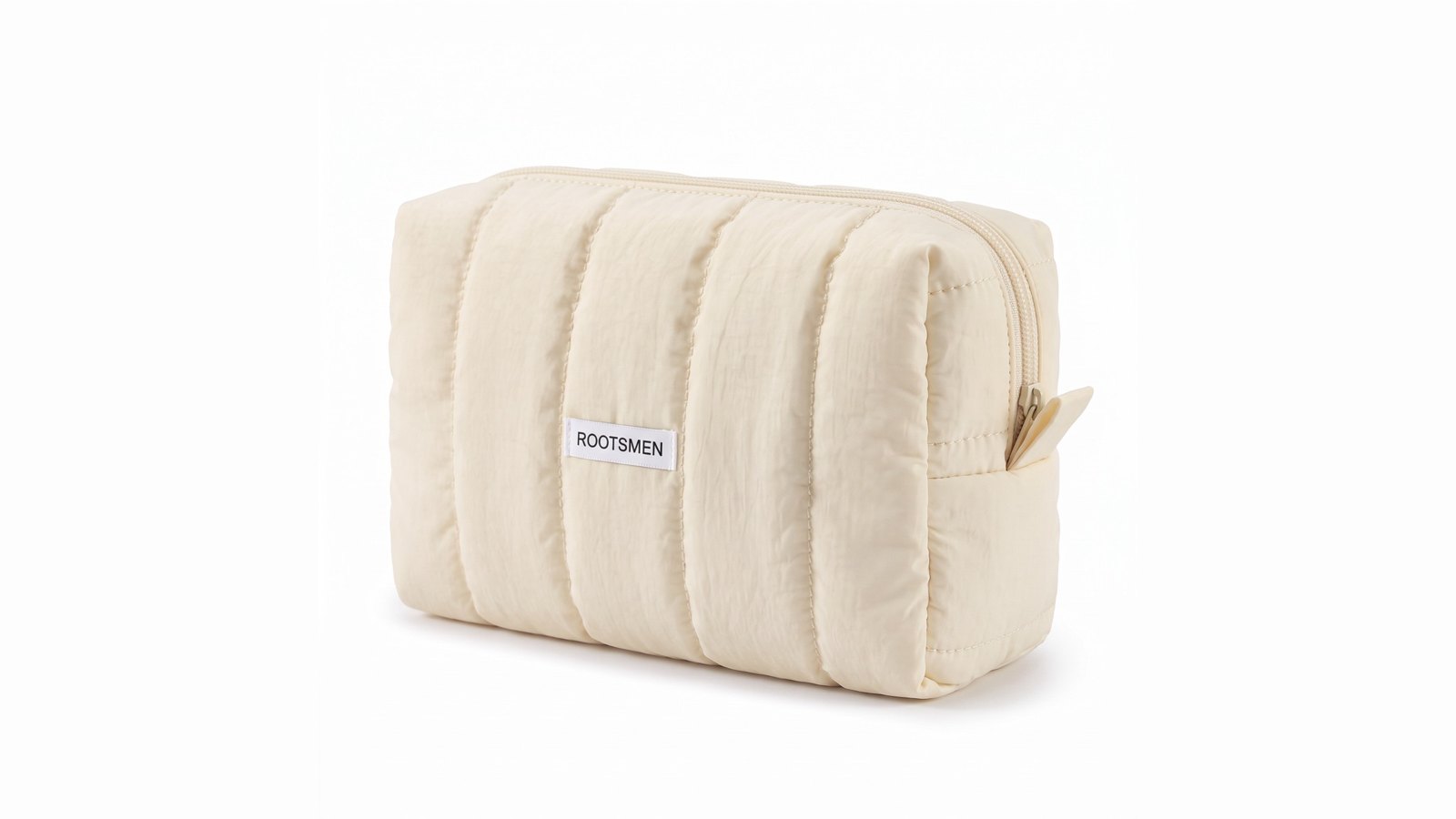
A toiletry bag looks like a simple pouch, but it has a harder life than most bags. It sits on wet bathroom counters, hangs on hooks near the shower, gets squeezed into a suitcase and carries bottles that sometimes leak. The shell fabric is the first choice a buyer makes, and nylon, polyester and cotton canvas are the three that come up most often.
This note compares the three for toiletry and wash bags, explains how denier, weave, coatings and laminates change their behaviour, and covers linings, seams, structure, hooks and the tests to agree on the sample. It is written for brand buyers and product developers working on a custom wash bag; our travel accessories range shows some of the shapes these fabrics are used for.
What a toiletry bag has to survive#
Start from use, not from the fabric list. A wash bag is exposed to splashes and damp surfaces, to wet items put back in after a shower, and to leaking shampoo, lotion or toothpaste inside. It is packed tightly into luggage, rubbed against other contents, and opened and closed many times. It also needs to be cleaned: most people wipe a wash bag rather than wash it.
So the questions are: how much water will the outside meet, what happens when something leaks inside, how hard will it be packed, and how will it be cleaned? The answers decide not only the shell fabric, but also the coating, the lining and how the seams are made.
Nylon: smooth, strong and easy to coat#
Nylon is a strong synthetic with a smooth surface and good abrasion resistance for its weight. It slides easily into luggage, resists scuffing at the corners and takes PU coatings and laminates well, which makes it a common choice for travel wash bags and hanging toiletry kits. It dries quickly and wipes clean easily.
Nylon tends to have a slight sheen and a technical look, which suits travel and outdoor styles. Quilted or ripstop nylon gives a softer or sportier character. Some colours can fade with long exposure to strong light, so if colour matters, compare shades on the actual fabric rather than on a card.
Polyester and RPET: colour stability and value#
Polyester is the most widely used fabric for wash bags and cosmetic pouches. It holds dyed colour well, prints cleanly and is cost-efficient, which is why it dominates gift sets and promotional toiletry bags. It is available in a very wide range of yarns and weaves, from plain oxford to brushed, quilted or jacquard faces.
Recycled polyester, usually called RPET, behaves much like virgin polyester for this use and lets a brand tell a recycled-material story. Ask the supplier what documentation supports the recycled content, and approve the shade on the actual RPET fabric, because recycled yarns can vary a little between lots. In everyday use the practical difference between nylon and polyester is smaller than the difference made by weave, coating and lining.
Cotton canvas: a natural look that needs protection#
Cotton canvas gives a toiletry bag a warm, natural look and a hand that synthetics do not have. It takes screen print, embroidery and woven labels well. But untreated cotton absorbs water, stays damp, can mark and can shrink if washed.
For bathroom use, a canvas toiletry bag usually needs a PU coating or lamination on the shell, a waterproof lining, or both. Waxed canvas is another option for a heritage look, but it should not be machine-washed. If the bag is meant to be washable, agree the acceptable shrinkage on the sample and make sure the lining behaves well alongside the canvas.
Denier and weave, without the jargon#
For nylon and polyester, denier describes how thick the yarn is. Higher-denier fabrics are generally heavier, stiffer and more abrasion-resistant; lower-denier fabrics are lighter, softer and fold more easily. For a small wash bag, a very heavy fabric can make bulky seams and stiff corners, while a very light one may need interlining to keep its shape. Our note on denier explained goes into the numbers.
Weave matters as much as denier. A plain or oxford weave is smooth and versatile, ripstop adds a grid that limits tears, and twill or textured weaves change the look and hand. Two fabrics with the same denier can feel very different, so choose from a physical swatch.
Coatings and laminates#
Most wash-bag shells are coated or laminated. A PU coating on the back of the fabric slows water passing through and is common on nylon and polyester. A TPU lamination bonds a thin film to the fabric, giving a smoother, more water-resistant surface that wipes clean, and is used both on shells and on linings.
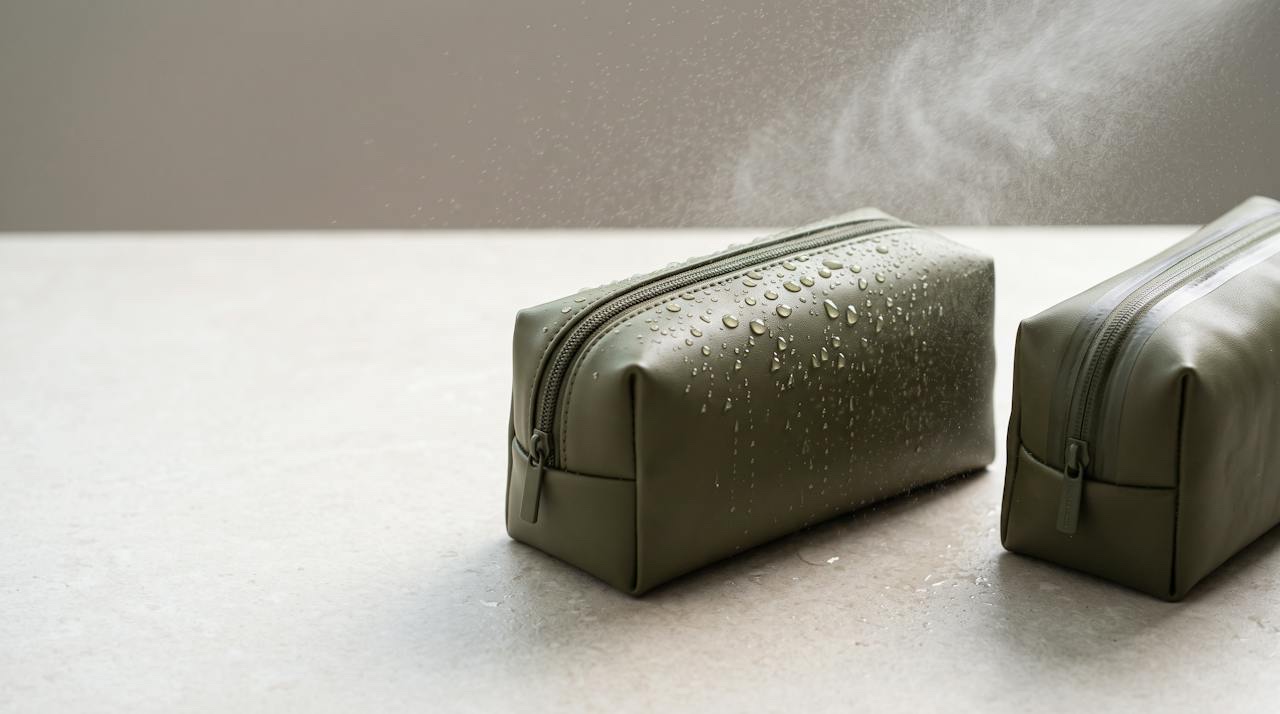
Coatings change the hand, usually making the fabric stiffer, and can crack at folds or lift at seams if the bond is weak. They also do not make a bag waterproof on their own, because water gets in through stitch holes and zippers. Our note on waterproof vs water-repellent wash bags explains the difference and how far construction can go.
Linings, seams and wipe-clean interiors#
For a toiletry bag, the lining often matters more than the shell. A PU-coated polyester, PEVA or TPU-laminated lining keeps leaks inside the bag and can be wiped out. A plain fabric lining looks softer but absorbs spills. Light-coloured linings show stains, while darker ones hide them but make contents harder to see.
Seams are where leaks escape. Bound or taped seams, fewer seams in the base, and a lining that is constructed as a separate liner rather than stitched through with the shell all help. Ask how the seams of the lining are finished, and whether the zipper area is covered, because that is where most wipe-clean interiors fail.
Structure and a bag that stands up#
Many people want a toiletry bag that stands open on a counter so the contents are easy to reach. A heavier or laminated shell helps, but structure usually comes from construction: a gusseted or boxed base, a foam or board insert in the base, interlining between shell and lining, or a frame along the opening.
Each of these adds bulk and can make the bag harder to clean or pack. Decide whether the bag should stand, fold flat or hang, and check on the sample how it behaves when full and when nearly empty.
Sizes and hanging hooks#
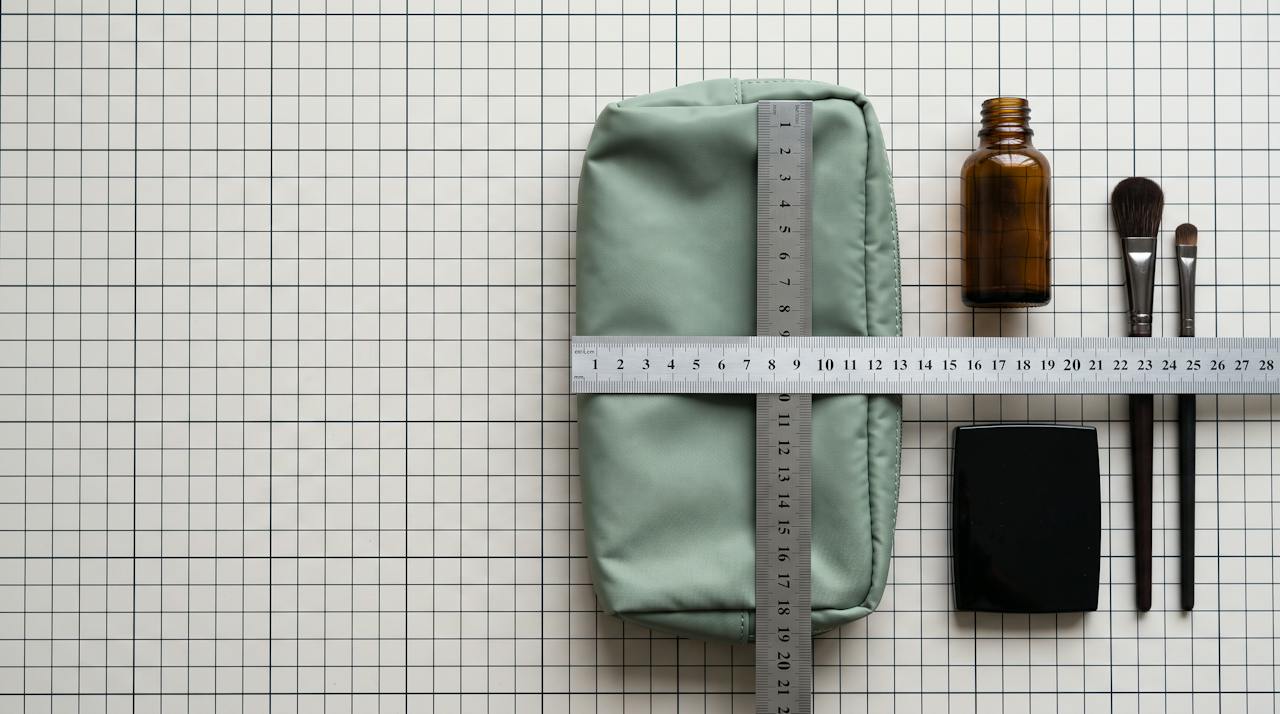
Size follows the contents. A bag for a few travel-size bottles and a toothbrush can be compact; a bag that must hold full-size bottles, a razor and a hairbrush needs more height and a wider base. Measure the actual items, including the tallest bottle standing upright, rather than relying on a standard size. Our guide to cosmetic bag sizes and dimensions covers how to brief them.
A hanging hook is useful where counter space is short. Metal hooks are firm but can scratch and should be checked for finish; plastic hooks are lighter. Check how the hook is attached, because a full bag hanging from one point puts load on that seam, and agree on the sample that the hook and its attachment carry the bag when full.
What to specify and what to test on the sample#
In the brief or tech pack, give the shell fabric (fibre, denier or weight, weave), any coating or lamination and which side it is on, the lining material and how its seams are finished, the zipper type, any structure or insert, the hook, the colours, the decoration method and the intended care: wipe only or washable.
On the sample, run simple tests that match real use. Splash or briefly wet the outside and check what comes through. Pour a little water into the lining and leave it to see whether it stays inside. Wipe the interior with a damp cloth and a mild cleaner and check for marks, peeling or colour loss. Fold the coated fabric at the corners and look for cracking. Agree the acceptable result for each test on the sample, then approve a sample made from the same materials that will go into bulk.
| Shell fabric | Strengths | Good for | Watch for |
|---|---|---|---|
| Nylon | Smooth, strong, good abrasion resistance, takes coatings well | Travel wash bags, hanging kits, bags that are packed and wiped often | Some shades fade in strong light; sheen may look technical |
| Polyester | Good colour stability, wide colour and print range, cost-efficient | Printed pouches, gift and promotional sets, everyday wash bags | Hand varies widely by yarn and weave; can feel plain unless finished |
| Recycled polyester (RPET) | Similar behaviour to polyester with recycled content | Ranges with a recycled-material story | Ask what documentation backs the recycled claim; shade can vary |
| Cotton canvas | Natural look and hand, takes print and labels well | Natural-look ranges, dry-use or lined bags | Absorbs water, shrinks, needs coating or a waterproof lining |
| PU-coated fabric | Coating on the back slows water passing through | Splash-resistant shells on any of the above | Stiffer hand; coating can crack at folds or lift at seams |
| TPU-laminated fabric | Film bonded to the fabric, smooth and wipeable | Wipe-clean shells and waterproof linings | Seams and zipper still need attention; check bond at folds |