The zipper is the part of a cosmetic bag people touch every time they use it, and it changes the look of the bag more than its size suggests. The three choices buyers ask about most are nylon coil, metal and invisible zippers, and each behaves differently on a small bag with curves, corners and spills to cope with.
This note compares those three, with a short look at moulded plastic and water-resistant coated zippers, tape and puller options, which zipper suits which bag, and what to specify and test. For the wider picture of sliders and pullers, see how to choose a zipper for a cosmetic bag; for sizes, see our zipper gauge guide. Our cosmetic bag range shows these zippers in use.
Nylon coil zippers: the flexible default#
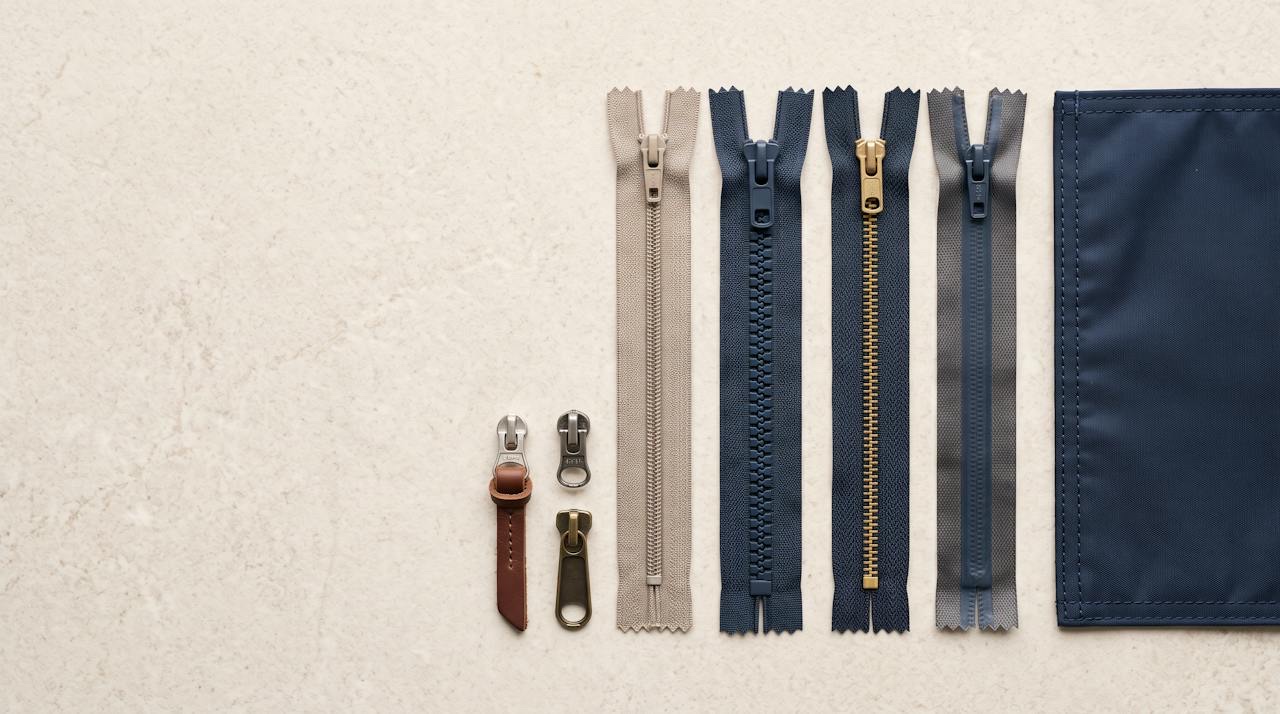
A nylon coil zipper has teeth formed from a continuous spiral of nylon stitched to the tape. Because the coil bends easily, it runs smoothly round curved openings and the boxed corners of a vanity case, and it stays light and quiet in use. It is also the easiest type to colour-match: tape, coil and slider can be dyed or chosen to suit the bag, or set in contrast as a design feature.
Coil zippers are forgiving to a degree. If a coil is forced out of line, running the slider back over it can often bring the teeth back together, which a broken metal or moulded tooth cannot do. The weak point is usually the slider rather than the coil, so a well-made slider matters as much as the zipper itself.
Metal zippers: premium look, practical trade-offs#
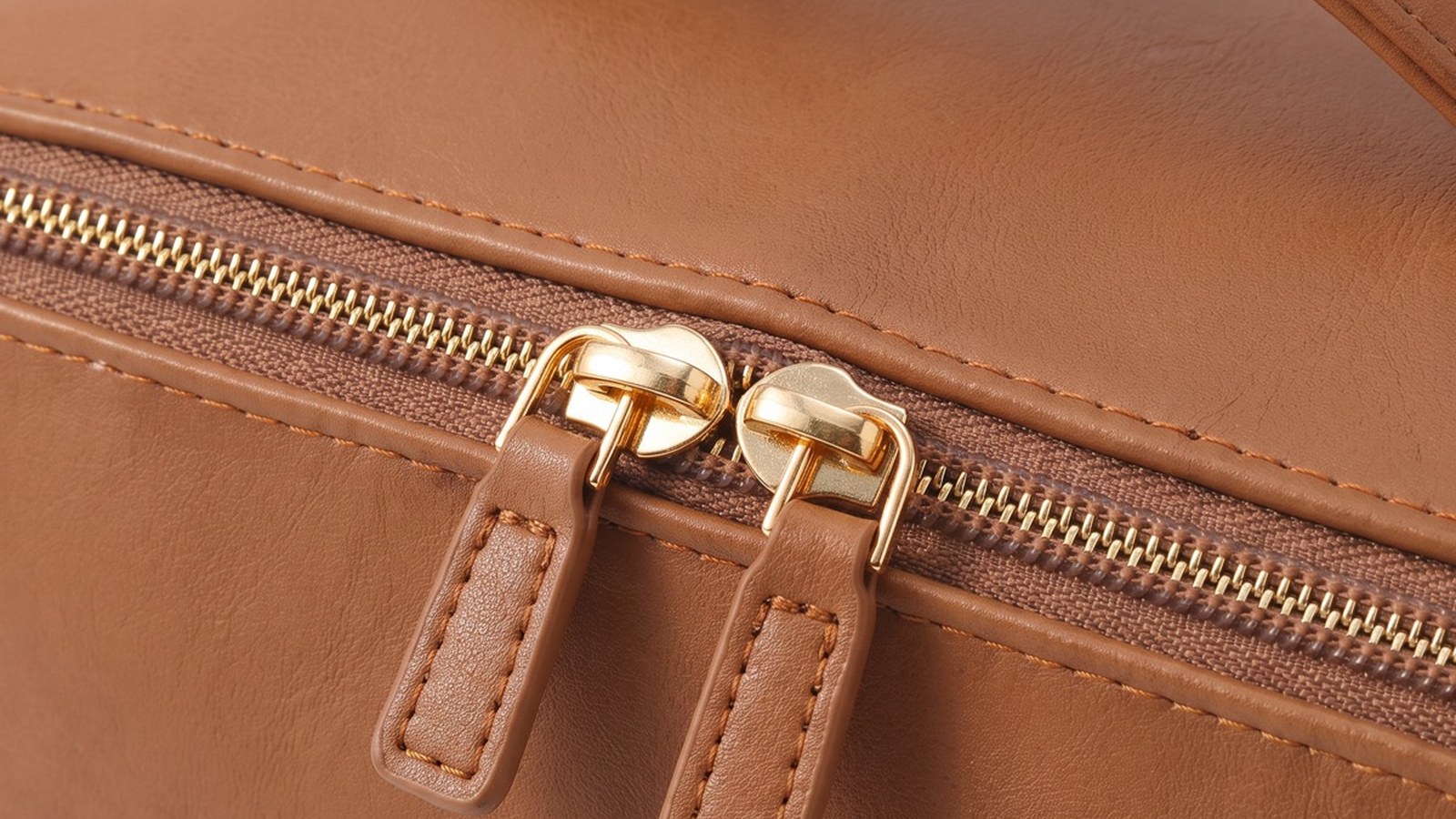
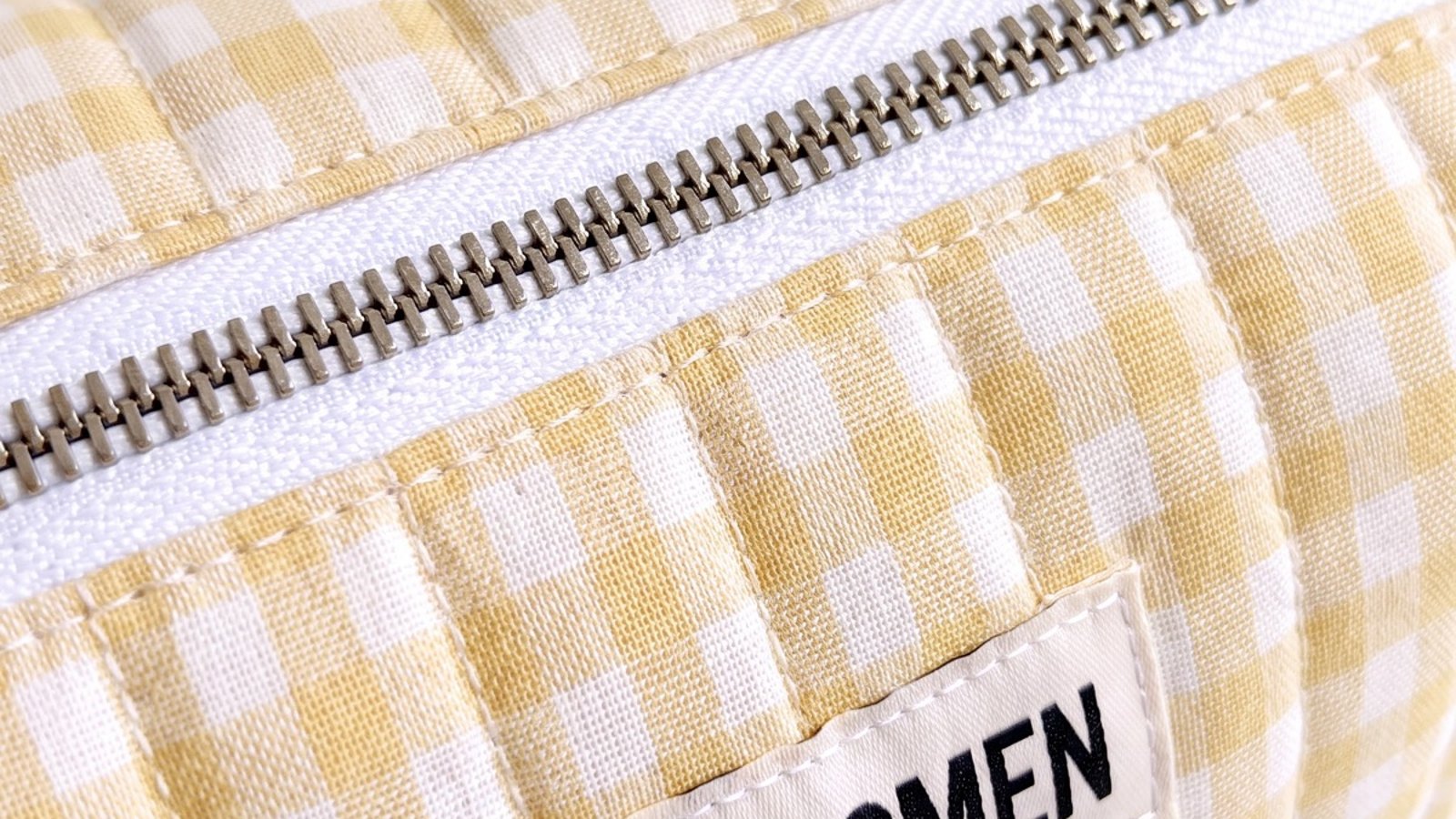
Metal zippers have individual teeth clamped onto the tape, commonly in brass or aluminium, with finishes from bright or polished to antique brass, gunmetal and other plated or coated looks. They give a bag a crafted, substantial feel that suits premium ranges, leather-look materials and heritage styles, and they pair well with a metal puller or hardware.
The trade-offs are practical. Metal is heavier and colder in the hand, the teeth can scratch fingers, mirrors and compacts, and the finish depends on plating and coating choices that need to be agreed and checked. Metal teeth also bend less willingly round tight radii, so they work best on straight or gently curved top openings; on a boxed corner they can feel stiff or snag. Some finishes can tarnish or wear at the slider path over time, so approve the finish on a sample, not from a colour card.
Invisible (concealed) zippers: a clean seamline#
An invisible or concealed zipper is a coil zipper whose teeth sit on the back of the tape, so from the outside only a fine seam and the puller show. It gives a minimal, tailored look and lets a print or fabric run almost uninterrupted across the opening.
The teeth are smaller and the construction lighter than a standard coil, so an invisible zipper is less robust on a bag that is stuffed full and opened many times a day. It also needs careful sewing close to the teeth. It suits slim pouches, inner pockets and light-use designs better than a busy wash bag.
Moulded plastic and water-resistant coated zippers#
Moulded plastic zippers have individual teeth moulded directly onto the tape. They look chunky and sporty, come in bold colours and are tough on straight runs, but they are bulkier and less flexible round tight corners than a coil.
Water-resistant zippers are usually coil zippers with a coated or laminated tape, sometimes with the coil turned to the back so the coated face shows. They slow splashes from getting in or out of a wash bag, but they pull more stiffly and are water-resistant rather than waterproof: water can still pass at the slider and the ends. Agree the level you need and test it on the sample.
Tape, pullers and custom branding#
The tape is part of the look. It can be dyed to match or contrast with the bag, chosen in a different texture, or coated for water resistance, and the way it is finished at the ends, bound, folded or covered with a tab, affects how neat the bag looks.
Pullers are the easiest place to add a brand. Options include a standard metal or plastic puller in a matching finish, a cord or fabric loop, a printed or debossed tab, or a custom metal or rubber puller carrying a logo. A custom puller needs its own design and approval and adds weight, so decide early whether a branded tab on a standard puller will do the job.
Matching the zipper to the bag#
Flat pouch: almost any type works on a straight top opening. Nylon coil is the practical choice, metal adds a premium touch, and an invisible zipper gives a clean look on a light-use pouch.
Boxed vanity case: the zipper usually runs round curved corners, where nylon coil is the most comfortable choice; metal and moulded teeth can feel stiff there. Our comparison of box pouch and flat pouch construction explains how the opening changes. Wash bag: a sturdy nylon coil or a water-resistant coated coil suits damp, heavy daily use. Clear PVC bag: a colour-matched or contrast coil keeps the look light, and the tape and stitching need to be neat because everything shows.
What to specify and what to test#
In the brief or tech pack, give the zipper type, the size as agreed on the sample, tape colour and finish, teeth and slider finish, puller type and any branding, whether the zipper is one-way or two-way, and how the ends are finished, including the end stops and any tabs. Send a reference zipper or bag if you have one.
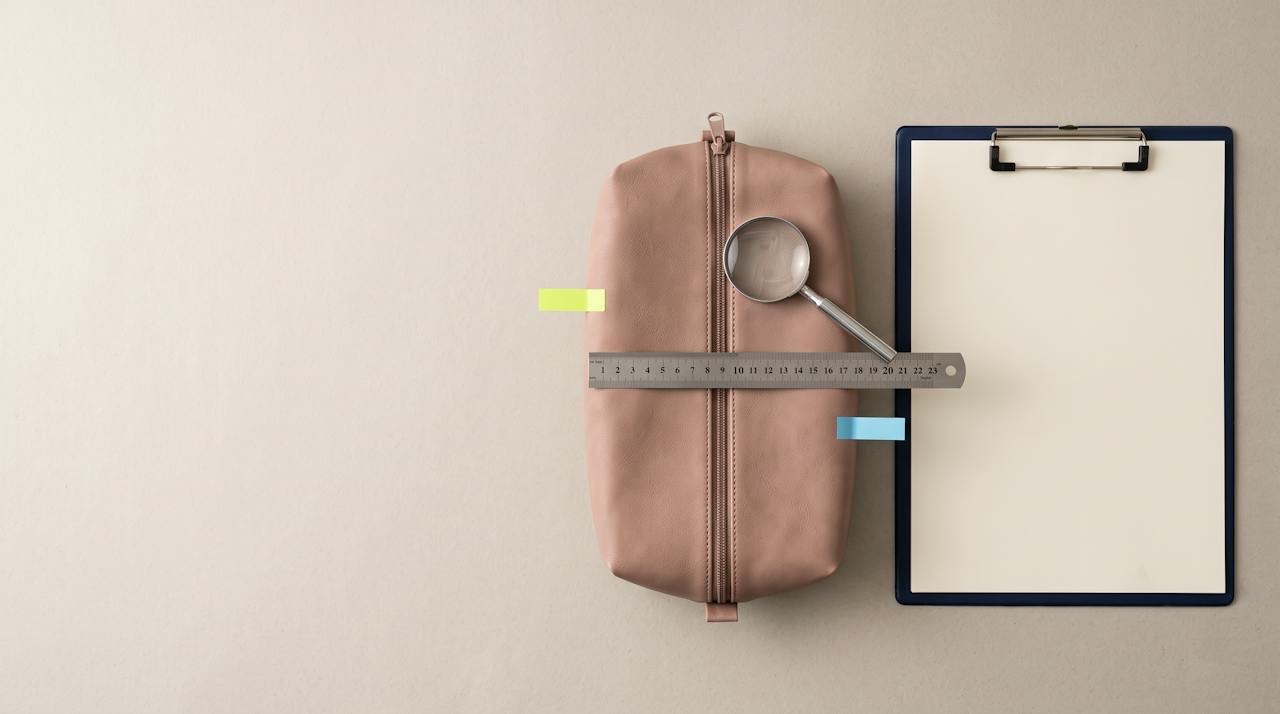
On the sample, open and close the zipper many times and feel for catching or roughness. Pull it round the corners with the bag full, check that the teeth meet evenly along the whole length and that the tape lies flat without puckering. Look at the plating or coating on metal teeth, sliders and pullers for even colour, chips and sharp edges. Our note on what to check when your first samples arrive covers the rest of the sample review.
| Zipper type | Look and feel | Good for | Watch for |
|---|---|---|---|
| Nylon coil | Light, soft, quiet, flexible | Most pouches, boxed corners, curved openings, colour-matched designs | Can look plain; a cheap slider spoils the feel |
| Metal (brass, aluminium, antique finishes) | Weighty, crafted, cool to the touch | Premium flat pouches and straight top openings | Weight, scratching, plating wear, stiffness on tight curves |
| Invisible (concealed) coil | Teeth hidden, clean seamline | Minimal designs and light-use pouches | Smaller teeth, less robust under heavy daily use |
| Moulded plastic teeth | Chunky, sporty, bold colour | Casual and outdoor-style bags, straight runs | Bulkier, less flexible round tight corners |
| Water-resistant coated coil | Smooth coated face, technical look | Wash bags and splash-prone pouches | Stiffer pull; resistance, not waterproofing, at the slider and ends |