A pencil case and a cable organiser look like small, simple products, yet they are among the most-handled items people own. They are opened many times a day, packed into bags with heavier things, and expected to keep their contents in order. A pouch that looks neat on the drawing can still fail if the zipper is too light or the loops do not fit the cables they were drawn for.
This note covers the main shapes, fabrics and interior layouts for custom pencil cases and tech or cable organiser pouches, how to protect chargers and drives, how to size zippers and loops, and what to test on the first samples. It is written for brand buyers, stationery and gift buyers, and product developers who want to specify these products clearly, whether they are briefing a custom pencil case manufacturer or a cable organizer bag OEM for a custom tech organizer pouch.
Shapes: flat, box, triangular, roll, stand-up and multi-layer#
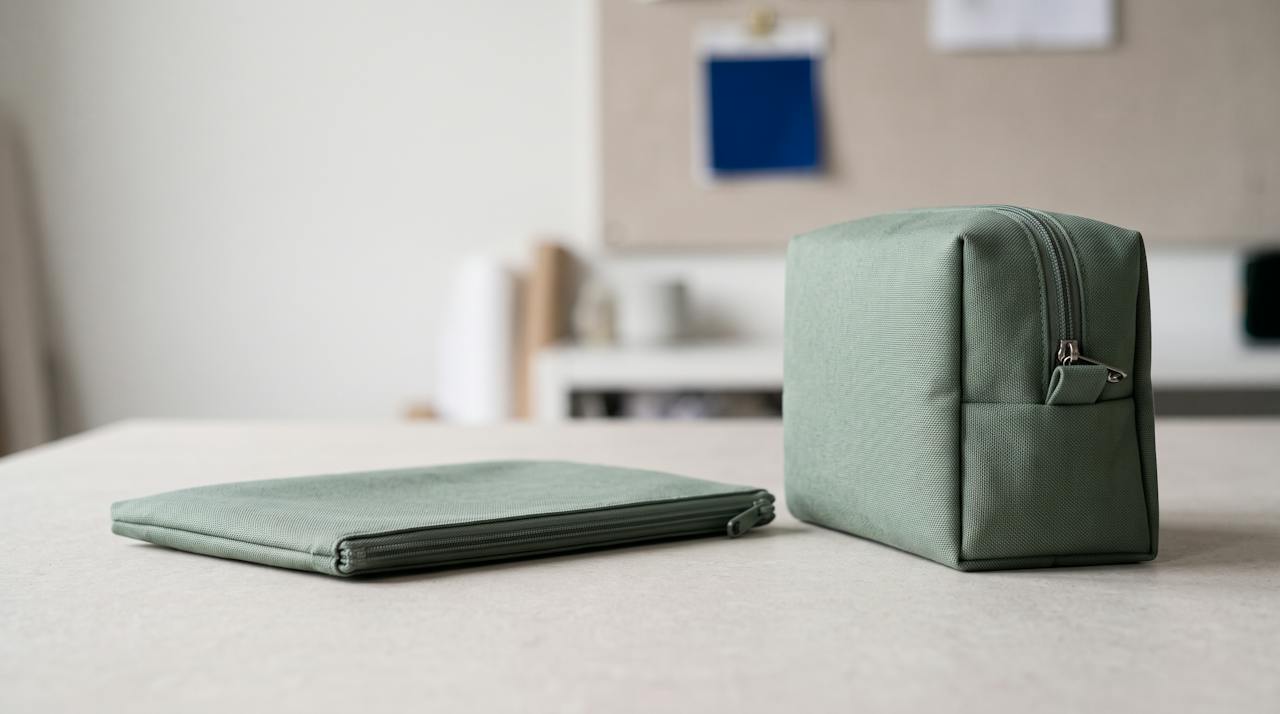
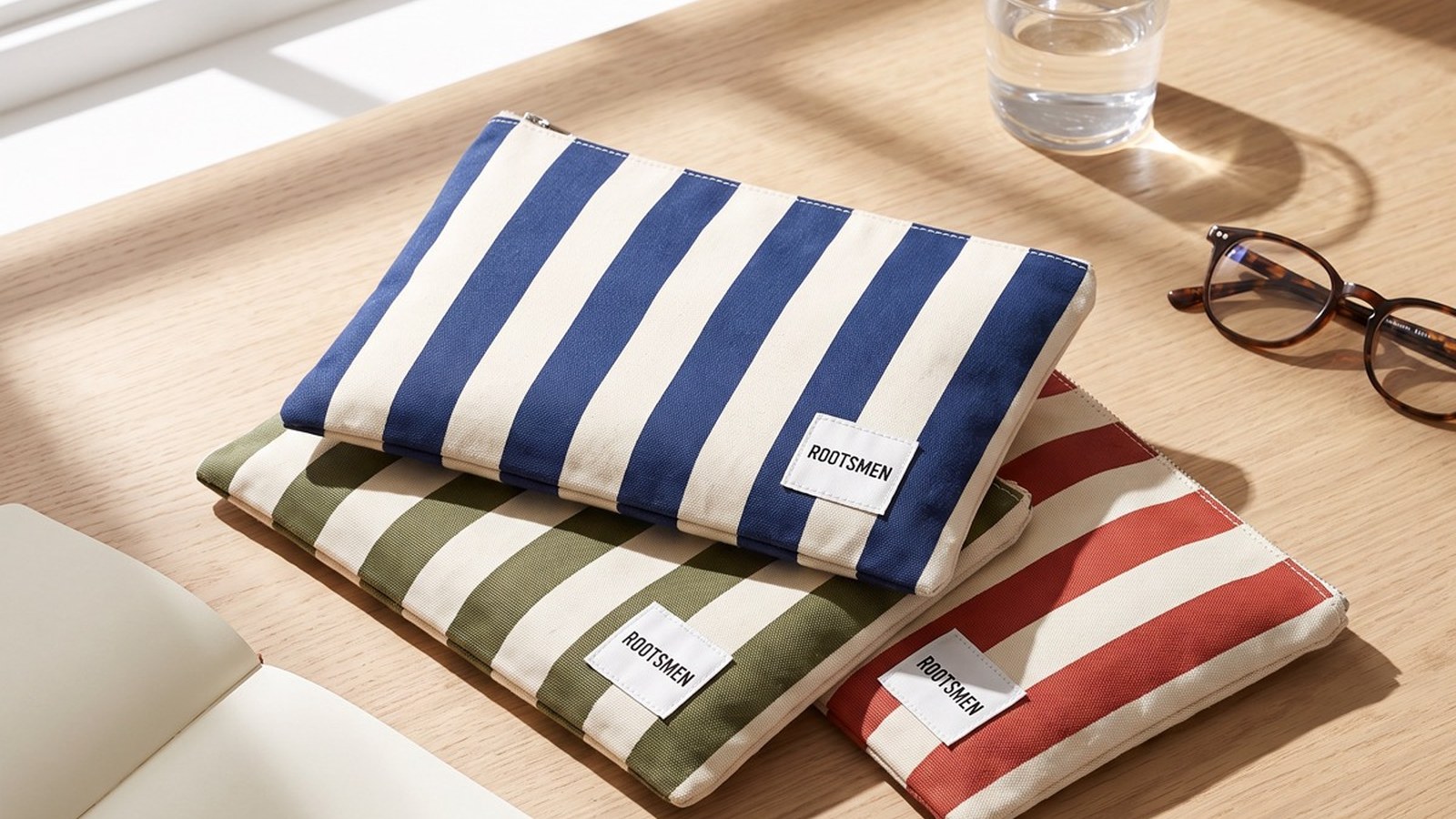
A flat pouch is the simplest: two panels and a zipper, slim enough to slip into a bag or a folder, with a large flat area for a logo. It suits a few pens or a small cable kit, but anything bulky pushes against the zipper. A box pouch adds a gusset so it opens wide, holds a full stationery set or a charger and power bank, and sits upright on a desk. A triangular pouch does the same with a more distinctive profile, at the cost of a trickier pattern. The trade-offs between the two main constructions are set out in box pouch vs flat pouch.
A roll gives every pen, brush or cable its own slot and rolls up compact, closed by a tie, strap or snap. A stand-up pencil case has a stiffened base and a top that folds down when opened, so it becomes a pen pot on the desk. Multi-layer and zip-around organisers open flat like a book and separate contents into zones, which is why they are the usual choice for tech kits. Decide the shape from the contents and the way the product will be used, not from the outside look alone.
Fabrics: nylon, canvas, PU, clear PVC or TPU, and felt#
Nylon and polyester are the everyday choice: light, hard-wearing, available in many colours and easy to print. Canvas gives a natural, matte look that suits school and lifestyle ranges, but it marks more easily and may need a coating if spills are a concern. PU and other leather-look materials give a cleaner, gift-like finish and wipe clean, but their edges, folds and surface wear need checking.
Clear PVC or TPU is used where contents must be visible, for example where a school or exam centre asks for see-through pencil cases, and for travel pouches that need to be checked quickly. The differences between these films, including feel in cold weather and odour, are covered in clear PVC, TPU, EVA and PEVA for bags. Felt makes a soft, structured desk piece and holds its shape, but it pills and collects dust, so it is better for gifts and desk sets than for pouches that live in a school bag.
Interior organisation for tech and cables#
Inside a tech organiser, the layout matters more than the shell. Elastic loops hold cables, pens and styluses; mesh pockets let people see small items such as adaptors and memory cards; padded dividers keep a charger from knocking against a drive; and a zip-around opening lets the pouch lie flat so everything is visible at once. Slip pockets on the lid side suit flat items such as cards and cleaning cloths.
Draw the interior to scale and list what goes in each place. Loops that are too tight are hard to use and stretch out; loops that are too loose let cables fall out. Elastic also loses some tension over time, so ask for loops to be stitched in short sections rather than as one long run, and agree on the sample which cable and adaptor sizes each loop and pocket must hold.
Padding to protect chargers and drives#
Chargers, power banks and external drives are heavier and harder than pens, and they are usually carried in a bag with other things. A layer of foam between shell and lining softens knocks and gives the pouch more body; padded dividers stop items rubbing against each other inside. More padding is not always better: it adds bulk, makes small pouches stiff and can push the zipper open when the pouch is full.
Describe the protection in terms of use — a kit that lives in a laptop bag, a pouch that is thrown into a backpack, a desk set that rarely moves — and agree the foam type and thickness on the sample. A padded pouch is not a hard case, so avoid describing it to end customers as protection against drops or crushing unless that has been tested.
Zippers, wrist loops and handles#
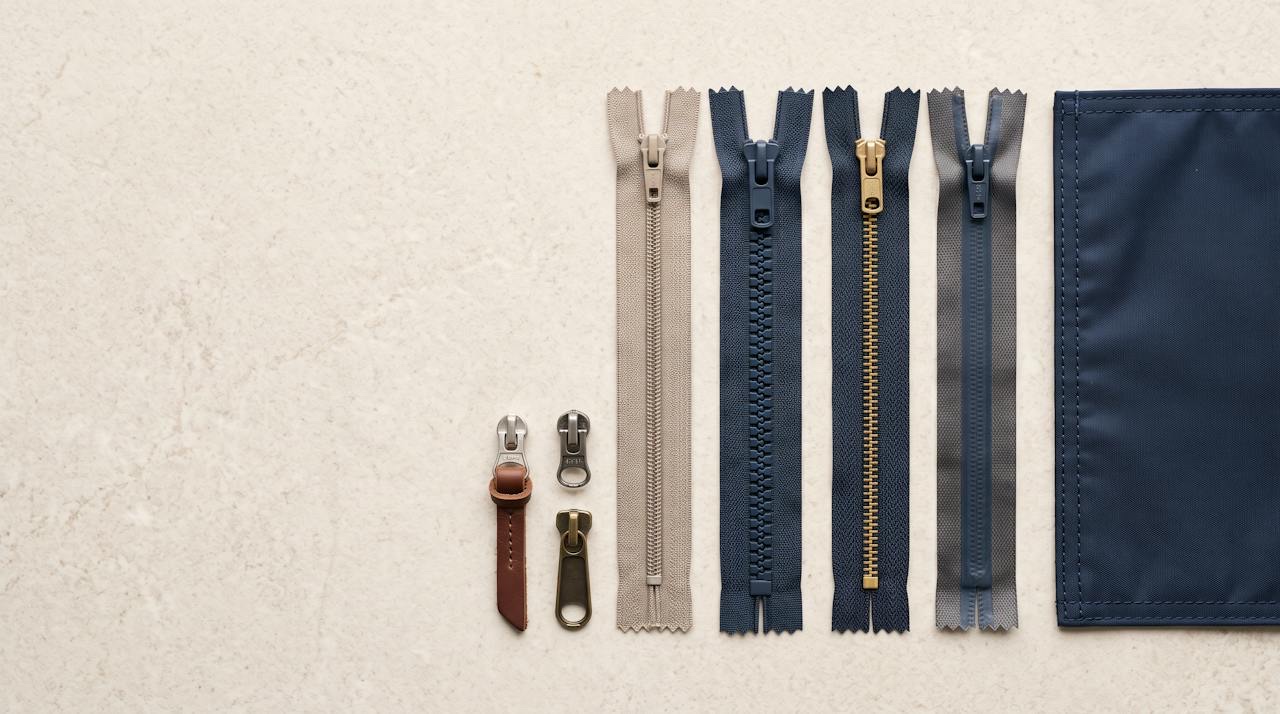
Pencil cases and tech pouches are opened far more often than most bags, so the zipper should be chosen for frequent use, with a puller that is easy to grip and a zipper path that does not bend too sharply at the corners. A zipper that is too light for a full box pouch will split or wear at the slider. How chain type, size and slider affect this is explained in how to choose a zipper for a cosmetic bag, and the same logic applies here.
A wrist loop or small grab handle makes a tech pouch easier to pull out of a bag and a pencil case easier to carry between classes. Small as they are, these loops are pulled sideways and swung, so they should be anchored through a reinforcement and tested like any other handle. Zip-around organisers often use a two-way zipper so the pouch can be opened from either end.
School, corporate gift and travel tech: different briefs#
A school or stationery pencil case needs to survive daily rough handling, be easy to clean and carry a clear name or design; colour and print usually drive the range. A corporate gift is judged first by look and finish, so PU, felt or a premium nylon with a neat logo and a useful interior often work better than a large print. A travel tech organiser is judged by its layout, padding and how flat it opens. Many of these products are developed alongside other lifestyle items, as in our lifestyle merchandise range.
If the pencil case or pouch will be sold for children, check the children's product rules that apply in the destination market before you finalise materials, small parts, pullers and printing, and plan any testing those rules call for. Treat this as part of the brief from the start rather than a check after the samples are approved.
Branding#
Flat pouches and the front of box pouches give the largest print area; clear PVC and TPU can be printed, but the print sits on a see-through surface and needs a design that works against the contents behind it. Woven labels, rubber or PU patches, debossed PU, embroidery on canvas and branded zipper pullers all suit small products, and a printed lining is an easy way to make the inside feel finished.
Keep logos away from seams, gussets and the zipper path, where they will be cut, folded or distorted. On a corporate gift, a small, well-placed logo usually looks more considered than a large one, and matching pullers, labels and lining across a set makes the range read as one family.
What to test on samples#
Fill the sample with the real contents — a full set of pens, the actual chargers, cables and drives — and open and close it many times. Check that the zipper runs smoothly around corners when the pouch is full, that loops hold their cables without being a struggle, that pockets do not sag, and that a stand-up case really stands. Pull wrist loops and handles sideways, not only straight up, and look at the anchors afterwards.
Check clear films for clouding, odour and stiffness, felt for pilling, and printed areas for rubbing after handling. Record what was tested and how, so bulk can be checked the same way. If the pouch is part of a gift set, check it packed alongside the other pieces too, so the logo and colours sit together.
| Shape | Typical use | Strengths | Watch for |
|---|---|---|---|
| Flat pouch | Pens for a bag or folder, promotional items, slim cable kits | Slim, simple, large flat print area | Holds little; bulky items strain the zipper |
| Box pouch | Full stationery sets, chargers and power banks | Opens wide, holds more, sits on a desk | Gusset and corner construction; needs some body to keep its shape |
| Triangular pouch | Pencil cases with a distinctive look, small tech kits | Stands out on the shelf, stable on a desk | Patterning and zipper path are less forgiving |
| Roll | Pens, brushes, cables and adaptors | Each item has its own slot; rolls up compact | Ties or straps must hold; slots sized to the contents |
| Stand-up pencil case | Desk use, school stationery | Turns into a pen pot when opened | Base must be stiff enough to stand; fold-down top must stay put |
| Multi-layer or zip-around | Tech organisers, large stationery sets | Opens flat, separates contents into zones | More parts and seams; interior layout must be drawn clearly |