Packing cubes look simple: a fabric box with a zip. That is exactly why they are easy to under-specify. Small decisions about the zip, the gusset, the mesh seam or the size of each cube decide whether a set feels well thought out, and whether it survives the way travellers actually use it, which is usually overfilled and squeezed into a case.
This note is for brand buyers and product developers working with a packing cubes manufacturer on their own range. It walks through what to specify, from standard versus compression construction to fabrics, zips, extras and packaging, and what to test on the first samples.
Standard cubes and compression cubes#
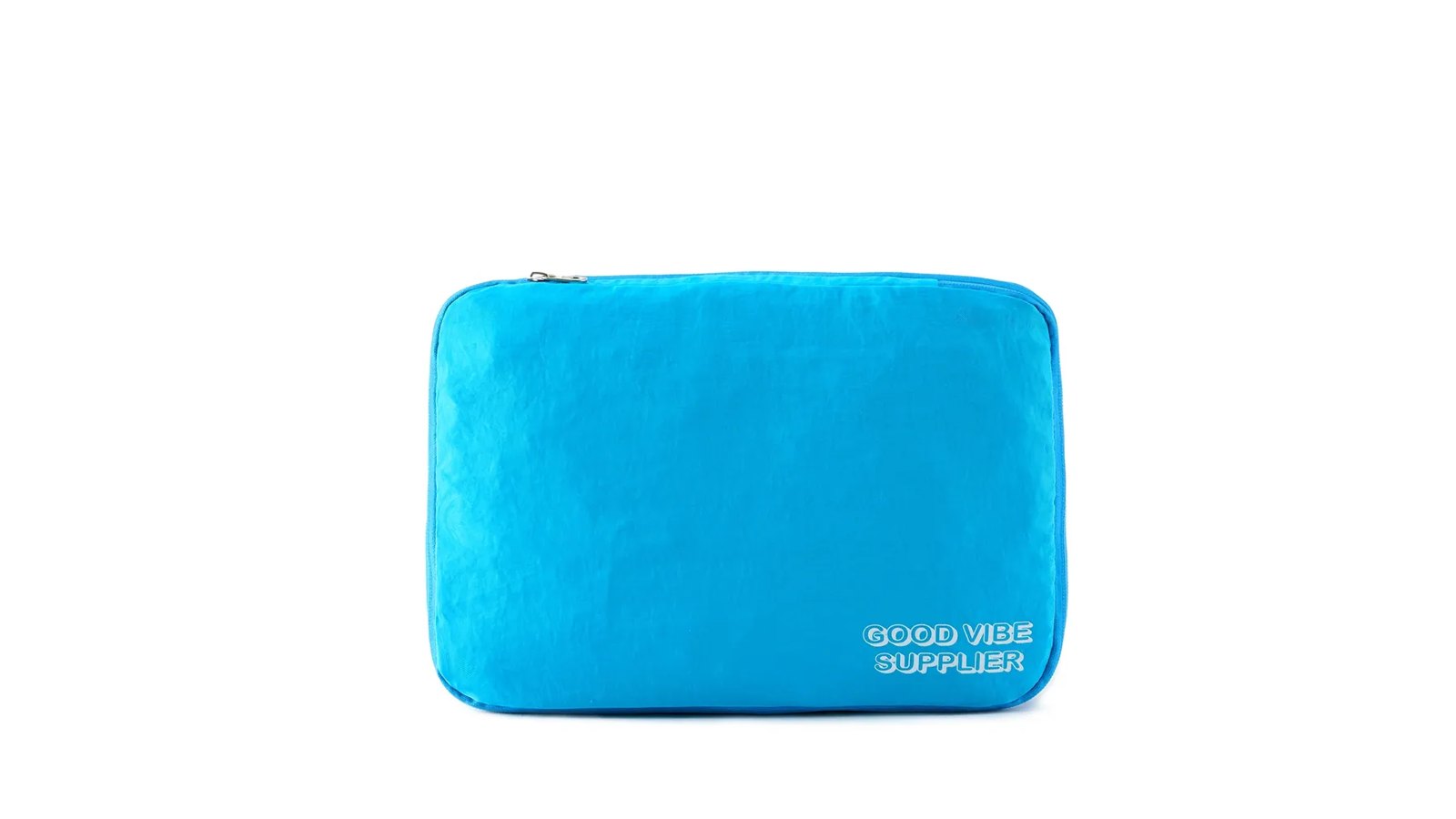
A standard cube is a fixed volume: a top, a base and a side wall, opened by one zip. It is simple to make, easy to use and works well for clothing that is rolled or folded neatly. A compression cube adds an expansion gusset and a second zip that runs around the cube. The traveller packs it open, then closes the second zip to pull the cube flatter.
Compression is a strong selling point, but it is a different product, not an extra feature. The pattern has more pieces, the second zip is under constant tension when closed, and the gusset seams take the load. If you are developing compression packing cubes as an OEM range, say so at the start, describe how much the cube should compress in words, and agree the exact behaviour on the sample rather than quoting a figure.
Sets, size ladders and nesting#
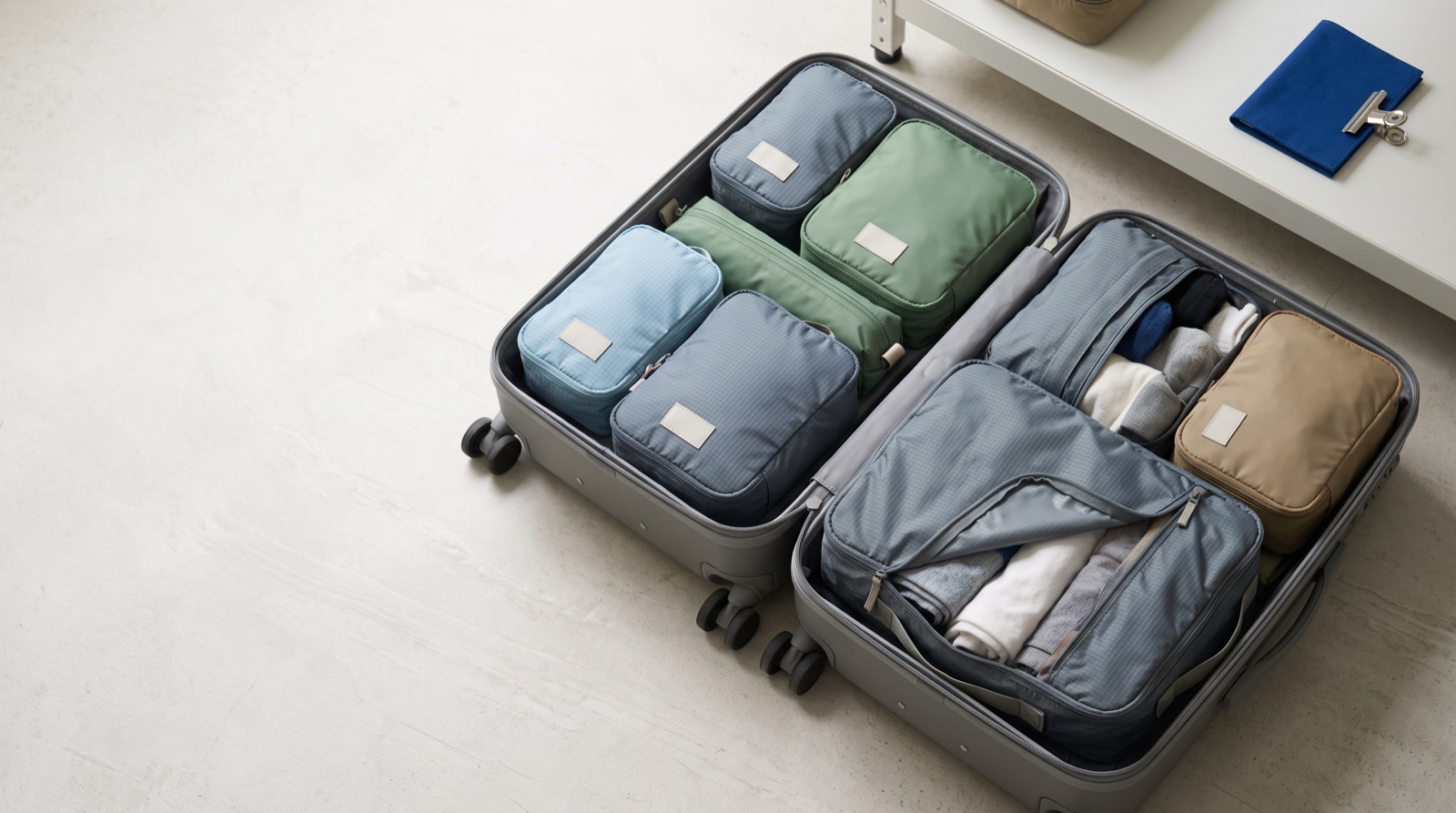
Most cubes are sold in sets, and a set works best as a ladder: a large cube for bulky clothing, a medium one for everyday items, a small or slim one for underwear and accessories. There is no industry standard for cube dimensions, so size the ladder to the luggage your customers carry. A set for a carry-on case and a set for a large checked case should not be the same.
A practical way to brief it is to describe the target case, how many cubes should fit across its width and length, and how much depth is left for a toiletry bag or shoes. Some brands also want the cubes to nest inside one another for retail or storage; if so, the step between sizes has to allow for the fabric and zip thickness, which is best checked on a physical sample.
Fabrics: nylon, ripstop and RPET polyester#
Packing cubes are usually made from lightweight nylon or polyester. Nylon has a smooth, slightly soft hand and good abrasion resistance. Ripstop nylon has a grid of heavier yarns woven in, which stops small tears from running and gives a technical look. RPET polyester is made from recycled polyester and suits ranges where recycled content matters; it takes print and colour well. Our comparison of ripstop nylon and RPET for travel organisers goes into the trade-offs.
Weight is a balance. A lower denier fabric folds small and keeps the set light, which travellers value, but it creases more and can tear where the zip and gusset meet. A heavier fabric feels more substantial and holds its shape, at the cost of bulk. Many sets use a light shell with reinforced corners, or a slightly heavier fabric on the base. Ask for swatches in your chosen colours and handle them before deciding.
Mesh top panels, solid panels and clear windows#
A mesh top lets the traveller see what is inside and lets clothing breathe, which is why it is the classic packing cube look. Mesh varies a lot: a fine, soft mesh looks neat and resists snagging, while a coarse mesh can catch on zips and jewellery. The seam joining mesh to fabric is a common weak point, so ask for it to be bound or taped rather than left as a raw overlock.
A solid top hides contents and gives a cleaner, more premium surface for a logo, and it suits compression cubes, where a stronger panel helps the cube hold its shape. Some sets mix the two, or use a clear panel on small cubes for cables and toiletries. Decide panel by panel, and note it on the drawing for each size.
Zips: double sliders, zip-around and size#
The zip layout decides how wide the cube opens. A zip along two or three sides opens the lid like a box; a zip-around lid opens fully and makes packing easier. Double sliders let the cube be opened from either end and give a neat place for a puller or lock to sit. On compression cubes the expansion zip is separate, and it should be clearly distinguished from the main zip by puller shape or colour.
Zip size matters more than it seems. A packing cube is often closed while overfilled, so the teeth and slider are under strain. A zip that is fine on a small pouch can split on a full large cube. Our guide on how to choose a zipper covers coil and other zip types, gauges and pullers; specify the zip by size, type and puller for each cube in the set.
Handles, labels and colour coding#
A small grab loop or handle on the end of each cube makes it easy to pull out of a full case. It is pulled hard and at an angle, so ask for it to be stitched into the seam or bar-tacked through a reinforcement, not just top-stitched to the panel. On larger cubes, a webbing handle along the side can be useful.
Labelling helps the traveller sort the set. Options include a woven label or printed logo, a write-on label panel, size or content icons, and colour coding, where each cube in the set has a different colour or a different zip tape. Colour-coded sets need each colour matched across fabric, zip tape and binding, so list them clearly in the brief.
Shoe bags, laundry pouches, folding and packaging#
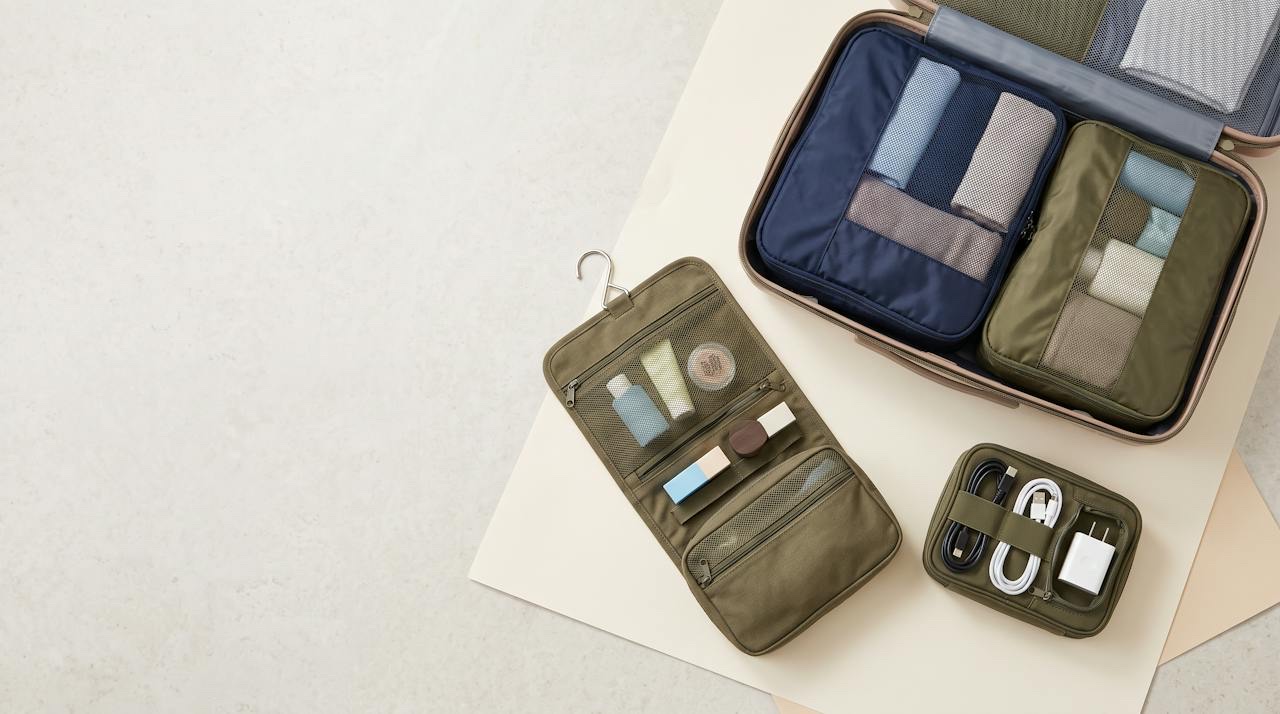
Many sets add companion pieces: a shoe bag, often with a water-resistant lining or a separate base, a laundry pouch to keep worn clothing apart, or a flat pouch for documents and cables. These pieces share the fabric and colourway of the cubes but have their own construction, so specify them as separate items. You can see related pieces in our travel accessories range.
Think about how the set is folded and presented. Cubes can be folded flat and nested, stored in the largest cube, or packed in a pouch, box or card band for retail. State how many pieces go in each retail unit, how they are folded, and what packaging and insert card you need, because this affects both the shelf presentation and how the cubes arrive.
What to test on samples#
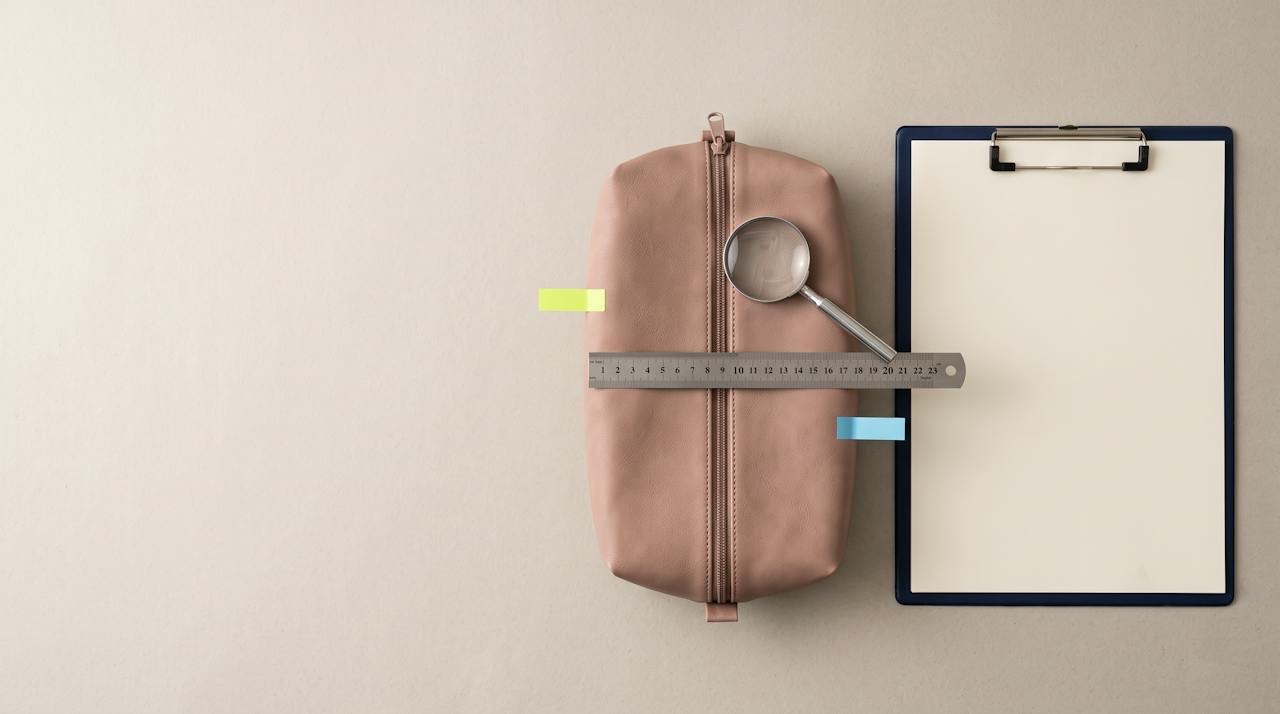
Pack each sample the way a real traveller would, then overfill it and close it. Watch the zip: does the slider run smoothly under strain, do the teeth stay engaged, and does the tape pull away from the panel at the corners? On compression cubes, close the expansion zip on a full cube several times and check the gusset seams for stretched needle holes or puckering.
Then check the seams and loops: pull the grab loops hard at an angle, press on the mesh seam, and turn the cube inside out to look at seam allowances and any loose threads. Check that the sizes in the set fit the target luggage as intended. Our note on what to check when your first samples arrive covers the rest of the review; record how you tested so bulk can be checked the same way.
| Choice | Common options | What it affects | Watch for |
|---|---|---|---|
| Construction | Standard cube; compression cube with second zip | Capacity, how flat the cube packs, pattern complexity | Compression puts more strain on zips and gusset seams |
| Set and sizes | Two to several cubes in a size ladder; nesting set | How well the set fills a case, retail presentation | Sizes drawn without the target luggage in mind |
| Shell fabric | Nylon, ripstop nylon, RPET polyester | Weight, hand feel, recycled content, colour | Very light fabrics wrinkle and can tear at stress points |
| Top panel | Mesh window, solid panel, clear panel | Visibility, breathability, look of the set | Mesh snagging; weak mesh-to-fabric seams |
| Zip layout | Two-sided, three-sided, zip-around; single or double slider | How wide the cube opens, ease of packing | Zip size too small for an overpacked cube |
| Extras | Grab loops, labels, colour coding, shoe and laundry pouches | Handling, sorting, perceived value of the set | Loops not anchored for being pulled out of a full case |