A first brief from a Japanese importer or retailer often arrives with more questions than a brief from other markets, and the questions tend to come before any discussion of the commercial terms. They are not obstacles. They show how the buyer will check the goods when they arrive, and answering them well at the start avoids surprises at inspection.
The questions below are the ones that come up most often for bags, pouches and travel organizers. Not every buyer asks all of them, and large retailers may have their own manuals, but a factory that can answer these is ready for most first conversations.
Why the first questions are about detail#
Many Japanese buyers inspect incoming goods against their own standards, and some sell into retailers that do the same. A defect that would pass elsewhere, such as a loose thread end, a slightly uneven seam or a small mark on a light fabric, may be treated as a reason to reject a unit.
Because of this, buyers often want to agree how quality will be judged before they agree anything else. The more of that is in writing, the fewer disagreements there are when the goods land.
Appearance standards and how defects are judged#
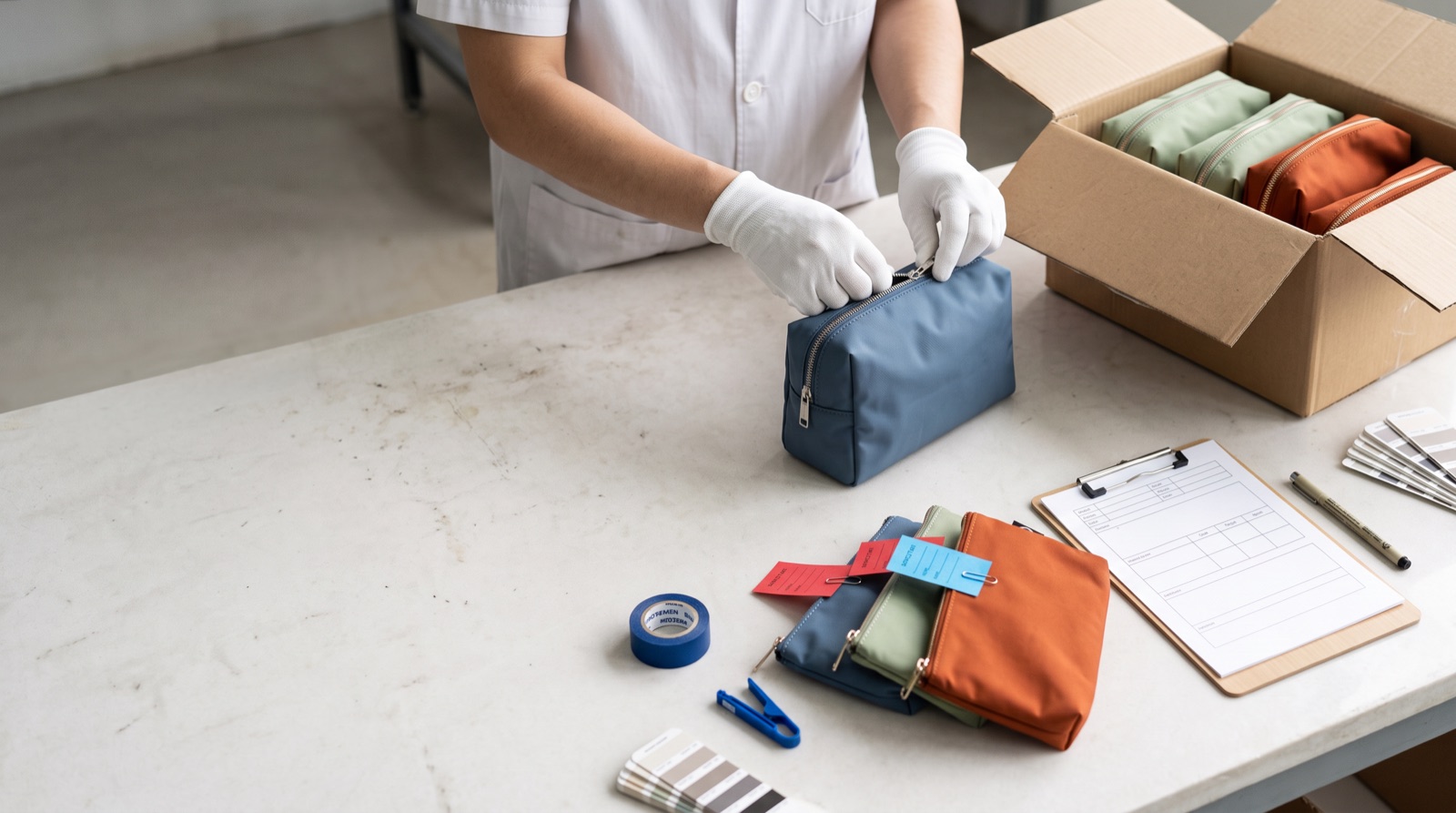
Expect questions about which defects are acceptable, where on the product they matter, and how they will be counted. Buyers may ask for a written appearance standard that lists defects such as stains, thread ends, puckered seams, misaligned prints and zipper waviness, and sorts them by severity and by location, for example the front panel versus the inside of a gusset.
Some buyers also use limit samples: physical samples that show the worst acceptable version of a defect, such as the maximum colour variation or the most visible stitch irregularity that still passes. If the buyer does not offer one, it is worth proposing it for any defect that is hard to describe in words. The inspection plan then connects these standards to sampling; our guide to setting an AQL inspection plan explains how.
Needle control and needle detection#
Needle control is one of the questions most specific to Japan. Buyers want to know that no broken needle tip, pin or staple can end up inside a product.
The Japan Textile Products Quality and Technology Center (QTEC) describes the practices involved in its guidance on inspection environments: needles and tools are issued, stored and counted with written records; personal tools are not brought into the work area; a broken needle is collected until the pieces make up the whole needle again, then stored and recorded; and needles that a detector cannot sense are not used. QTEC also describes needle detectors and X-ray inspection machines used to check for sharp metal objects, with regular sensitivity checks.
Buyers may ask whether finished goods pass through a needle detector, how sensitivity is checked, and how products with metal sliders, snaps or frames are handled, since metal hardware can trigger a detector. Agree the method in writing before production.
| Question | What is behind it | What to prepare |
|---|---|---|
| How will defects be judged? | Incoming inspection against the buyer's own standards | Written appearance standard by severity and location |
| What is the worst acceptable version? | Defects that are hard to describe in words | Limit samples |
| How are needles controlled? | No broken needle or pin may remain in a product | Tool records, broken-needle procedure, detection method |
| What goes on the label? | Retailer expectations, statutory rules for leather bags | Label layout with fibre, care symbols and importer details |
| Which marks go on the packaging? | Identification marks on plastic and paper packaging | Packaging drawing with marks per component |
| Will the reorder match? | Planning for repeat orders | Approved swatches, trim cards and sealed sample |
| What if something changes? | Approval before any change | Written change-control rule |
Quality labelling: what the law covers and what buyers ask for anyway#
Japan's Household Goods Quality Labelling Act sets labelling rules for bags, but the Consumer Affairs Agency defines the covered category narrowly: bags made with cow, horse, pig, sheep or goat leather, such as travel bags, business bags and school satchels. Handbags and small goods such as wallets are outside the category. For covered bags, the label must state the type of leather, handling precautions, and the name and address or telephone number of the party responsible for the label.
Most fabric pouches and organizers therefore fall outside that category. Even so, buyers often ask for a sewn label with fibre content, care symbols, country of origin and the importer's details, because their retailers expect it. Where care symbols are used, Japan's JIS L 0001 is based on the international ISO 3758 symbol system, so a label designed for Europe may need only small changes. The Consumer Affairs Agency announced a revision of the textile labelling code in August 2024, so check the current symbol set before artwork is locked.
Working on a programme like this? Send us the brief and we will come back with material and construction options. Contact Us →
Packaging marks for plastic and paper#
Packaging is the next question. Under Japan's Act on the Promotion of Effective Utilization of Resources, plastic and paper containers and packaging must carry an identification mark. The Ministry of Economy, Trade and Industry (METI) explains that the obligation falls on businesses that manufacture, process or sell the packaging, including businesses that commission its manufacture.
For a bag order, the individual polybag, any paper header card or box, and sometimes the carton insert are where the question comes up. Ask the buyer which marks they want on each component and who supplies the artwork, then add them to the packaging drawing.
Colour and material consistency across reorders#
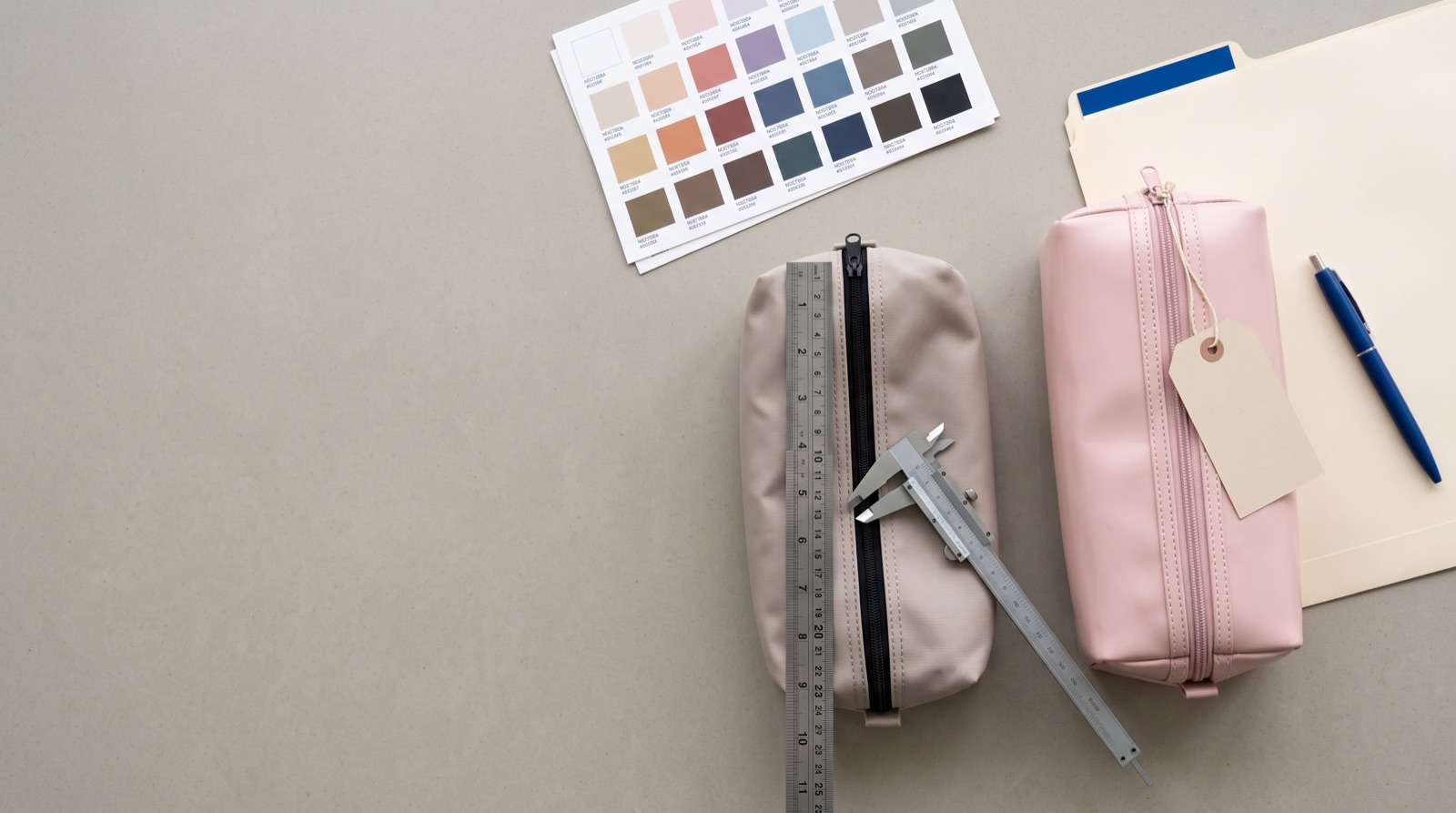
Japanese buyers often plan for reorders from the first order, so they ask how colour and materials will be kept consistent. Expect questions about how colour is approved, whether lab dips are kept on file, how much shade variation between dye lots is acceptable, and whether the same fabric and trim suppliers will be used next time.
The practical answer is a set of approved references, such as fabric swatches, trim cards and a sealed sample, kept by both sides and used for every reorder.
Documentation, language and change control#
Buyers usually want answers in writing, and they often prefer a single specification that both sides sign rather than decisions spread across messages. A bilingual specification, with Japanese terms alongside the English, reduces misunderstandings on items such as seam allowance, stitch density and label position.
Change control is part of this. Many buyers expect to be told before any material, trim or process changes, even when the change seems minor, and to approve it in writing.
What to have ready before the first call#
A factory, or a brand briefing a factory for a Japanese customer, can prepare most of this in advance:
- A draft appearance standard with defects sorted by severity and location
- A proposal for limit samples where defects are hard to describe
- A description of needle and sharp-tool control, and the needle-detection method
- A label layout with fibre content, care symbols and importer details
- The packaging components and the identification marks each will carry
- The colour approval process and the references kept for reorders
- A change-control rule, agreed in writing
ROOTSMEN has market experience in Japan, as well as Sweden, Taiwan and Southeast Asia, and the questions above are the ones we prepare for at the start of a brief.
Sources#
- QTEC (Japan Textile Products Quality and Technology Center), 検品環境の知識 (inspection environment: needle and tool control, needle detectors): https://www.qtec.or.jp/knowledge/inspection/inspection-environment/
- Consumer Affairs Agency, Household Goods Quality Labelling Act, かばん (bags): https://www.caa.go.jp/policies/policy/representation/household_goods/guide/zakka/zakka_02.html
- Consumer Affairs Agency, 新しい洗濯表示 (JIS L 0001 care symbols): https://www.caa.go.jp/policies/policy/representation/household_goods/laundry_symbols.html
- METI, 資源有効利用促進法: 事業者の義務 (identification marks on containers and packaging): https://www.meti.go.jp/policy/recycle/main/admin_info/law/02/entrepreneur/index.html