Tyvek-type bags and pouches have become a familiar sight: a crumpled white tote that looks like paper, a printed envelope pouch that survives a rainy day, a gift set wrapped in something that is neither paper nor fabric. Buyers ask for them by the trade name, by "DuPont paper" or, in Taiwan, as 杜邦紙.
This explainer covers what the material actually is, how it is made, why it behaves the way it does, the main types, how it is printed and sewn, how to care for it and what happens at the end of its life, and what to specify and test on a sample. It is written for brand buyers and developers working on a custom bag or pouch; our sustainable materials page shows where it fits alongside other alternative materials.
What Tyvek is, and why it is called "DuPont paper"#
Tyvek® is a registered trademark of DuPont. It is the brand name of a flashspun high-density polyethylene nonwoven sheet. Because it looks and feels like paper and came from DuPont, it is commonly called "DuPont paper" and, in Taiwan, 杜邦紙. Neither nickname is a technical term: both simply mean this kind of sheet.
We use the name here only because it is how most people know the material. ROOTSMEN is not affiliated with DuPont, and a bag made from a Tyvek-type sheet should only carry the trademark where the rules of the material's owner allow it. If you want the name on your product or packaging, check the trademark owner's usage guidance first.
How it is made, in plain words#
Flashspinning starts with polyethylene dissolved under heat and pressure. The solution is released through a small opening, the solvent flashes off almost instantly, and the polymer is left as a web of extremely fine, continuous fibres. Those fibres are laid down at random on a moving belt, building up a sheet much like a very fine, dense nonwoven.
The loose web is then bonded with heat and pressure. How strongly and how evenly it is bonded largely decides whether the sheet ends up smooth and paper-like or softer and more fabric-like. There is no weave and no yarn, which is why the sheet has no grain in the way a woven fabric does and why its cut edges do not fray.
Looks like paper, behaves like a film or fabric#
Because the fibres are so fine and densely packed, the surface is white, opaque and smooth enough to print and write on, so the sheet reads as paper. Underneath, it is polyethylene, and it behaves more like a strong plastic film or a nonwoven fabric.
In practice this means it is hard to tear by hand, even in light weights, although once a tear starts from a nick or a hole it can travel. It does not absorb water or go soft when wet, so splashes and rain run off. It is very light for its strength. And the gaps between the fibres are small enough to hold back liquid water but large enough to let water vapour through, which is why it is often described as breathable. That also means it is not a seal for liquids, odours or fine powders on its own.
Types of sheet: hard and soft structures#
Tyvek-type sheets come in many weights and in two broad families. Sheets often called "hard structure" are bonded across the whole area; they are smooth, crisp and paper-like, take fine print well and crease sharply. They suit envelopes, flat pouches, tags and printed packaging.
Sheets often called "soft structure" are bonded in a pattern, so they are softer, more flexible, quieter to handle and closer to a fabric. They suit sewn pouches, totes and items that are folded and handled a lot. Within each family there are lighter and heavier sheets, and some are given antistatic or other surface treatments. Rather than chase a grade name, choose from physical swatches for the look and hand you want, and say in the brief whether you need a crisp or a soft sheet.
The crumpled, softened look#
Many Tyvek-type bags are deliberately crumpled. Washing, tumbling or mechanical softening breaks up the stiffness of the sheet and leaves a creased, slightly leathery texture that many brands like for a relaxed, paper-bag look. The sheet becomes softer and quieter and drapes more like fabric.
Softening changes more than the look. Panels can shift slightly in size, the texture is never identical from piece to piece, and printed artwork takes on a worn, broken appearance, which may be exactly the effect you want or may not. Decide whether softening happens to the sheet before cutting or to the finished bag, and approve the texture and the print on a softened sample.
Printing on a Tyvek-type sheet#
The smooth white surface is one of the material's attractions, and it can be printed by screen, offset, flexographic and some digital methods. The sheet is polyethylene, though, so inks must be suited to it: an ink that works on paper may rub off, crack or never dry properly. Some sheets are treated to help ink adhesion.
Polyethylene also softens at relatively low temperatures, so heat-based processes such as heat transfer, hot stamping or high-temperature drying need care to avoid shrinking, glazing or distorting the sheet. Hard-structure sheets give the sharpest print; soft and softened sheets give a more textured result. Test the print on the actual sheet, rub it, fold it and, if the bag is meant to be washable, wash it before approving.
Sewing and edge finishing#
Because the sheet has no woven threads, cut edges do not fray, so raw edges can be left as a design feature on totes, envelopes and pouches, or folded and bound for a cleaner look. That is a real advantage over woven fabrics in simple constructions.
The weak point is the needle line. Each stitch makes a hole, and a row of holes in a thin sheet can act like a perforation, so seam strength depends heavily on stitch length, needle, thread, seam type and whether the seam is reinforced with a binding, tape or doubled layer. Handles and zipper ends need particular attention. Agree the seam construction on the sample and load-test handles and stress points rather than assuming the sheet's tear resistance carries over to the seam.
Where it works: pouches, totes, envelopes and gift sets#
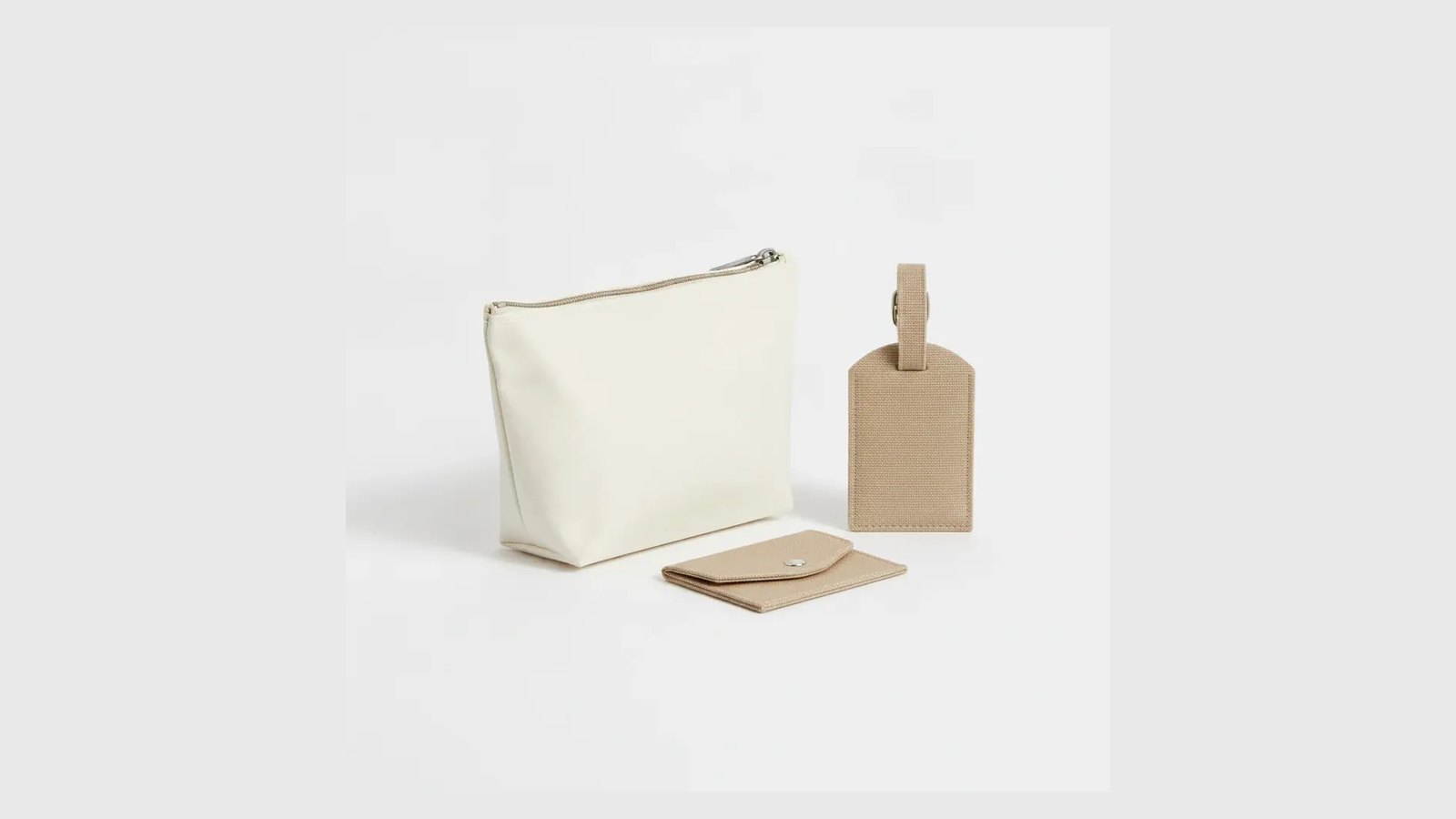
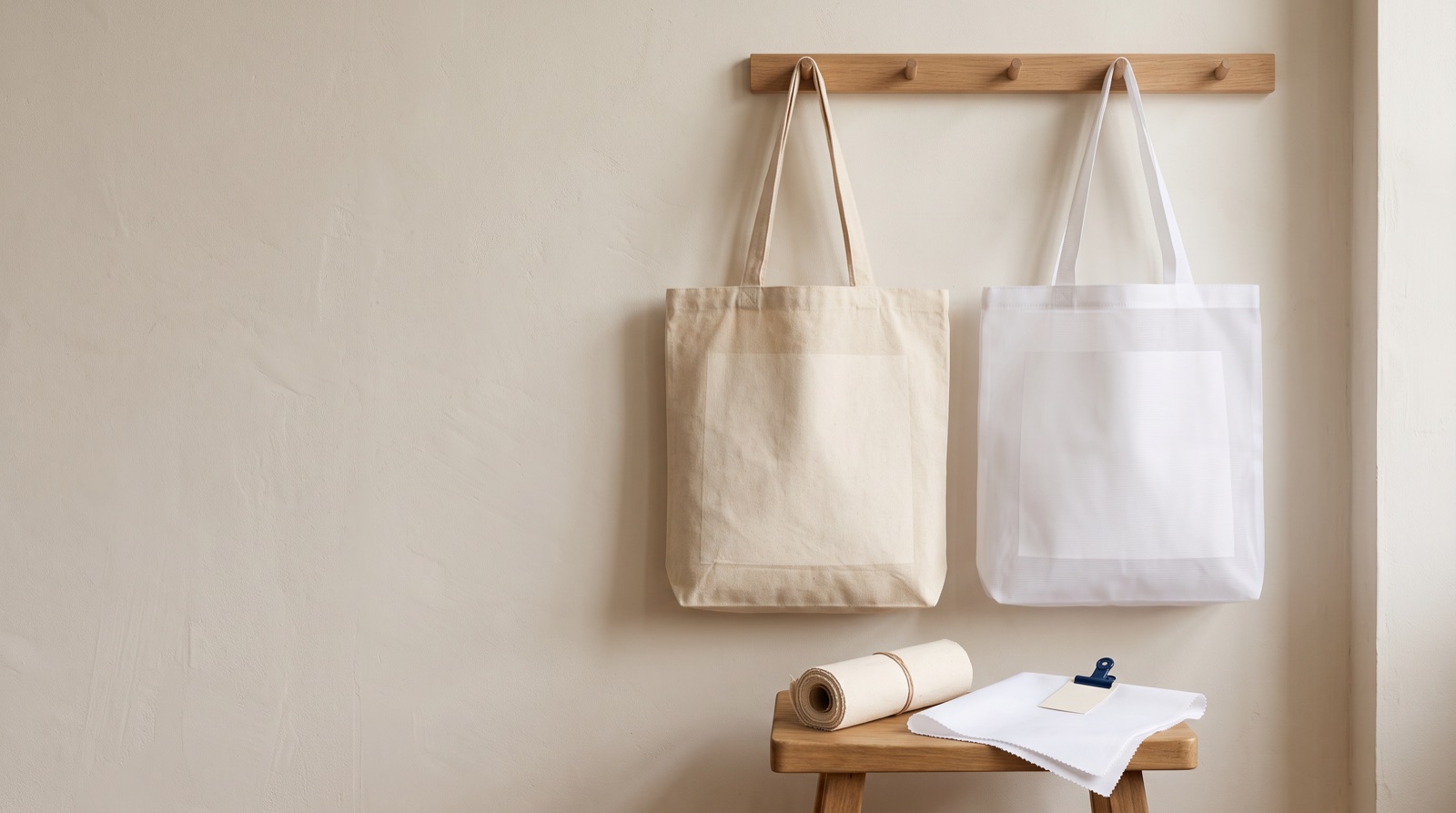
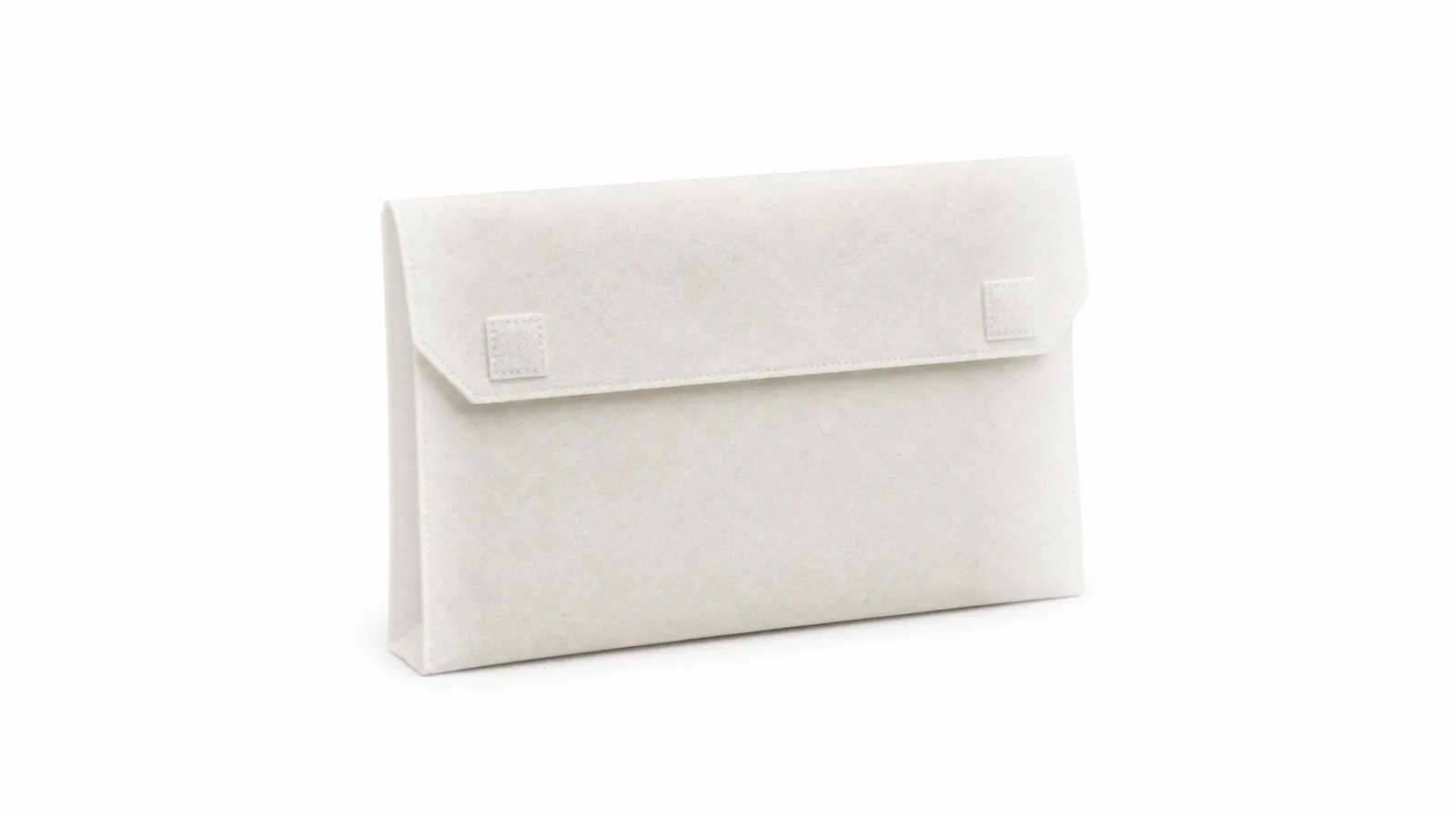
Flat zip pouches and envelope pouches with a fold-over flap are natural uses: light, printable, splash-resistant and easy to keep flat. Tote bags in soft or softened sheet give a paper-bag look that can be folded, carried and reused. Envelopes, document sleeves and tags make use of the crisp, writable surface.
In gift sets and gift-with-purchase programmes, a Tyvek-type pouch or wrap can replace a paper box or a plastic bag with something the customer keeps. It is less suited to bags that carry heavy loads on thin seams, items that need a rigid shape without support, or pouches that must hold liquids without a separate lining.
Care and washing#
Surface dirt can usually be wiped or spot-cleaned with a damp cloth and mild soap. Whether a Tyvek-type bag can go in a washing machine depends on the sheet, the print, the trims and the construction: some softened bags tolerate gentle washing, others lose their print, change shape or wear at the seams. Heat from a dryer or iron can shrink or mark polyethylene.
Do not promise washability from the material name. Decide whether the product is meant to be washable, test the actual sample the way the care label will say, and write the care instructions from that result.
Recycling and end of life#
The sheet itself is high-density polyethylene, a plastic that is widely recycled in some places. Whether a finished bag is actually recycled, though, depends on local collection and sorting systems, and many do not accept flexible plastic items at all. Printing, coatings, sewing thread, zippers, labels and linings in other materials all make a product harder to recycle as a single material.
If recyclability is part of the story, keep the design as single-material as you can, check what the markets you sell into actually accept, and word any claim carefully; recycling and environmental claims are regulated in many places, so confirm them locally. Our note on reducing plastic packaging for bags and pouches covers the packaging side.
Similar materials#
Tyvek is the best-known flashspun sheet, but generic flashspun polyethylene sheets are also offered, and buyers sometimes group it with "washable paper" or kraft-paper fabrics, which are cellulose-based papers made to tolerate handling and washing. They share the paper look but differ in feel, ageing, printing and end of life.
We compare these options, along with cork, in Tyvek, cork and washable paper for bags. Whatever the material, approve it from a physical swatch and a sample rather than a name.
What to specify and what to test#
In the brief or tech pack, describe the sheet as a flashspun HDPE nonwoven (or name the branded material if you need it), say whether you want a hard, crisp structure or a soft one, give the weight or a reference swatch, and state whether the sheet or bag is softened. Add the print method and colours, the edge finish, seam construction and any reinforcements, trims and lining, and whether the product is meant to be washable.
On the sample, compare the sheet with the approved swatch for hand and texture. Rub, fold and crease the print. Pull on handles, zipper ends and seams to see where the needle line gives. Splash it and see where water gets in. If it is meant to be washable, wash it as the care label will say and check shape, print and seams afterwards. Then approve a sample made from the same sheet that will go into bulk.
| Property | What it means in a bag | Watch for |
|---|---|---|
| Paper-like surface | Takes print and writing, looks like paper | Shows creases and fingerprints; not every ink adheres |
| Tear resistance | Hard to tear by hand, even when thin | A nick or needle hole can start a tear under load |
| Water resistance | Sheds splashes; does not go soft when wet | Seams, zippers and needle holes still let water in |
| Light weight | Very light for its strength; packs flat | Can feel flimsy in large panels without structure |
| Vapour permeability | Lets water vapour pass, not liquid water | Not a seal for liquids or odours |
| Hard structure | Smooth, crisp, paper-like | Envelopes, flat pouches, labels; creases sharply |
| Soft structure | Softer, more fabric-like, quieter | Sewn pouches and totes; still check seam strength |
| Washed or softened finish | Crumpled, leather-like, relaxed | Texture and size vary; print may look aged |