When the weather turns, cosmetic pouches move from smooth nylon and coated canvas to fabrics you want to touch: velvet, corduroy, sherpa and teddy pile, and boucle-style loops. They photograph well and read as seasonal at a glance, which is why they appear so often in autumn-winter and holiday ranges.
They are also less forgiving than flat shells. Every one of them has a surface with a direction and a depth, and that affects cutting, sewing, branding, colour approval and packing. This note walks through how each behaves and what a custom velvet pouch manufacturer needs to see in the brief, for buyers and developers planning a velvet cosmetic bag, a corduroy makeup bag or a sherpa pouch for the first time.
Nap direction and shading#
Velvet and sherpa have a pile that leans one way, and corduroy has ribs made of cut pile. Brushed with the nap, the surface looks lighter and smoother; against it, darker and richer. If the front of a pouch is cut one way and the back or gusset the other, the finished bag looks as if it were made from two different colours, even though it is one roll of fabric.
The fix is simple but must be written down: all panels cut in one direction, usually with the pile running down so the bag wipes smooth when stroked from top to bottom. Some brands prefer the deeper shade of pile running up. Either is fine as long as it is consistent and agreed on the sample. One-way cutting uses more fabric than flat shells, because pattern pieces cannot be turned to fit, so expect the layout to change.
Crush marks, pressing and lint#
Velvet records pressure. Fingers, clamps, a hot iron, a tight fold or the weight of other cartons can leave flattened patches or a shiny mark that shows from every angle. Some marks relax with gentle steam held above the surface, others do not. Ask for seams to be pressed from the wrong side or finger-pressed rather than ironed flat on the face, and check that work clamps are padded.
All pile fabrics shed a little at the cut edges, and sherpa and teddy pile shed more. Loose fibres collect on the lining, in the zipper teeth and on dark trims. Overlocked or bound inner seams, a lint-rolling step before packing, and a lining colour that does not show stray fibres all help. Corduroy is the most relaxed of the three: it resists crush marks well and sheds least, which makes it a good first pile fabric for a range.
Corduroy: wale size and rib direction#
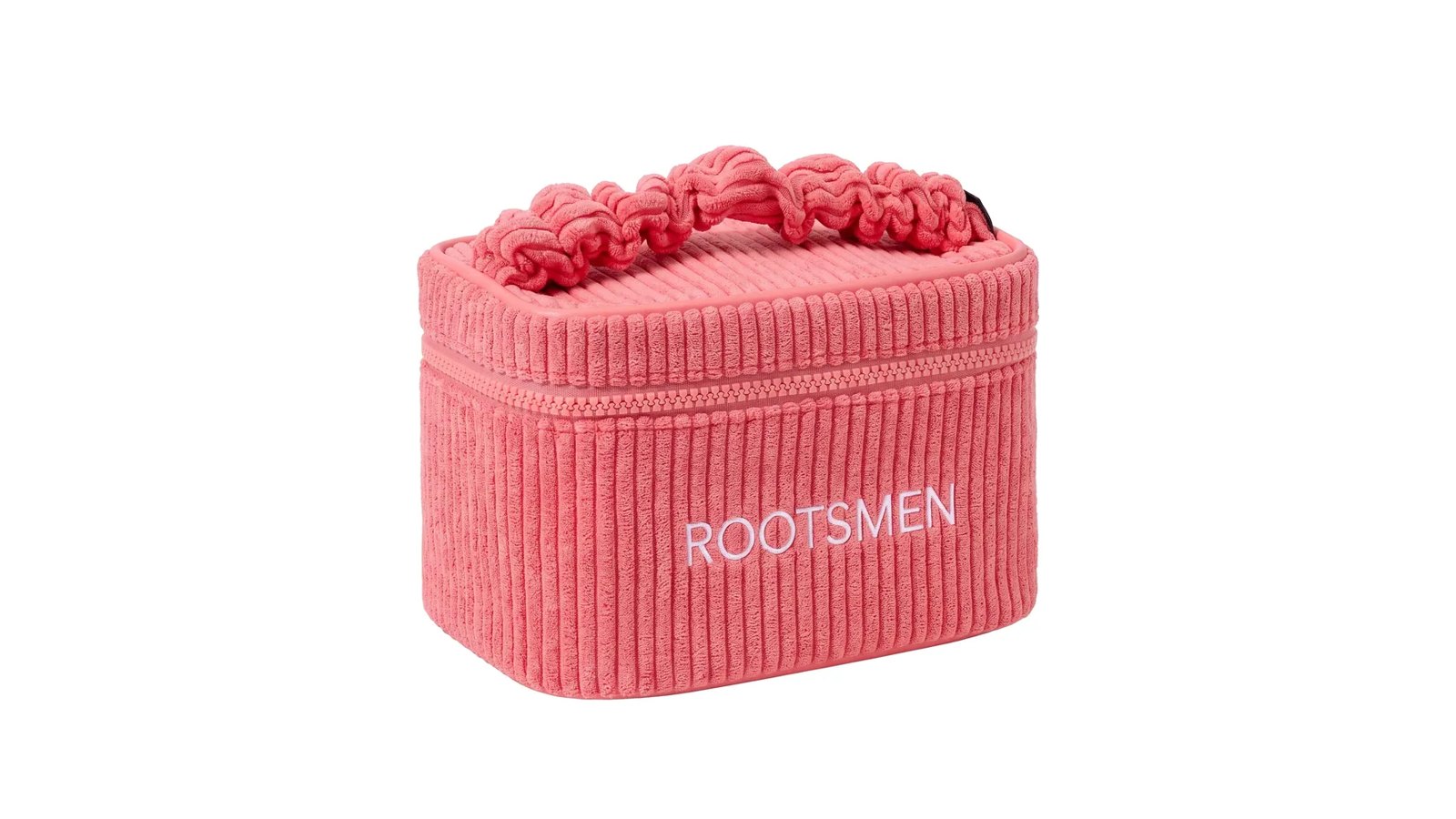
Corduroy is described by its wale, the width of the ribs, usually given as a count of ribs per inch. Fine or needle wale looks quiet and refined and works on small pouches; medium wale is the everyday choice; wide or jumbo wale is bold and chunky and suits larger train cases and wash bags where the rib has room to show.
Decide which way the ribs run, usually vertical on the front, and whether they should line up across the zipper or a seam. Wide wale is thicker where ribs cross a seam, so corners and zipper ends need trimming and care. Corduroy also has a nap, so the one-way cutting rule still applies, just with a gentler shade difference than velvet.
Sherpa, teddy and boucle-style pile: height and seam bulk#
Sherpa, teddy and faux lambswool fabrics have a deep, soft pile on a knitted or woven base. The taller and denser the pile, the cosier the pouch, but also the bulkier every seam, corner and zipper end. A shape that works in nylon may lose its corners in sherpa, so simple shapes with fewer seams usually look better.
Common techniques are shearing or trimming the pile back in the seam allowance, using a flat binding or a smooth contrast fabric at the zipper and edges, and brushing pile out of the seam after sewing. Boucle-style looped fabrics add a further point: loops catch on hooks, zipper sliders and jewellery, and cut edges can unravel, so edges should be bound or overlocked. Agree pile height and the look of the seams on the approved sample rather than as a number in isolation.
Lining, interlining, zippers and trims#
Pile fabrics are soft and tend to slump, so a pouch that should stand up or hold a square shape needs an interlining such as a fusible, a foam or a stiffer woven layer behind the shell, and a lining inside to keep fibres and make-up apart. Fusing onto velvet must be done with care, because heat and pressure can crush the face. Our guide to lining and interlining for cosmetic bags explains the options.
Pile can creep into the zipper teeth and jam the slider. A zipper tape with a little margin, a narrow binding or piping along the zip, and a coil zipper with a smooth-running slider all help. Choose pullers that do not snag the pile: smooth metal, PU or cord pullers rather than anything with sharp edges. Thread colour should match the pile, since stitches on velvet tend to show more than on flat fabric.
Branding on pile fabrics#
Embroidery straight onto pile tends to sink, especially on sherpa and deep velvet: the stitches disappear between the fibres and the logo looks thin. A water-soluble topping during stitching, a fuller design, or embroidering on a separate patch keeps it crisp. Fine lettering and small details are the first to be lost.
Printing directly on pile is limited, because ink sits on the fibre tips and the image breaks up or changes as the pile moves. Branding that sits on top of the surface usually works better: a woven label, a patch, a PU or metal tab, a branded puller, or a printed lining inside. Our note on woven labels, printed labels and patches covers the choices. Whatever you pick, approve it on the real pile fabric, not on a flat swatch.
Colour and dye lot variation#
Pile fabrics look different under different light and from different angles, so a colour that matches a standard when viewed flat may read lighter or darker on a finished pouch. Approve lab dips or strike-offs on the actual pile fabric, viewed with the nap in the direction it will be sewn.
Shade can also vary between dye lots, and pile fabrics show it readily. Ask for panels of one pouch, and ideally one colourway, to be cut from the same lot, and keep an approved reference to compare bulk against. Our note on colour matching and lab dips explains why colours shift and how to agree a tolerance.
Care, packaging and planning a seasonal capsule#
Pile fabrics are harder to clean than coated shells. Spot cleaning and gentle brushing suit most velvet and corduroy; sherpa can mat if rubbed hard or washed hot. Agree the care wording with the factory based on the actual materials, and consider a wipe-clean lining for pouches that will hold liquids.
Packing matters as much as making. Pack velvet pouches loosely enough to avoid creases and pressure marks, with tissue or a soft bag between pieces, and avoid heavy stacking. For a capsule range, a practical approach is to pick one pile fabric as the hero, add one or two shapes and a small set of seasonal colours, and share trims and branding across the set. Browse our cosmetic bags for shapes that translate well into pile fabrics.
| Fabric | Look and feel | Plan for | Branding that tends to work |
|---|---|---|---|
| Velvet | Short, dense pile; rich sheen; dressy | Strong shading with nap direction; crush and pressure marks; shows needle holes | Woven label or patch, metal or PU tab, puller with logo |
| Fine-wale corduroy | Narrow ribs; soft, casual, slightly retro | Rib direction must match across panels; light shading | Small embroidery, woven label, printed lining |
| Wide-wale corduroy | Bold ribs; chunky, textured | Ribs must line up at seams; bulk where ribs cross a seam | Patch or woven label; avoid fine detail across the ribs |
| Sherpa / teddy pile | Curly or fluffy pile; warm, cosy | Seam bulk; pile caught in zips and seams; some shedding | Patch or label on a flat tab or a smooth contrast panel |
| Boucle-style looped pile | Nubbly loops; soft, textured | Loops snag on hooks and zips; edges can unravel | Woven label or patch on a flat binding or tab |