Polyester and nylon are the most common outer fabrics and linings for cosmetic bags, toiletry pouches and travel organisers. Both are synthetic, quick to dry and fairly forgiving, which is why people expect to be able to wash them. Whether a particular bag can actually be washed depends less on the fabric than on how it is built: what is inside the walls, what the surface is coated or printed with, and what the trims are made of.
This guide explains how to clean a polyester or nylon bag or makeup pouch step by step, from the care label and spot-cleaning to hand-washing, machine washing and drying. It is written for anyone cleaning a pouch they own, and for brands writing care instructions for one; our cosmetic bag range shows the kinds of construction we mean. For how the two fabrics compare with canvas in the first place, see nylon, polyester or canvas for toiletry bags.
Read the care label first#
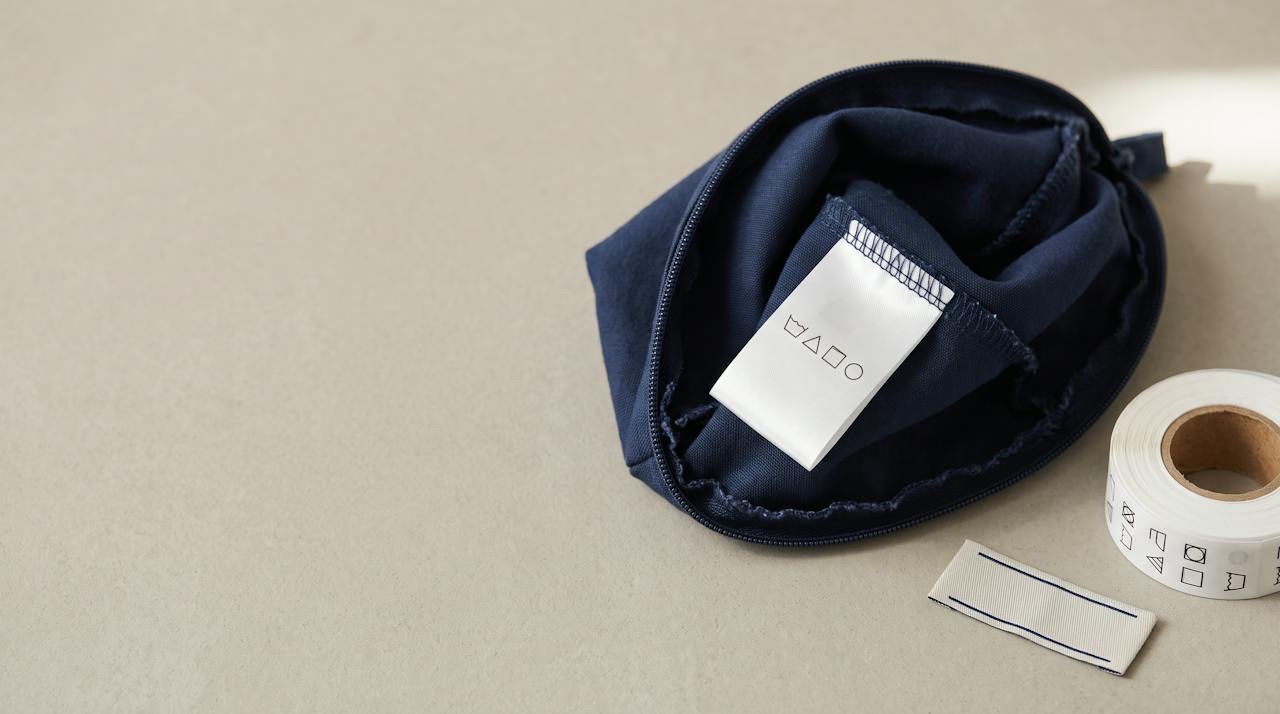
Before any water touches the bag, look for a sewn-in care label, usually in a side seam or inside the lining. The washing symbols tell you whether the bag may be washed by hand or machine, at what temperature band, whether it may be tumble-dried, and whether ironing or dry cleaning is allowed. A crossed-out tub means do not wash; in that case stick to brushing and wiping.
If there is no label, or it has been cut out, treat the bag cautiously: spot-clean only, test first, and do not use a machine. A label is the maker's statement of what the whole bag, not just its outer fabric, will survive. Our note on care labels and washing instructions for bags explains what the symbols mean.
Empty it, shake it out and clean the seams#
Take everything out, including small items hiding in inner pockets and elastic loops. Open every zip fully, turn the pouch upside down and shake it over a bin. Loose powder, broken eyeshadow and crumbs collect in the bottom corners and along the seams, where water would only turn them into paste.
Use a dry soft brush, such as a clean toothbrush or makeup brush, along the seams and corners, then go over the inside with the narrow nozzle of a vacuum cleaner. If the lining is loose rather than bonded, you can often push it out to reach the corners. Doing this first makes every later step quicker and cleaner.
Spot-cleaning with mild soap and lukewarm water#
For most marks, spot-cleaning is all a pouch needs. Mix a small amount of mild soap or gentle liquid detergent into a bowl of lukewarm water. Dip a soft cloth, sponge or soft brush, squeeze it out well, and work on the mark with light pressure, from the edge towards the centre so it does not spread.
Always test first in a hidden spot, such as inside a seam allowance or under a flap, and check that the colour does not transfer to the cloth and the surface does not dull or lift. Then wipe the area with a cloth dampened in clean water to remove the soap, and blot dry with a towel. Avoid bleach, solvents, abrasive pads and stiff brushes, which can fade colours, remove coatings or roughen the fabric.
Makeup stains and oily stains#
Makeup is the reason most cosmetic pouches need cleaning. Deal with it gently and as soon as you can. For foundation and other liquid makeup, blot off as much as possible with a dry tissue first, then dab with the soapy cloth. Do not rub: rubbing pushes the pigment deeper into the weave and spreads the mark.
For lipstick, balm and other oily or waxy marks, lift off any solid residue carefully with the edge of a card, then dab with a little more soap on the cloth, since soap is what loosens oil. For loose or pressed powder, brush or vacuum it off dry before using any water, otherwise it turns into a smear. Repeat gently rather than pressing harder, and accept that some pigments may leave a faint shadow on light fabrics.
Hand-washing a whole pouch#
If the pouch is soft and unstructured and the label allows washing, hand-washing is the gentlest way to clean it all over. Fill a basin with lukewarm water and a little mild detergent, close the zip most of the way, and submerge the pouch. Squeeze the water through it gently, work on any marks with a soft brush and leave it to soak only briefly.
Do not wring or twist the bag, which can distort the shape, crack a coated lining and strain the seams. Instead, press the water out with your hands, then roll the pouch in a towel and press again.
Machine washing: only if the label allows#
Some soft polyester and nylon pouches are made to be machine-washable, and the label will say so. If it does, close the zip so the teeth cannot snag other items, empty the pockets, and put the pouch in a mesh laundry bag or a pillowcase. Choose a gentle or delicate cycle, cold or lukewarm water as the label shows, a small amount of mild detergent and a low spin.
Wash it with similar colours or on its own the first time, in case of colour bleeding. Skip fabric softener, which can leave a film on synthetic fabrics and coatings. Take the bag out as soon as the cycle ends so it does not sit crumpled and damp.
When not to put a bag in the machine#
Some constructions should not go in a washing machine even if the outer fabric is polyester or nylon. Structured bags with board, plastic sheet or foam inside the walls can bend, crack or lose their shape. PU or leather-look trims, handles and tabs can peel or crease. Printed, foiled or coated fabrics can scuff, crack or lose their finish when they rub against the drum.
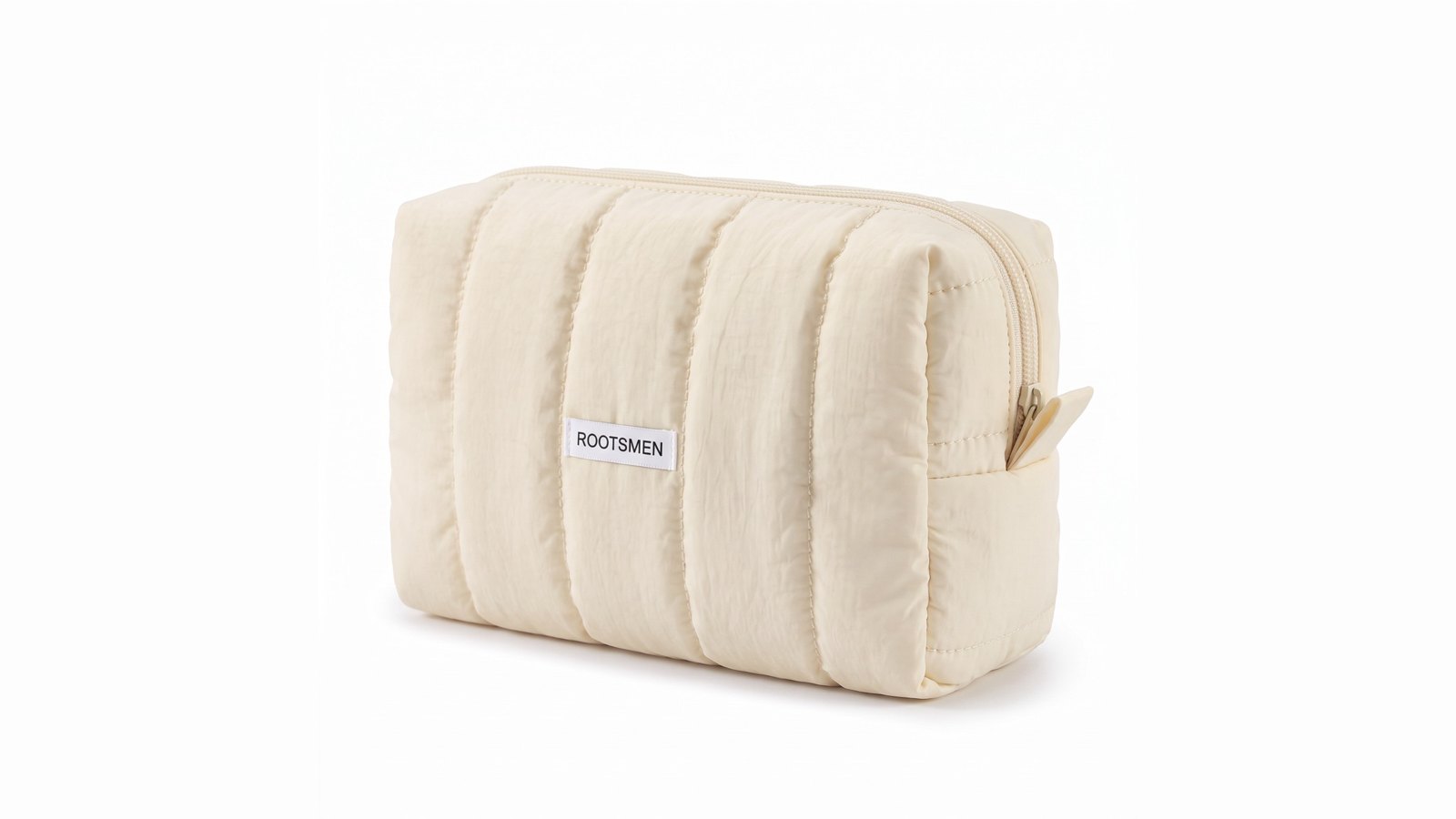
Quilted and puffer-style pouches need special care: the filling can clump, shift or flatten in a machine and may dry slowly, leaving the quilting lumpy. Hand-wash or spot-clean these unless the label clearly allows the machine. Our guide to quilted puffer cosmetic bags explains how the filling and stitching are built.
Rinsing and drying#
Rinse until the water runs clear. Soap left in the fabric can attract dirt, leave a stiff patch or show as a ring when it dries. With a hand-washed pouch, change the rinse water two or three times; with spot-cleaning, wipe the area again with a cloth dampened in clean water.
Then air-dry. Press out the water, reshape the pouch with your hands and, if it helps, stuff it lightly with a clean towel to hold its shape. Leave it open, zip undone, so the inside dries too, and hang it or stand it upside down in a well-ventilated place, away from radiators, heaters and direct sun, which can fade colours, distort synthetics and damage coatings. Do not tumble-dry unless the label says so, and do not put it away until it is dry inside and out.
Coated and laminated linings, and zippers#
Many cosmetic pouches have a wipe-clean lining, such as a PU-coated fabric, PEVA or TPU-type film. These are made to be wiped, not scrubbed. Use a soft damp cloth with a little mild soap, then a clean damp cloth, then dry it with a towel. Hard scrubbing, stiff brushes and soaking can scratch the film, loosen it from the fabric behind it or make it peel at the seams.
Zippers collect powder and grit, which makes them stiff. Brush along the teeth on both sides with a dry soft brush, and after washing open and close the zip a few times and let the tape and slider dry fully before you store the bag. A zip that is put away damp can stay stiff, and metal parts can mark.
Prevention: keeping a pouch cleaner for longer#
The easiest pouch to clean is one that did not get dirty. Keep liquids upright, close caps properly and put anything that might leak in a small inner bag or a removable pouch liner, which can be wiped or washed on its own. Store powders and pressed products in their cases rather than loose.
Wipe spills as soon as they happen, while they are still on the surface. Every so often, empty the pouch and shake it out before crumbs build up in the seams, and let it air with the zip open after travel.
For brands: care labels that match the construction#
If you are developing a polyester or nylon pouch, write the care instructions for the whole bag, not just for the outer fabric. A fabric that survives a machine wash on its own may still be stitched to board, foam, a coated lining, printed panels or PU trims that do not. Decide early whether the bag is meant to be washable, and choose materials, filling, prints and trims to suit that decision.
Then test it. Wash samples the way the label will tell customers to, by hand or machine, and dry them the way the label will say, then check shape, colour, print, coatings, seams, filling and zippers afterwards. Agree with the factory what result is acceptable on the sample, and if the bag does not pass, change the label to spot-clean or wipe-clean rather than hoping. Labelling requirements differ by market, so confirm locally what your label must carry.
| Method | Good for | Avoid on | Tip |
|---|---|---|---|
| Shake out, brush, vacuum | Crumbs, powder, loose dust | Nothing; always the first step | Turn the lining out if it is loose; brush along the seams |
| Spot-clean with mild soap | Small marks, drips, most bags | Untested fabrics; rub only lightly on prints | Test in a hidden spot; work from the edge of the mark inwards |
| Wipe only | Coated, laminated or PU-trimmed surfaces | - | Damp cloth, then dry; do not scrub or soak |
| Hand-wash the whole pouch | Soft, unstructured, all-fabric pouches | Bags with board, foam or leather-look trims | Lukewarm water, gentle squeezing, no wringing |
| Machine-wash | Only bags whose label allows it | Structured, coated, printed or quilted bags | Laundry bag, gentle cycle, cold or lukewarm, zip closed |
| Air-dry | Every washable bag | - | Reshape, leave it open, keep it out of direct heat and sun |