Buyers often send a photo and ask "how much?". From the other side of the email, that question starts a short piece of detective work. A factory has to turn a picture or an idea into a bag that can actually be made, and only then can it put a price on it.
This note walks through that journey from enquiry to quotation and the thinking at each step. It is about the process, not about rates or formulas: for what moves the unit price up or down, see what drives the unit price of a custom cosmetic bag, and for reading two offers side by side, see how to compare two bag factory quotations.
Reading the enquiry: what the bag must do#
The first read is about purpose rather than price. Is this a retail cosmetic bag that will sit on a shelf next to the brand's products, a gift with purchase, a travel organiser that must survive a suitcase, or a promotional pouch used once at an event? The answer shapes everything after it: how durable the bag has to be, how finished the inside must look and how much presentation matters.
Next come the references: a photo, a competitor's bag, a sketch or an old sample. Then the practical inputs: the quantity tiers you are considering, when you need the goods and where they are going. None of these is a price on its own, but each one changes which materials, methods and packing are realistic, so they belong in the very first message.
Clarifying questions#
Almost every enquiry has gaps, and a good factory asks about them rather than guessing silently. Typical questions: Is the size inside or outside? Does the bag need to stand up on its own? Should it wipe clean? Is the logo printed, embroidered or a label? Is a gift box or retail card needed? Does the product have to meet any market or retailer requirements?
These questions are not a sales delay. Each answer removes an assumption that would otherwise be built into the price. If something is still open, say so; the factory can then quote it as an option or state clearly what it has assumed, instead of picking something you did not intend.
Breaking the bag into a bill of materials#
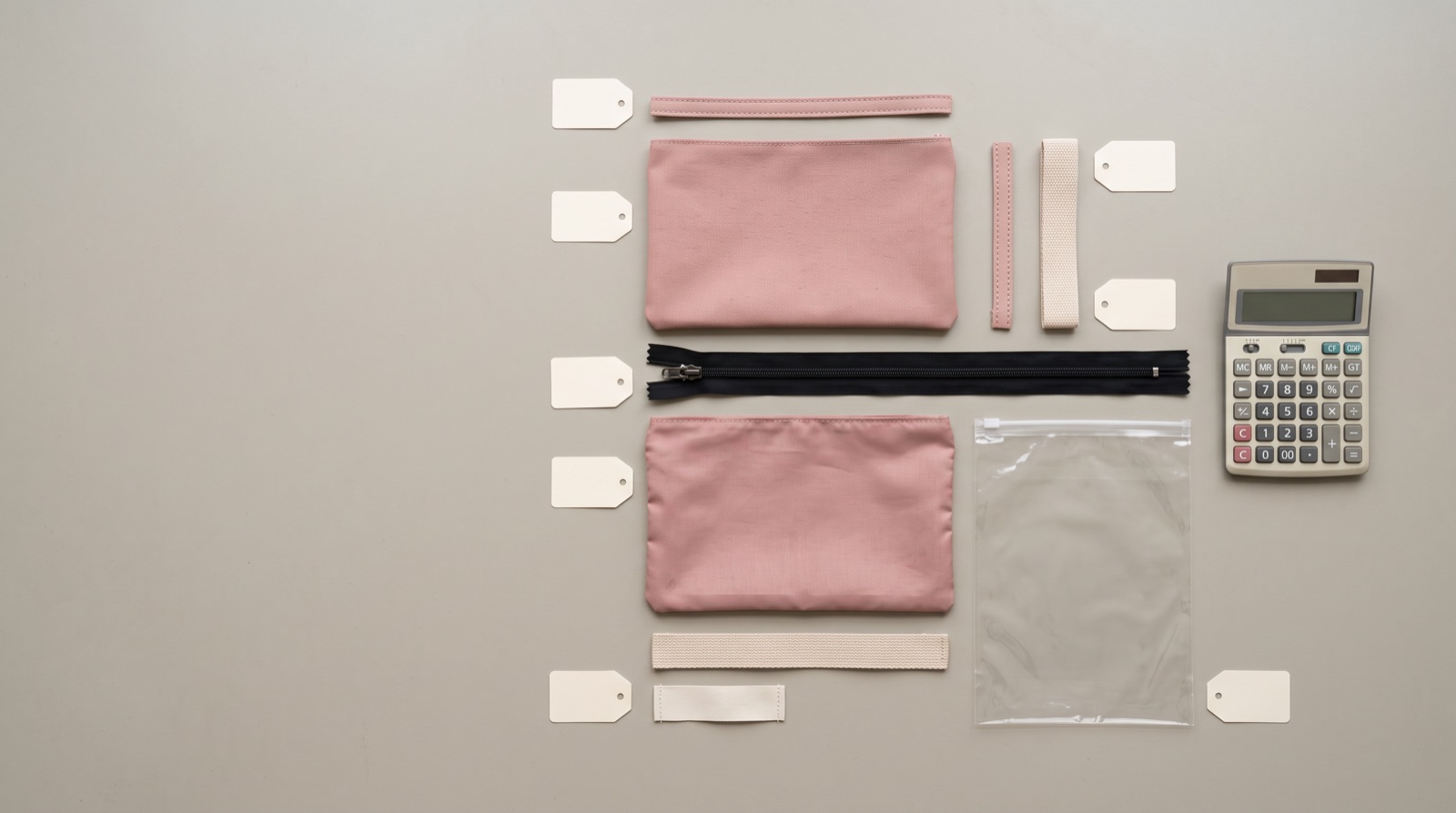
Once the bag is understood, it is taken apart on paper. The shell is the outer fabric that gives the look. The lining covers the inside and may need to be wipe-clean. An interlining or padding between them gives body, shape or structure. The zipper is described by type, size and finish, and the puller separately, because a branded or shaped puller is its own component.
Then come the trims: piping, binding, webbing, handles, D-rings, elastic loops, mesh pockets, inner dividers. Then the labels: a woven or printed brand label, a care label, any origin or content information. Finally the packaging: a polybag, a hang tag, an insert card, an individual box, the outer carton. Writing all of this down in words is what turns "a pouch like this one" into something that can be priced and later checked against the sample.
Choosing material routes and alternatives#
For many parts there is more than one sensible route. A shell can be a coated polyester, a nylon, a cotton canvas, a recycled fabric or a PU leather, each with a different look, feel and behaviour in use. A lining can be a simple woven fabric or a wipe-clean material. A zipper can be a standard coil or a metal or moulded one with a more premium finish.
The factory chooses a route that fits what you have said matters most, and often notes an alternative: a material that looks almost the same but is easier to source, or one that adds a recycled content story. If you tell the factory your priorities, such as look first, durability first or a sustainability claim, the first route it proposes is far more likely to be the right one.
How construction and sewing are considered#
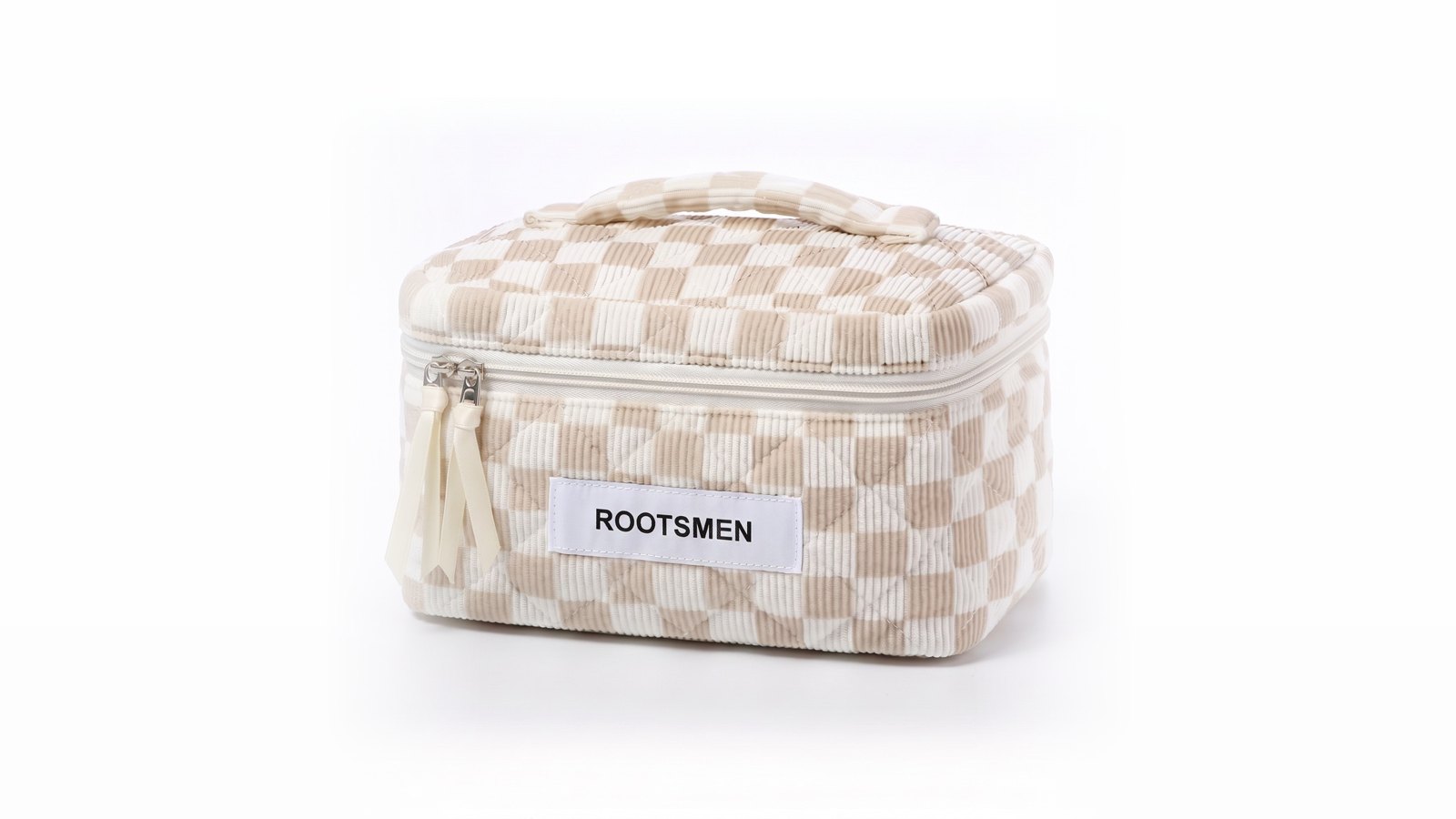
Two bags in the same fabric can be very different to make. A flat zip pouch is cut from a few pieces and sewn quickly. A boxy vanity case with quilting, piping, a structured base, a handle and inner pockets has many more pieces, more steps and more places where alignment matters.
So the factory looks at how the bag is put together: how many panels, whether seams are turned or bound, whether there is quilting or a pattern to match across seams, how corners are finished, how much handwork is involved and how hard the bag will be to check. This is why a small detail you like on a reference, such as contrast piping or a matched stripe, is worth pointing out early.
Branding methods#
How the logo goes on is a separate decision with its own considerations: printing, embroidery, debossing or embossing, a woven label, a patch, a metal or rubber badge, or a branded zipper puller. Each method suits some materials better than others, and each has its own set-up and its own way of looking right or wrong.
For the quote, the factory needs the method, the artwork, the size, the position and the number of colours. If you are unsure which method fits the material, ask for a recommendation; it is easier to settle this before sampling than after.
Packaging and shipping terms as inputs#
Packaging is part of the product, not an afterthought. A bag packed in bulk with simple protection, one in an individual polybag with a barcode sticker, and one in a printed gift box with tissue are three different jobs. Retailer packing instructions, carton marks and labelling needs all count.
Shipping terms matter too: whether the price is for goods collected at the factory, delivered to a port, or delivered to your door changes what the quotation covers. Stating the destination and the terms you want means the quote answers your real question instead of a different one.
Why one quote may come with options#
Sometimes a factory sends a quotation with more than one version of the same bag: a good option that meets the brief simply, and a better option with an upgraded fabric, a nicer zipper, a richer branding method or better packaging. This is not upselling for its own sake; it shows you where the choices are and what each one changes.
Options are most useful when the brief leaves room, for example when you have a look in mind but no fixed materials. They let you decide with the trade-offs in front of you, rather than going back and forth with one question at a time.
What changes a quote later#
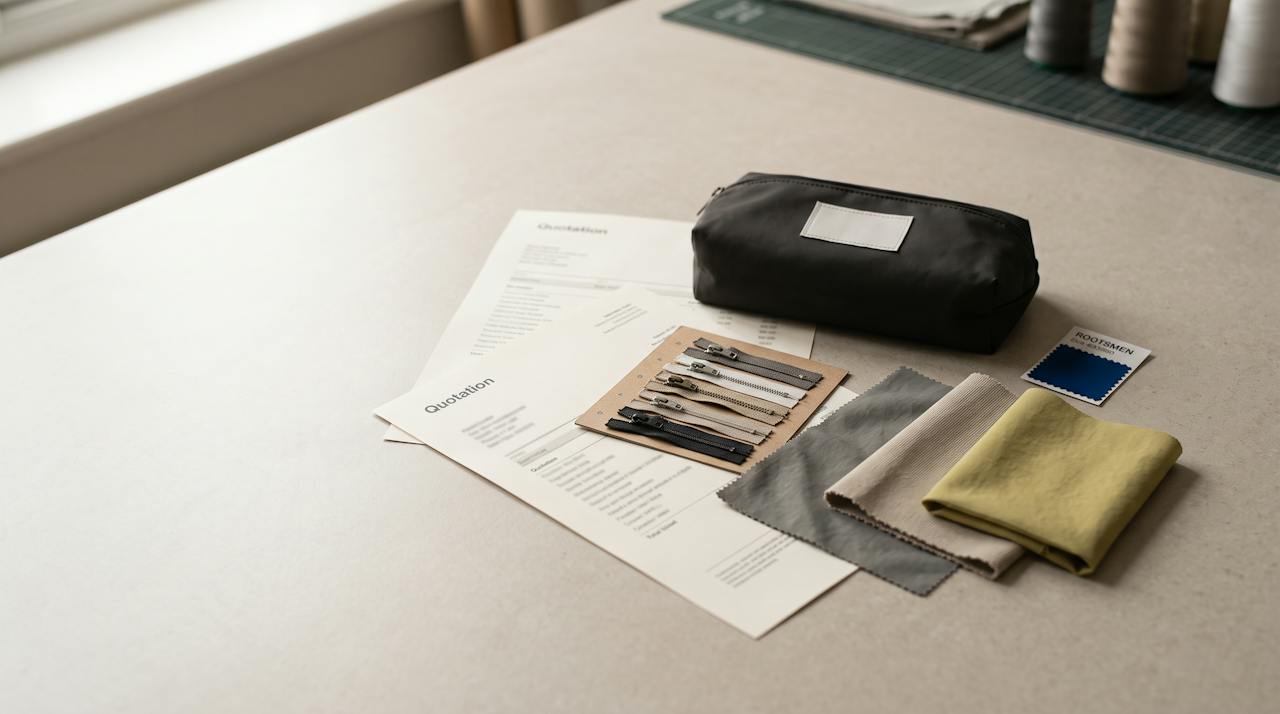
A quotation describes a specification. When the specification changes, the quote may change with it. Common reasons: a size adjustment, a different fabric or zipper, an extra pocket, more colourways or a colour that needs its own dye lot, a change in branding method, new packaging, or a different quantity tier or delivery term.
Sampling feedback is a frequent trigger. Once you hold the sample, you may want a firmer base, a softer lining or a larger logo, and each of those is a reasonable request that also changes the bill of materials. Keeping a clear record of what the quote assumed makes these updates quick and transparent for both sides.
Why two factories quote differently for "the same bag"#
When two quotes for the same photo differ, the factories are often not quoting the same bag. One may have assumed a heavier fabric, a padded interlining, a branded puller and individual polybags; the other a lighter fabric, no padding, a plain puller and bulk packing. Both read the same picture and filled the gaps differently.
The fix is to compare the assumptions, not just the totals. Ask each factory to state its materials, construction, branding, packaging and terms, then line them up. Our guide on comparing two bag factory quotations goes through this step by step.
What to send for a faster, more accurate quote#
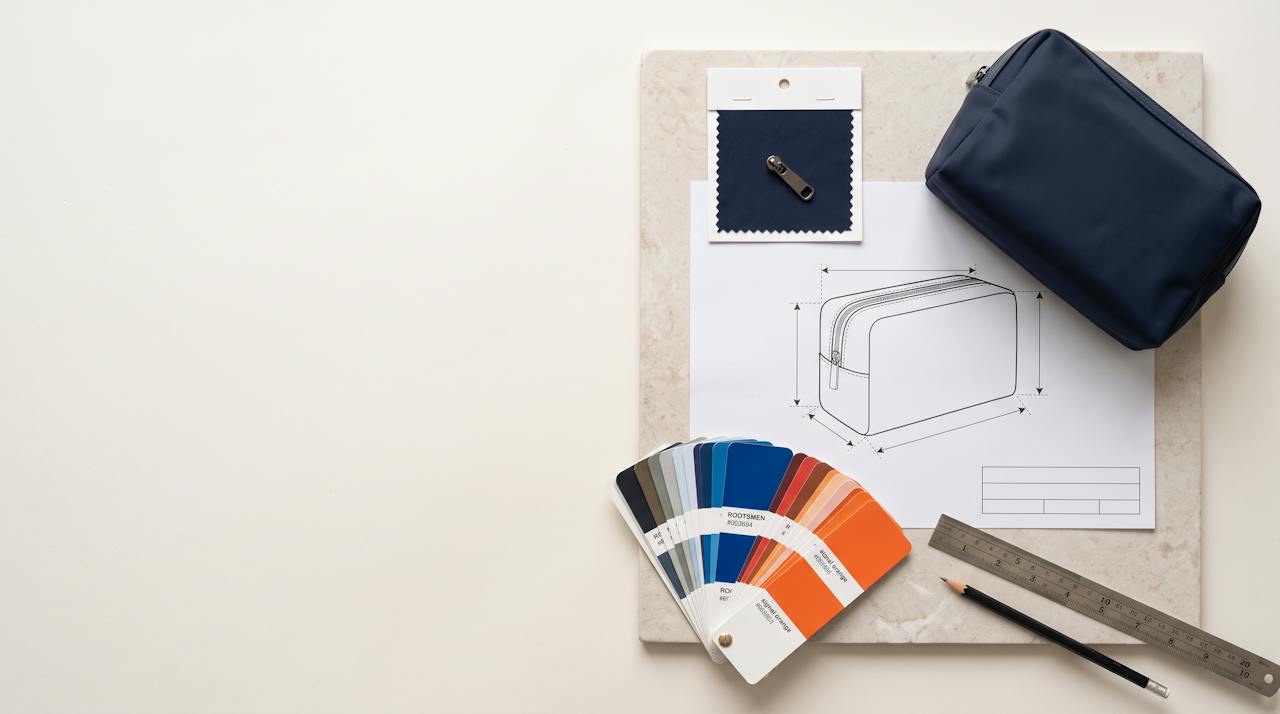
The quickest quotes come from enquiries that answer the questions before they are asked. Helpful things to include: a tech pack, or at least a sketch with dimensions; a reference sample or clear photos from several angles; the target market and how the bag will be sold or used; the quantity tiers you want quoted; your branding artwork and placement; your packaging needs; your destination and preferred delivery terms; and anything that is fixed versus open.
If you do not have a tech pack yet, how to write a tech pack for a cosmetic bag shows what to put in one. And if you would rather talk the project through first, get in touch and we will ask the clarifying questions with you.
| Stage | What the factory is working out | What helps from your side |
|---|---|---|
| Reading the enquiry | What the bag must do, who it is for, how it will be sold or given away | A short brief, the target market, the quantity tiers you are considering and your timing |
| Clarifying questions | Which assumptions are safe and which need your answer | Quick, specific replies; saying when something is open |
| Bill of materials | Every part of the bag, described in words | A tech pack or an annotated reference sample |
| Material routes | Which fabrics and components fit the look, use and budget | Your priorities: look, feel, durability, sustainability claims |
| Construction | How the bag is cut, assembled and finished | Photos of seams, corners and details you want to keep |
| Branding | Method, size, position and number of colours | Artwork files and where the logo should go |
| Packaging and shipping | How each bag is packed and on what terms it is delivered | Retail or bulk packing, labelling needs and destination |
| The quotation | A price for a clearly stated specification, sometimes with options | Checking the stated assumptions against what you meant |