A sleep eye mask looks simple: two layers of fabric, a strap and a binding round the edge. In practice it is worn against the face, for hours, often by someone lying on their side, so small choices about fabric, shape and strap decide whether it is used every night or left in the drawer after the first trip.
This note is written for brand buyers and product developers planning a branded sleep mask, a mask for a travel set, or a mask as a gift with purchase. It covers face fabrics, filling and layers that cut light, flat and contoured shapes, nose bridges, straps, binding, care labels, branding and packaging, and what to check on the first samples. It does not cover any health or sleep claims; those are outside what a soft-goods brief should promise.
Face fabrics: what touches the face#
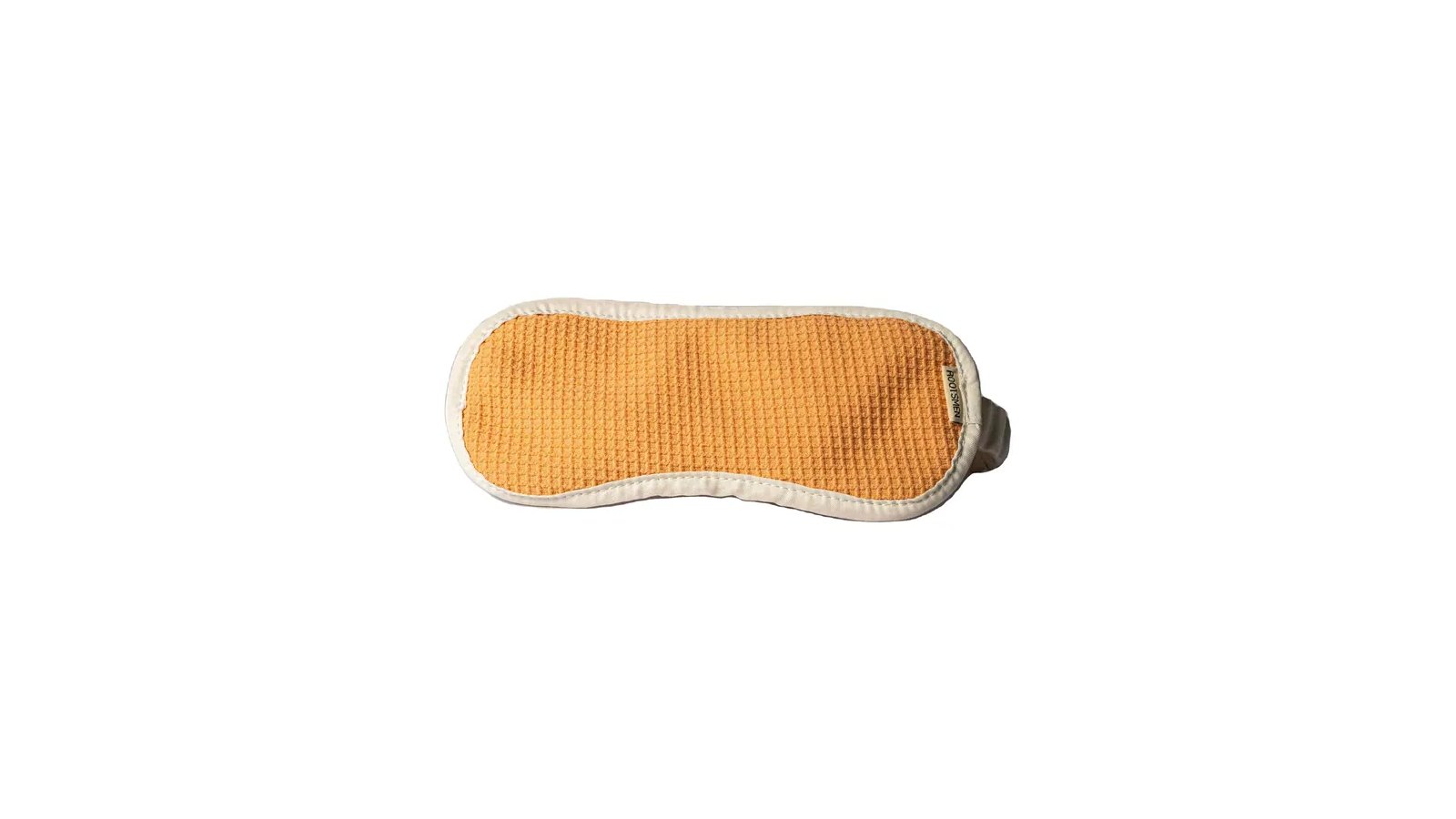
The face fabric is the side that sits against the eyes and cheeks, and it is the first thing a customer judges. Cotton is soft, matte and familiar, and suits everyday and natural-look ranges. Waffle cotton adds texture and pairs well with spa or hotel-style sets. Polyester satin is smooth and glossy, takes bright and printed colours well, and is common in beauty gift sets. Velvet and plush feel cosy and suit winter and holiday ranges; modal and blended jersey are very soft with a little stretch.
Silk and silk-like finishes are often requested for premium ranges. Describe them carefully: if the fabric is genuine silk, the fibre content must be stated accurately on the label; if it is a polyester satin with a silk-like look, call it that. Keep the product copy to how the fabric looks and feels rather than what it does for skin or hair. The outer side and the face side do not have to match: a printed satin outside with a plain cotton face is a common combination.
Filling, foam and layers that cut light#
Between the outer fabric and the face fabric there is usually a middle layer. A thin wadding gives a soft, slightly padded feel; a foam layer gives a firmer body and is needed for moulded, contoured masks. Thicker filling feels more cushioned but can be warmer and bulkier to pack, which matters when the mask goes into a travel pouch.
If the brief asks for the mask to block light, say so, because a single light-coloured fabric with thin wadding will let light through. A darker inner layer or an extra lining between the outer fabric and the face is a common way to cut light. How much light gets through is best checked on the sample, held up to a window or a lamp, rather than promised with a figure on the box. Light also leaks around the nose and at the sides, which is a question of shape as much as of fabric.
Flat or contoured, and the nose bridge#
A flat mask is cut from flat pattern pieces and sewn, so it is light, folds easily and takes print and embroidery well. A contoured or 3D mask has moulded eye cups that leave space in front of the eyes and eyelids, so the fabric does not press directly on them. Contoured masks usually rely on a foam layer, are bulkier to pack, and give less flat area for a logo.
The nose bridge is where most masks let light in. It can be shaped with a cut-out in the lower edge, a dart, a small flap of fabric, or a curve moulded into a contoured mask. Ask for the nose shape to be drawn on the pattern, and try the sample on several people with different face shapes, because one person's good fit can gap or press on someone else.
Straps, fit and comfort#
The plainest strap is a flat elastic band sewn into the sides. It is light and easy, but a bare elastic can grip hair and feel tight over a long night. A covered elastic, where the elastic runs inside a fabric tube, is softer against the head and can match the mask. An adjustable strap, with a hook-and-loop tab or a slider at the back, lets one size fit more people.
Agree the strap width and how tight it should feel, and check how the strap ends are anchored, because that is where they pull loose. If you use hook-and-loop, ask for the hook side to sit where it cannot catch hair or rub the skin, and check that it does not snag the face fabric when the mask is washed. Write down the strap length and stretch agreed on the approved sample so bulk can be checked against it.
Edge binding, skin contact and the care label#
Most masks are finished with a binding around the edge, which covers the raw seam and gives the outline its shape. The binding can match the mask or contrast with it, and its width and stiffness change the look. Check that it lies flat, that the corners and curves are smooth, and that there is no hard seam or rough edge on the side that touches the face.
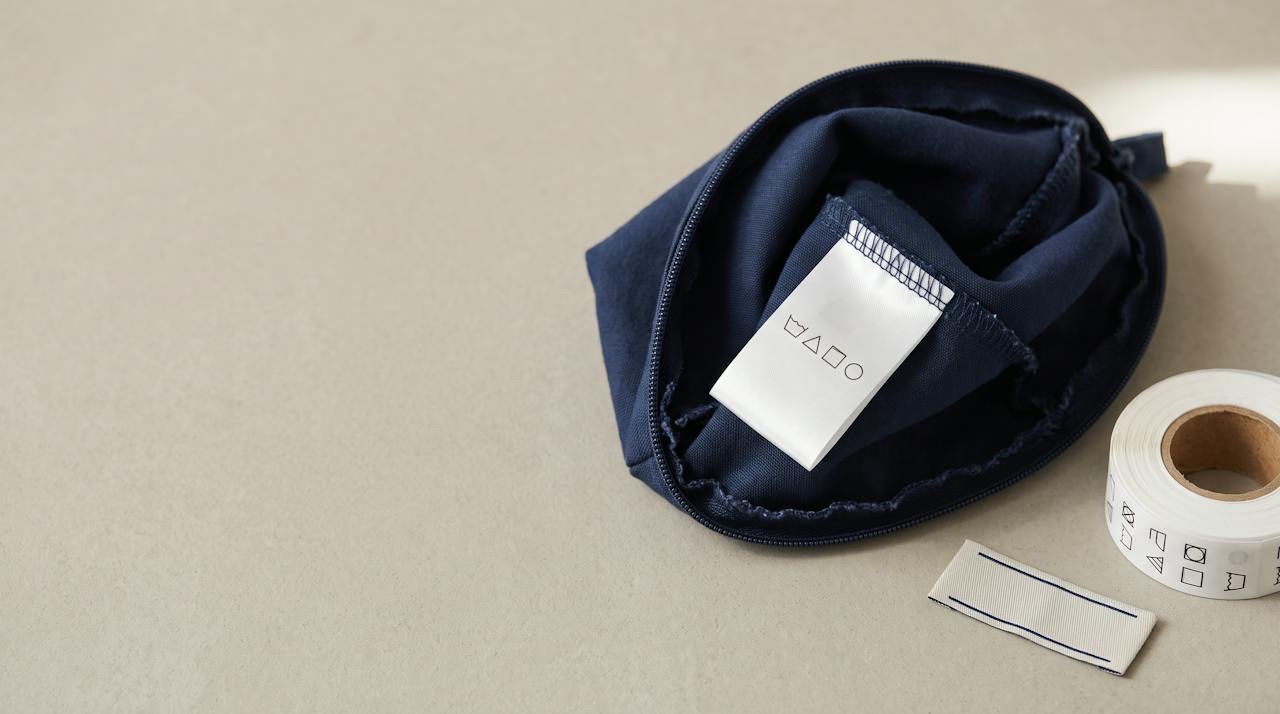
Because the mask is worn against the skin, keep the face side free of scratchy labels, prints with a heavy feel and knots of thread. Put the care label on the outside or in the strap seam. Decide how the mask should be washed, by hand or in a laundry bag for example, wash the sample that way, and check shrinkage, colour and shape afterwards. Our note on care labels and washing instructions covers what the label should say and where it can go.
Branding on a soft surface#
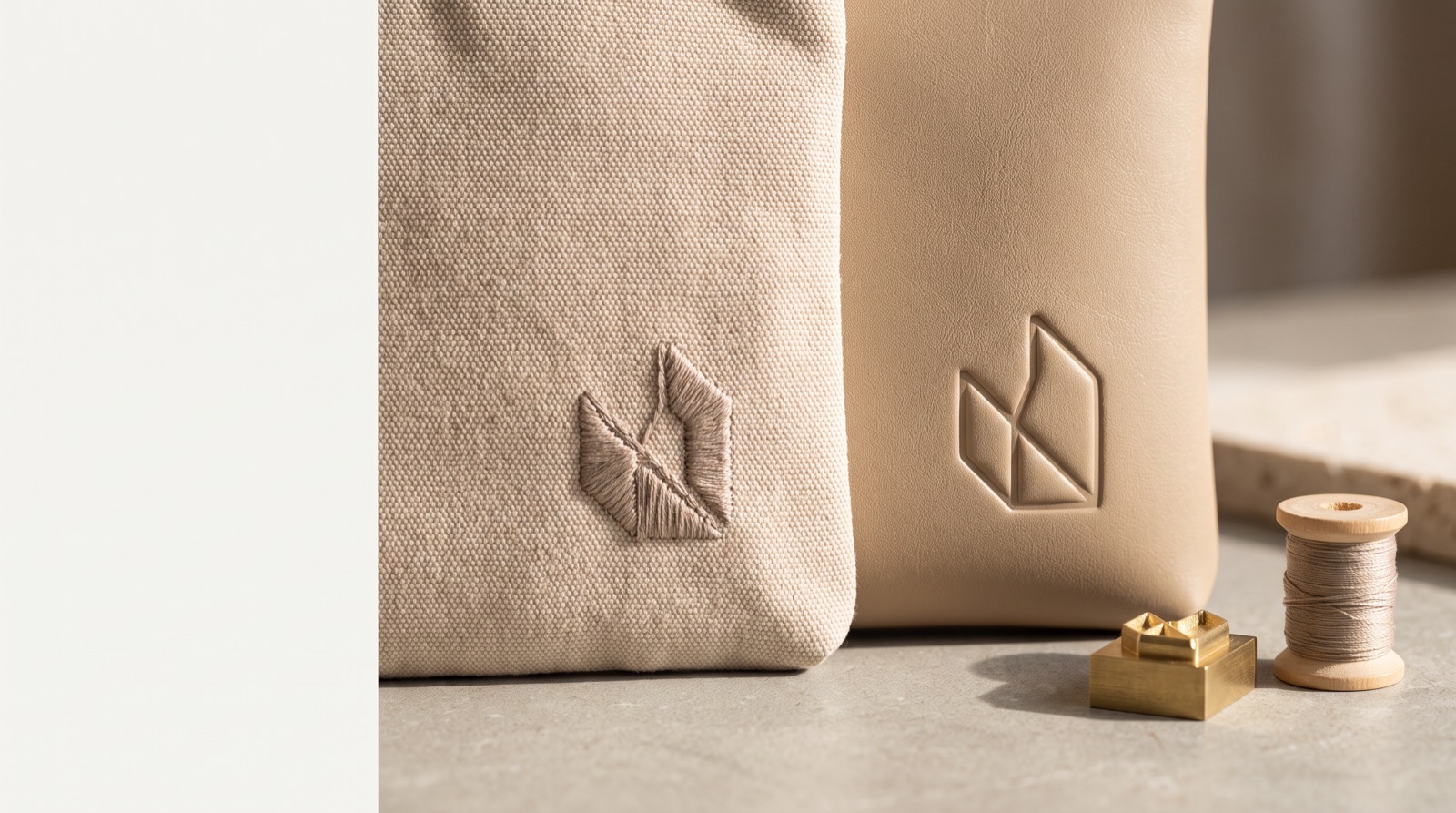
An eye mask is small and soft, so the logo has to work on a padded, curved surface. Embroidery looks rich and lasts well, but dense stitching can pucker satin and stiffen a thin mask, and it sinks into velvet pile; a backing behind the embroidery helps. Printing keeps the surface smooth and suits detailed artwork and all-over patterns, so check how it feels and how it holds up after washing. A small woven label on the side or on the strap is a quiet, tidy option.
Keep the logo on the outer side, away from the area directly over the eyes on a contoured mask, and away from the nose bridge, where it would crease. Our quick guide to embroidery and debossing on soft goods explains how to choose between methods, and the same artwork rules apply here.
Packaging, travel sets and GWP#
Masks are rarely sold bare. A matching fabric pouch keeps the mask clean in a bag and can carry the brand again; a printed card or sleeve suits retail and gift sets; a polybag with a header card suits large promotional runs. Decide whether the mask is folded or flat in its packaging, because folding a contoured mask can crush the cups.
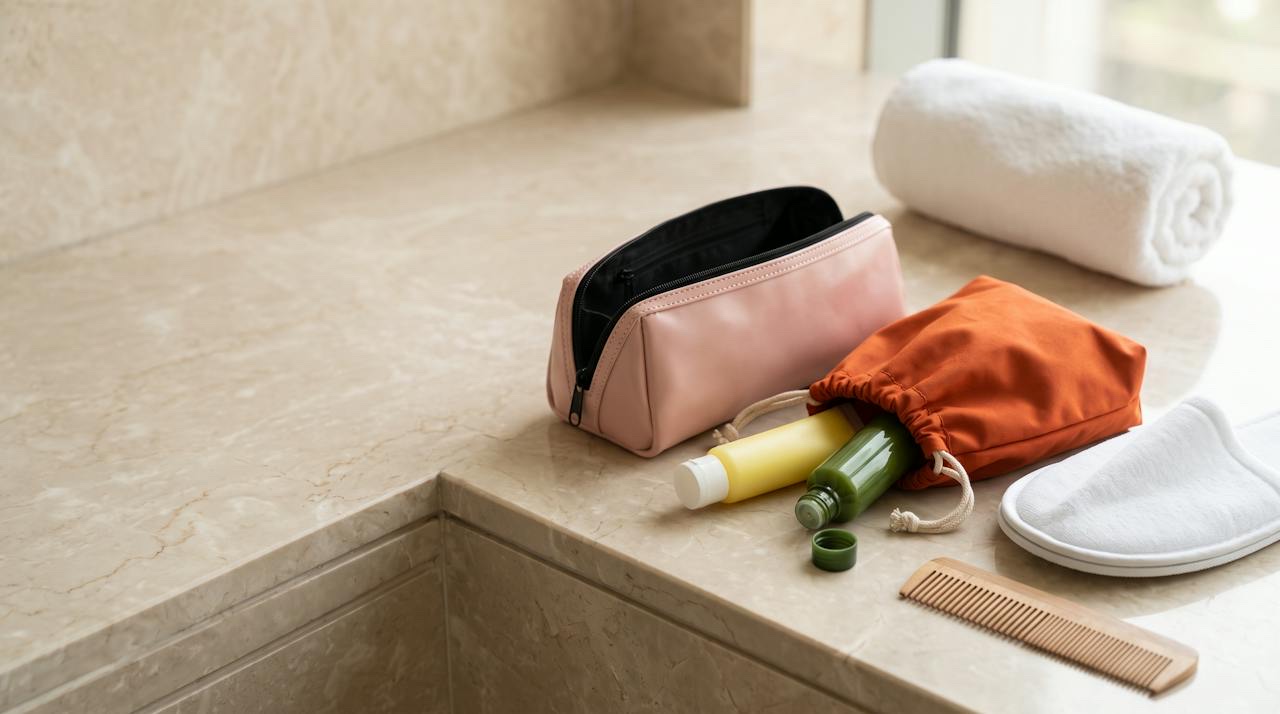
In travel sets the mask is usually paired with an organiser, an amenity pouch, ear plugs or slippers, and works best when fabric and colour are planned together; our guide to hotel amenity kits and travel sets shows how these sets are built. As a gift with purchase, a mask is light and easy to ship, and can be developed alongside a matching pouch. You can see the styles we make on our eye masks and hair accessories page.
| Face fabric | Typical feel and look | Good for | Watch for |
|---|---|---|---|
| Cotton (plain weave or jersey) | Soft, matte, familiar | Everyday masks, natural-look ranges, travel sets | Can shrink or crease when washed; colour may fade over time |
| Waffle cotton | Textured, light, relaxed | Spa and hotel-style sets, coordinated with towels or robes | Texture can blur fine print; check shrinkage after washing |
| Polyester satin | Smooth, glossy, slides easily | Beauty GWP, gift sets, bright or printed colours | Shows puckering and needle marks; can feel warm |
| Silk or silk-like finish | Fine, smooth, premium look | Premium gift and beauty ranges | State fibre content accurately; handle and care need agreeing |
| Velvet or plush | Soft pile, rich colour, cosy | Winter and holiday sets, children's styles | Pile direction, shedding, and embroidery sinking into the pile |
| Modal or blended jersey | Very soft, drapes, slight stretch | Comfort-led ranges, sleepwear and loungewear sets | Stretch affects the shape; edges need a stable binding |