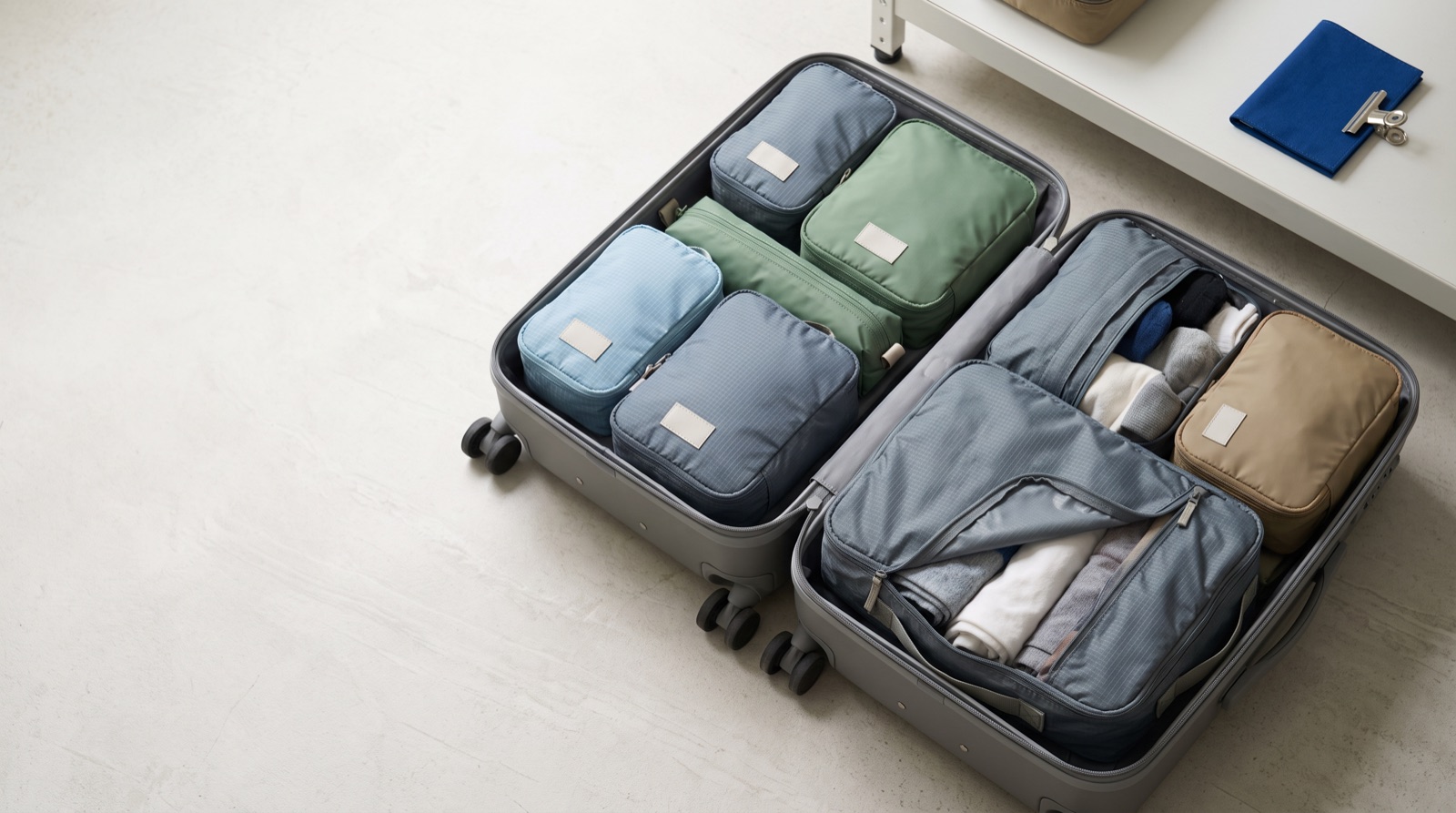
旅行收納袋的表布要撐過被塞爆、被壓縮、在機場地板上拖行,然後再被拿出來——而且是一再重複。這讓它的材質比較,和一個一輩子待在架上的零售收納包完全不同。
格子布尼龍與 RPET 都可行,這個品項兩者都被大量指定。它們的差別在於「壞掉的方式不同」,那才是選之前該知道的事。一個講的是織法,一個講的是纖維來源——先釐清這點,因為這正是這場比較經常被比錯的原因。
一個是織法,一個是原料來源#
格子布(ripstop)講的是織法,不是纖維。較粗的補強紗以固定間距織入,形成肉眼可見的方格。那些方格就是止裂結構:破口從一格開始,會被下一根補強紗攔住,而不是沿著整片延伸。
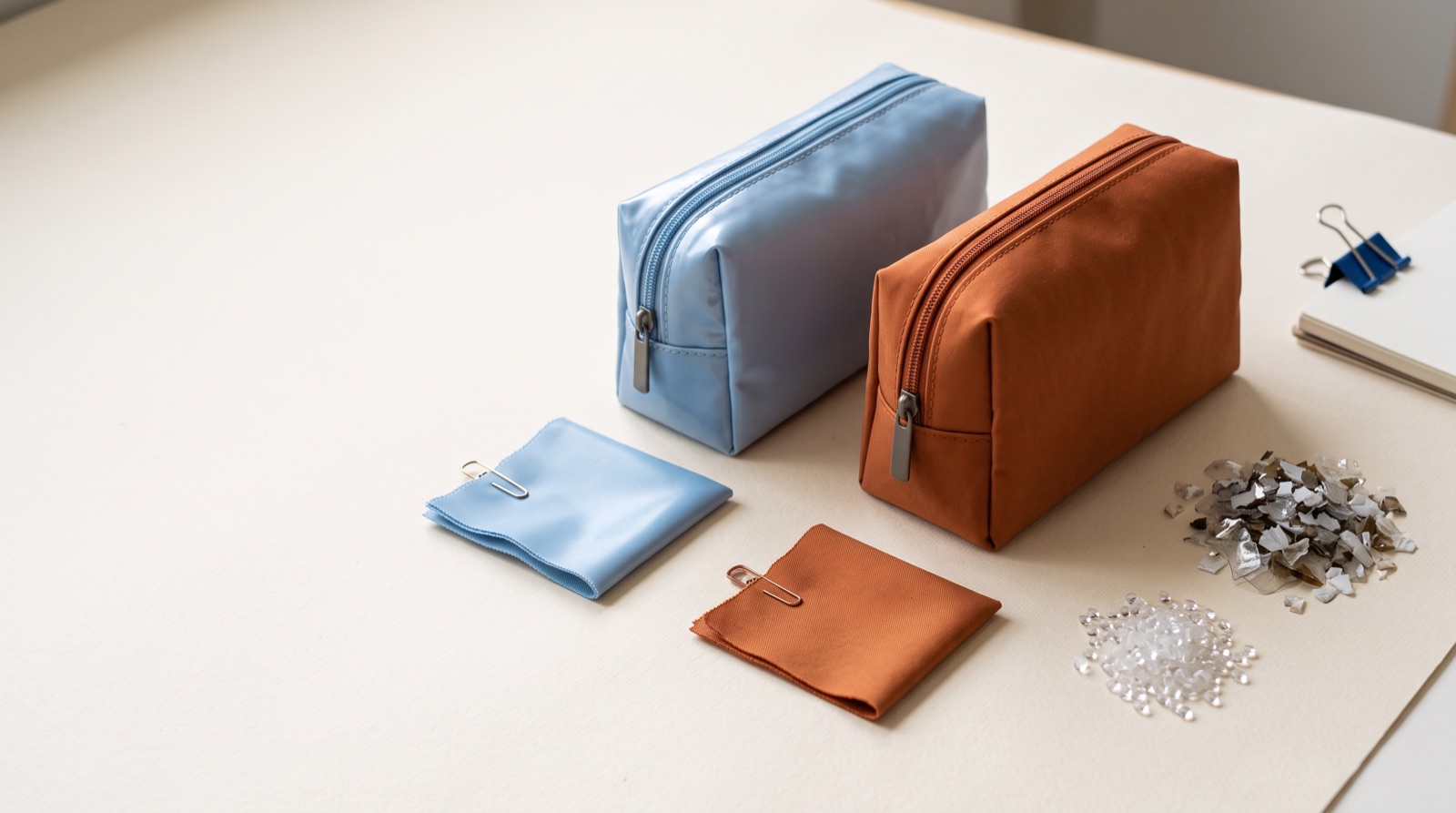
RPET講的則是聚酯纖維的來源——多半是回收寶特瓶碎片——而不是織法或克重。RPET 本身也可以織成格子布,而且愈來愈常見。所以真正誠實的比較,通常是「格子布尼龍 vs. 平織 RPET 聚酯」,這也是報價時最常見的組合,需求單上最好直接寫明是哪一種。
釐清之後就會出現兩個各自獨立的決定:纖維(尼龍或聚酯、原生或回收)與結構(平織、格子布,或更厚的織法)。這兩件事可以分開決定。
磨損、撕裂,以及真正會發生的失效方式#
對一件會被塞緊、被從接縫處拉扯的產品來說,抗撕裂是最相關的性能,這也是格子布主宰旅行品類的原因。破口從應力點開始——通常是方角、拉鍊端點或提把接合處——但它會停在原地,不會延伸。
同克重下,尼龍的耐磨與抗撕裂通常優於聚酯;聚酯則更耐長時間紫外線,吸水也更少。對一個住在行李箱裡的收納袋來說,每天被測試的是耐磨與抗撕裂,紫外線幾乎無關——所以除非有其他更重要的考量,纖維這一題會偏向尼龍。
同克重的 RPET 耐磨表現可以接受,但在平織結構下沒有同樣的止裂能力。輕度使用幾乎看不出差別;被塞超過設計容量的壓縮袋就看得出來——而且那種破損很顯眼,因為它會一路延伸。
重量、丹尼數,以及怎麼比才算同一條件#
布重以丹尼(D)標示,指的是 9,000 公尺紗線的公克重。它是紗線的量測值而非強度指標,但在同一種織法內,它和耐用度的相關性高到足以當參考:70D 與 210D 屬輕薄,420D 與 600D 是主力,1680D 則是行李箱等級。丹尼數怎麼看一文說明各級別的位置。
拿 210D 的格子布尼龍去比 600D 的 RPET,那不是材質比較,而是重量比較——關於這兩種表布的爭論,多半其實都是這個。先把丹尼數或成品重量目標固定下來,再開始比。
格子布尼龍有「很輕但仍然夠強」的規格,當一組收納袋主打「幾乎不增加行李重量」時,這點很關鍵。同等強度下的 RPET 通常比較重,一組五到六件時,手感上摸得出來,運費上也算得出來。
塗層、防水性,以及誠實能講到哪裡#
兩種表布通常背面都有塗層——PU 最常見——正面也都可以做撥水處理。但纖維與織法本身都不會讓一個袋子防水;決定防水的是車縫線與拉鍊,這點在防水與撥水的差別一文裡有完整說明。
撥水處理同時也是法規問題的入口。部分含氟處理劑在愈來愈多市場受到限制,而旅行配件在其中好幾項法規裡被明確點名。如果要做撥水,請在需求階段就決定,讓處理劑與它的文件一起被選定——PFAS 法規是否適用於旅行收納與化妝包說明哪些市場管到這個品類。
聚酯吸濕性低於尼龍,所以 RPET 表布乾得比較快,濕的東西塞進去也比較不容易留下悶味。如果做的是盥洗包而不是乾貨收納袋,這是 RPET 實打實的優點。
顏色、印刷與批次差異#
尼龍上色穩定可預期。RPET 則可能有批次色差,因為回收原料本身就帶有變異;這在淺色與中間色上最明顯,兩件擺在一起就看得出來。
對「成套」的產品——旅行收納袋幾乎都是成套賣的——這才是真正的風險。五個收納袋是要互相對得起來,不只是各自對得上色標。做法只有兩個:下單時鎖定同一缸染色,或選一個對色差比較寬容的顏色。確認紀律和打色與顏色為什麼會跑掉裡講的完全一樣。
網布面板會讓事情更複雜:網布上蓋與素面袋身分開染色,除非刻意去配,否則不會完全一致。請在打樣階段就決定它們是要「配色一致」還是「刻意對比」。
收納性與開箱時的樣子#
兩者都能折平。格子布在壓縮後恢復形狀比較快,這會影響客人第一次拆開時看到的樣子——這是小事,卻承載了很大一部分的質感印象,而且拍照時特別明顯。
如果產品需要挺度——能站立的底部、不會塌的開口——那份挺度來自襯料或底板,不是表布;同一組內襯在兩種材料後面都能用。所以請把「這個表布摸起來很軟」和「這個產品沒有結構」分開看,因為它們的解法不一樣。
這個品類真正被使用者用到的功能——壓縮拉鍊、提把、網布上蓋、識別窗——幾乎都與表布無關。買家真正在意的旅行收納功能一文說明哪些值得花成本。
永續訴求靠什麼成立#
如果專案要帶永續訊息,RPET 是能支撐它的路線——但前提和其他地方一樣:訴求成立與否,靠的是那一批特定材料的文件,而不是材料類別。回收成分要靠交易證書與流向紀錄佐證,而且要在選料階段就索取,不是等吊牌印好之後。
回收尼龍也存在,如果抗撕裂是關鍵、但專案仍需要回收訴求,值得問問看。它的現貨比 RPET 少,材料交期通常也比較長——那是時程問題,不是技術問題。
要準備什麼文件、依什麼順序索取,請見回收材質訴求怎麼查證。
裝填測試:打樣階段該做什麼#
不論選哪種表布,旅行類產品都值得多做一個檢查,時程上也該留給它:把樣品裝進它真正要裝的東西。一個桌上量起來正確的收納袋,裝滿之後仍可能失敗——拉鍊路徑變緊、方角疊料、網布外凸——而在打樣階段發現,遠比量產後便宜。
請要求樣品反覆壓縮再放開幾次,而不是只裝一次。要看的是方角的車縫線是否仍然方正,以及拉鍊在受力時是否還能順跑。這兩項就能攔下大部分「好包」與「第二個月就壞的包」之間的差距。
其餘檢查項目請見第一批樣品到手要看什麼,下一道關卡則見產前樣到底確認了什麼。
怎麼選#
重度使用、要輕、抗撕裂優先:格子布尼龍,並在需求單上把丹尼數寫死。必須帶可佐證回收訴求的專案:RPET,最好也採格子布織法,才不會為了纖維而放棄止裂性。會被濕著收起來的盥洗包:聚酯,因為乾得快。
無論怎麼選,都請在比價前把克重與結構寫成文字,並在需求階段就決定表布,而不是第一版樣品之後。打樣後換表布等於重新開版,因為兩種材料在接縫處的表現不同。旅行配件系列可以看到各種表布實際的使用方式。
| 格子布尼龍 | RPET | |
|---|---|---|
| 撕裂表現 | 格子織法能就地止裂 | 受力時破口會延伸 |
| 同強度下的重量 | 較輕 | 較重 |
| 壓縮後恢復形狀 | 較快 | 較慢 |
| 印刷表面 | 淺色平塗下會透出格子紋 | 平整,適合滿版印刷 |
| 回收訴求 | 無 | 可以,須有文件佐證 |