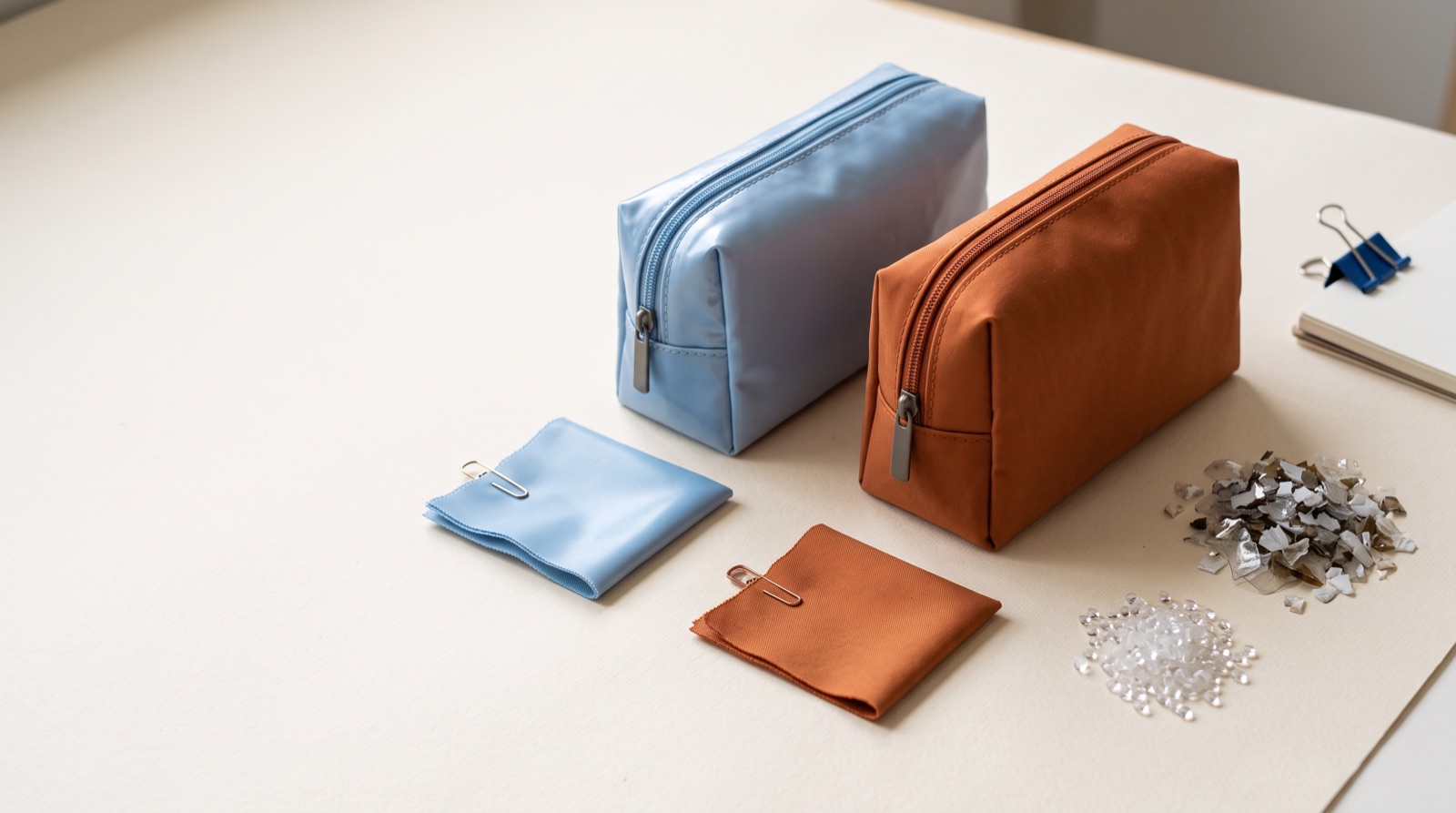
尼龍與 RPET 都能當化妝包表布,紙上看起來可以互換。但在開發階段它們的表現差異大到——太晚決定通常要多付一輪打樣,而且那一輪是重新開版,不是微調。

簡短版本:尼龍比較好做出有結構的形狀;RPET 則讓你能提出一個真的舉證得出來的永續訴求。哪個比較重要是定位決定,不是技術決定,而且值得在第一版樣品之前就想清楚。
- 印刷:RPET 適合轉印與昇華;網印需針對該批號先試印
- 手感:同磅數下 RPET 略乾、垂墜性較差
- 顏色:再生紗染色的批次差異較大
- 成本:量大時相當;小批量時差距拉開
它們是什麼,以及名字沒說清楚的部分#
尼龍是聚醯胺。在這個品類裡通常以 210D、420D 或 600D 的梭織布出現,背面常上 PU 塗層以增加挺度與防潑水性,有時也織成格子布以提高抗撕裂性。
RPET 是以回收 PET 製成的聚酯——這個名字講的是原料來源,不是織法或克重。這是第一件要釘住的事,因為拿 210D 尼龍去比 600D RPET 的報價,比的是重量而不是材質。先固定丹尼數或成品重量目標,再開始比。丹尼數怎麼看說明常見規格的位置。
兩者通常都會搭配塗層與裡布,而這兩樣對手感的影響比表布纖維本身更大。柔軟的 RPET 加上挺一點的襯料,摸起來會比完全沒加襯的尼龍更有結構。
在結構上的表現差異#
尼龍吃摺、能用較少的內部補強做出方正的立體形狀。如果需求是「空的時候要能站在架上」,尼龍用比較少的加片就能達成,重量與單價都比較好控制。
RPET 手感通常較軟,批次之間的一致性略低,因為原料是回收料。這不是瑕疵,是材料的本質——但這表示要做出有結構的輪廓,通常得用更厚的規格或加一塊底板,而這兩者都會動到成本。裡布與襯料一文說明每一層各自負責什麼。
在接縫處,兩者對針的反應不同。塗層布比較容易留下針孔,這在包邊或壓線的方角上會被看見;在一種材料上剛好的針距,在另一種上可能把布打穿。這是在樣品上逐材料設定的,也是為什麼太晚換表布等於重新開版而不是重車。
顏色與印刷#
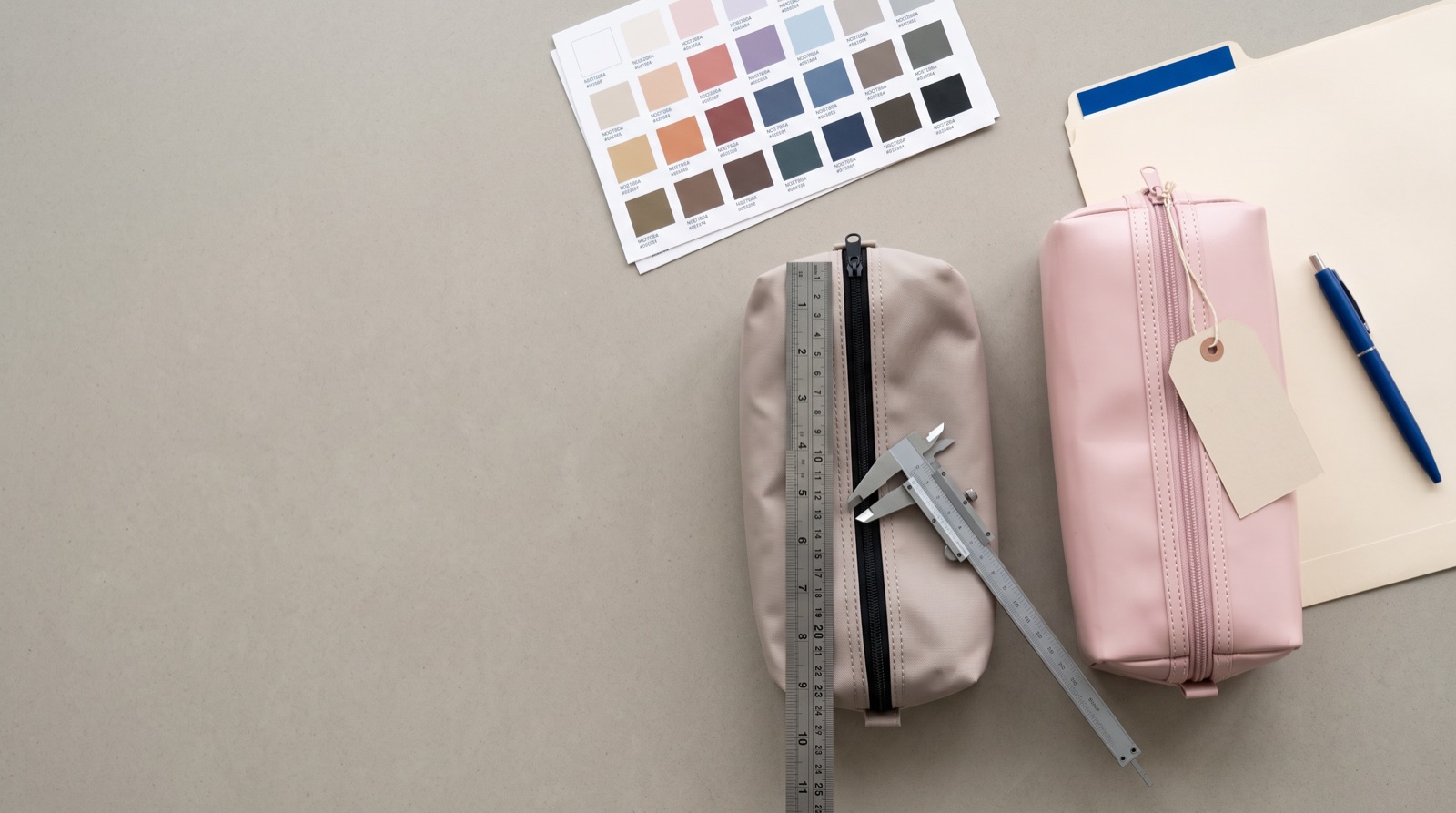
尼龍上色飽和、可預期,也能保留細緻的印刷細節。RPET 則可能有批次色差,這在淺色與中間色上最明顯——兩件擺在一起就看得出來。
對一個系列的實務影響是:如果同一個色的多個品項要擺在一起賣,就在下單時鎖定同一缸染色,或選一個對色差比較寬容的顏色。這要在選料階段決定,不是在最終驗貨時——確認紀律請見打色與顏色為什麼會跑掉。
印刷方面,RPET 對轉印與昇華接受度很好;網版印刷則需要就該批做測試,因為塗層會影響油墨附著。兩種材料的深色表布通常都需要打底,那在版費上是多一色——請見印刷工法怎麼選。
防水、清潔與老化#
聚酯吸濕性低於尼龍,所以 RPET 化妝包乾得快、也比較不容易留下悶味——對會被濕著收起來的盥洗包來說是實打實的優點。同克重下尼龍比較耐磨,這在一個長期散放在手提包裡的產品上看得出來。
兩者都不會因為纖維本身而防水。防水性來自塗層、車縫線與拉鍊,誠實能講到哪裡,請見防水與撥水的差別。
如果要做撥水處理,請在需求階段決定:部分含氟處理劑在愈來愈多市場受限,而化妝包在其中好幾項法規裡被點名。PFAS 法規是否適用說明是哪些市場。
不論選哪一種,產品都需要一個與它真正能承受的條件相符的洗滌指示——請見洗標與洗滌指示。
不是表布的那些部分#
化妝包上最容易被怪罪「質感不好」的零件是拉鍊,而它的選擇與表布無關。鍊齒型式、拉頭、拉片與布帶寬度,對質感的影響都遠大於這兩種布的差別——化妝包拉鍊怎麼選一文完整說明。
裡布是另一個。無裡布的收納包會露出縫份與刺繡背面;有裡布則兩者都藏起來,但成本增加。對一個要裝玻璃瓶的產品來說,裡布也是保護內容物不被表布內面磨到的那一層。
請把「這塊表布摸起來很軟」和「這件產品沒有結構」分開看,因為解法不同,而且只有其中一個需要換材料。
成本,以及差距真正落在哪裡#
在相同克重與結構下,這兩種表布通常接近到「材料不是決定單價的因素」。真正決定單價的是結構:幾片版、有沒有裡布、有沒有底、幾條拉鍊,以及標誌怎麼上。
如果 RPET 得用更厚的規格、或加一塊底板,才能做到比較輕的尼龍就有的結構,整體反而可能更貴——這正是「永續定位確實有成本」的那個具體情況,值得事先知道,而不是在報價單上才發現。
完整清單、依數字實際變動的順序,請見什麼決定客製包袋的單價。
永續訴求靠什麼成立#
RPET 支撐回收成分的定位,但不會自動產生它。訴求靠的是該批特定材料的文件——交易證書與流向紀錄——而且要在選料階段索取,不是等吊牌印好之後。
回收尼龍也存在,如果結構真的需要尼龍的表現、但專案仍需要回收定位,值得問。它的現貨較少,材料交期通常也較長,那是時程問題而非技術問題。
要什麼、依什麼順序要,請見回收材質訴求怎麼查證。銷往歐盟的專案,趨勢正朝「產品層級文件成為標配」走——請見ESPR 與數位產品護照的影響。
怎麼決定#
如果產品要有結構、要面對零售貨架、而且對顏色很要求:尼龍風險較低。如果專案帶著必須禁得起檢視的永續訊息:走 RPET,而且訴求要在出現在任何文案之前,先對照該批材料的文件確認。
無論哪一種,這個決定都屬於需求階段。第一版樣品之後換表布等於重新開版,因為兩種材料在接縫處的表現不同,而且通常要多付一整輪。
請把表布、克重、裡布與預期結構一起寫進技術規格書。化妝包系列可以看到各表布實際的使用方式。
| 尼龍 | RPET | |
|---|---|---|
| 結構 | 用較少補強就能做出方正立體 | 較軟,通常需更厚規格或加底板 |
| 顏色一致性 | 批次之間可預期 | 淺色與中間色可能有批次色差 |
| 印刷細節 | 細節保留良好 | 良好;深色表布可能需打底 |
| 回收訴求 | 無 | 可以,須有文件佐證 |
| 常見用途 | 有結構的零售收納包 | 帶永續訊息的專案 |