Brand buyers increasingly ask for a recycled polyester cosmetic bag, and supplier quotes come back with three words that are used almost interchangeably: polyester, recycled polyester and RPET. They are related, but they are not the same, and the difference matters both for how the bag looks and for what you can honestly say about it on a hangtag or a product page.
This note explains what each term means, where recycled polyester comes from, the difference between mechanical and chemical recycling, how recycled fabric compares in hand, colour, consistency and strength, what happens with coatings and laminates, how to check a recycled claim and what to write in the spec. For a narrower, practical comparison for soft pouches, see RPET vs virgin polyester for soft cosmetic pouches.
Three terms: polyester, recycled polyester and RPET#
Polyester, in bags, almost always means PET (polyethylene terephthalate) spun into fibre and woven or knitted into fabric. "Conventional" or "virgin" polyester is made from new raw material derived from oil and gas. It is the baseline most cosmetic bag fabrics are developed against: widely available in many deniers, constructions and colours.
Recycled polyester is the same kind of polymer, made partly or wholly from polyester that has already been used or wasted. RPET simply means recycled PET. Strictly, all recycled polyester fabric is recycled PET, but in the trade "RPET" usually refers to polyester made from post-consumer drinks bottles, while "recycled polyester" is the wider umbrella term. Because suppliers use the words loosely, ask what the feedstock actually is rather than relying on the label in a quote.
Where recycled polyester comes from#
Most recycled polyester in bag fabrics today comes from PET bottles. Bottles are a convenient feedstock: they are collected in large volumes, they are mostly clear PET, and they can be sorted, washed and flaked before being turned into fibre. This is what most buyers mean by an RPET cosmetic bag.
Two other sources are growing. Post-industrial recycled polyester is made from waste generated during production, such as yarn ends, off-cuts or rejected fabric, before it ever reached a consumer. Textile-to-textile recycled polyester is made from used fabrics or garments, which is harder because old textiles are often blended, dyed and finished. Each source is a legitimate form of recycled content, but they are not interchangeable in a claim: "made from recycled bottles" and "made from recycled textiles" are different statements, and only one of them will be true for a given fabric.
Mechanical and chemical recycling, at a high level#
Mechanical recycling cleans and sorts the material, melts it and re-extrudes it into new fibre without breaking the polymer down. It is the established route for bottles. Because the input is melted rather than rebuilt, the quality of the fibre depends on how clean and consistent the feedstock is, which is one reason mechanically recycled yarns can show more variation in shade and dye uptake.
Chemical recycling breaks the polymer down into its building blocks or an intermediate, purifies it and rebuilds it into new polymer before spinning. It can accept mixed, coloured or textile waste and can produce fibre that behaves very much like virgin. Some chemically recycled supply is counted through accounting methods that allocate recycled input across output, rather than every metre physically containing it. Neither route is automatically better for a cosmetic bag; what matters is what the fabric does on your sample and how the supplier describes the content.
Hand, look and colour matching#
A recycled polyester fabric specified in the same denier, weave and finish as a virgin one can look and feel very close to it, and many buyers cannot tell them apart in a finished pouch. Small differences are possible: some recycled yarns have a slightly drier or less lustrous hand, and the range of special yarns, such as very fine filaments or particular textures, may be narrower than in virgin.
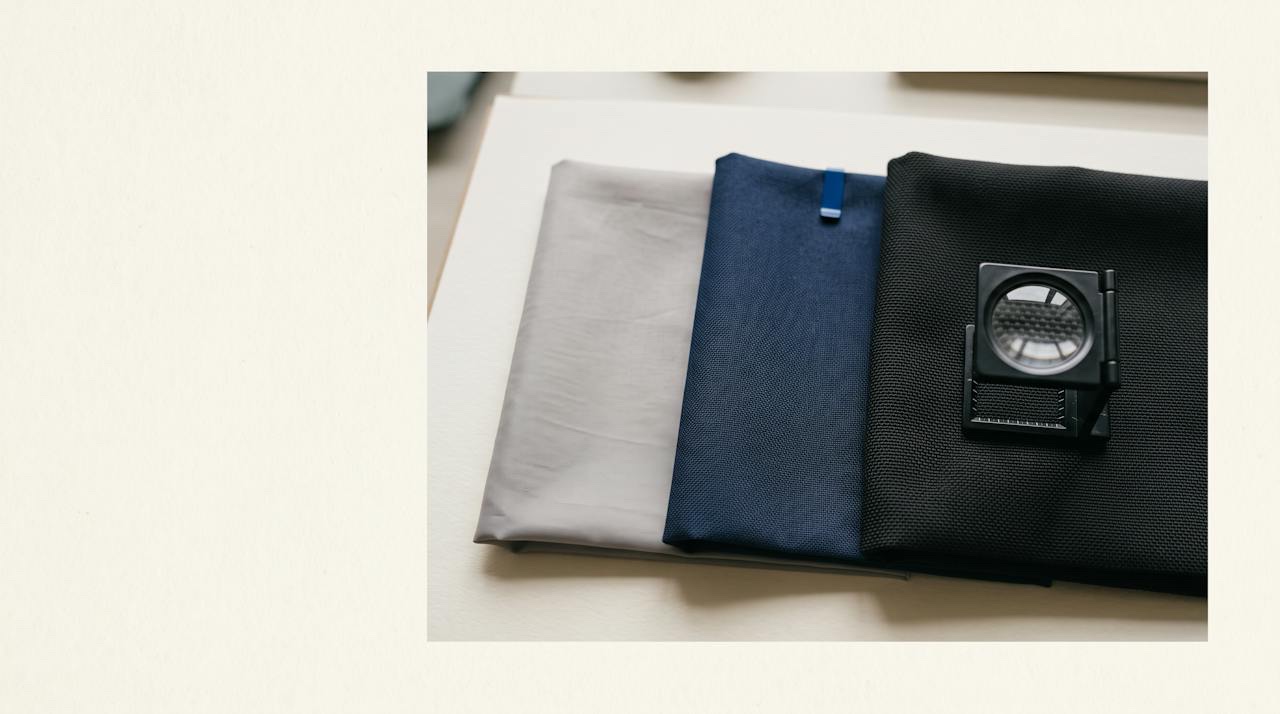
Colour is where differences show most often. Recycled feedstock can carry a faint tint, and dye uptake can vary, so very clean whites, pale pastels and exact brand colours may take more work to match. Ask for a lab dip on the actual recycled base fabric, approve it under agreed lighting, and do not assume a colour approved on virgin polyester will match on recycled.
Consistency between lots#
Virgin polyester is made from a tightly controlled raw material, so lot-to-lot consistency is usually good. Recycled polyester depends on what was collected and how it was processed, so shade, hand and sometimes width or weight can vary more between lots, especially with mechanically recycled fibre.
The practical answer is the same as for any fabric where consistency matters: keep a signed reference swatch, agree in advance how much variation between lots is acceptable, and ask to see a cutting from the bulk lot before production starts. If a collection is reordered, compare the new lot with the original approved swatch, not with memory.
Strength, denier and construction#
Denier describes the thickness of the yarn, not whether it is recycled. A 600D recycled polyester and a 600D virgin polyester woven in the same construction and finished the same way should behave comparably in a cosmetic bag, and in practice the construction, coating and stitching usually matter more than the source of the yarn. Our guide to denier: 210D, 600D and 1680D explains how to choose a weight.
Recycled fibre can differ slightly in tenacity or abrasion behaviour depending on the feedstock and process, so do not take comparability on trust. If tear, seam strength or abrasion matter for the bag, agree what is acceptable and check it on the sample or through tests on the bulk fabric, the same way you would for a virgin fabric.
Coatings, laminates and trims on recycled fabric#
Most cosmetic bag shells are coated or laminated for body and splash resistance, typically with a PU or PVC-type coating on the back, or a laminated film. These work on recycled polyester much as they do on virgin, but the coating is usually not recycled. A fabric can therefore be a recycled base with a conventional coating, and the recycled share of the finished material is lower than that of the yarn alone.
The same applies to the rest of the bag. Lining, zipper tape, webbing, binding and thread may be recycled or conventional, and zipper teeth, pullers and hardware are usually separate materials altogether. Decide which components you want recycled, ask for each one to be confirmed, and check that the coating and the base fabric bond well at folds and seams on the sample.
How to check a recycled claim before you print it#
A recycled claim is only as good as the paperwork behind it. Ask the fabric supplier what the feedstock is, what share of the fabric is recycled, whether that share is physical content or allocated by an accounting method, and which documents cover the specific lot used in your order. Independent recycled-content standards and chain-of-custody schemes exist; if a supplier relies on one, ask for its current certificate and the transaction documents that link it to your material, and check that names, dates and quantities match.
Then keep the wording to what you can show. Say which part is recycled ("shell fabric made with recycled polyester") rather than implying the whole bag is, give a percentage only if the documents support it, and avoid broader environmental promises that the material cannot prove. Rules on environmental claims differ between markets, so check the requirements where the bag will be sold. Our note on how to verify a recycled material claim before you print it on a hangtag goes through the checks step by step.
What to write in the spec#
In the brief or tech pack, give the fibre and whether it is recycled or conventional; for recycled, the feedstock (bottle, post-industrial or textile) and the recycled share you need; the denier, construction and finish; any coating or laminate and whether it needs to be recycled too; the colour reference; and which other components should be recycled. State the exact wording you intend to use on labels or packaging, so the supplier can confirm the documents will support it.
On the sample, compare the recycled fabric with your approved swatch for hand, shade and weight, check coated areas at folds and seams, and confirm that the documents you received match the fabric used. Then approve a sample made from the same recycled material that will go into bulk. Our sustainable materials page shows the recycled and lower-impact materials we commonly work with.
| Term | What it usually means | Feedstock | What to ask |
|---|---|---|---|
| Polyester (conventional, virgin) | Polyester made from new raw material | Petrochemical raw material | Denier, construction, finish and colour; the usual baseline |
| Recycled polyester | Any polyester made partly or wholly from recycled material | Bottles, factory waste or used textiles | Which feedstock, what share is recycled, and what documents exist |
| RPET | Recycled PET; in fabrics, usually polyester from bottles | Mostly post-consumer drinks bottles | Is it really bottle-based, and is the whole fabric recycled or a blend? |
| Post-industrial recycled | Polyester remade from waste before it reached a consumer | Yarn, fibre or fabric waste from production | Whether the claim is described as post-industrial or post-consumer |
| Textile-to-textile recycled | Polyester remade from old fabrics or garments | Used or discarded polyester textiles | How it was recycled and how the content is counted |
| Mechanically recycled | Material cleaned, melted and re-extruded into new fibre | Mainly clean, sorted bottles | Shade range, dye matching and lot-to-lot variation |
| Chemically recycled | Polymer broken down and rebuilt before spinning | Bottles, mixed or coloured waste, textiles | Whether content is physical or allocated by an accounting method |