Almost every cosmetic bag, pouch and travel organiser leaves the factory in a clear bag of some kind. Buyers often call it an "OPP bag" or simply a "poly bag", but the two are not the same thing, and the choice affects how the product looks on a shelf, how it survives a warehouse and how much plastic the customer throws away.
This note explains what OPP film is, how OPP compares with PE and CPP poly bags, why bags are used at all, and the greener options, from thinner film and recycled content to paper, compostable film and packing without a bag. It ends with what to put in a packaging specification. Our wider guide on how to reduce plastic packaging for bags and pouches covers cartons, inserts and labels as well.
What OPP film is#
OPP stands for oriented polypropylene. The polypropylene film is stretched during manufacture, and when it is stretched in two directions it is often called BOPP, biaxially oriented polypropylene. The stretching lines up the polymer and gives the film its typical character: very clear and glossy, crisp and stiff in the hand, with a light crinkle when handled.
The same stretching also means OPP has little give. It resists being pulled but, once it has a nick or a puncture, a tear runs easily. That is fine for a display bag around a soft pouch, and less fine for a bag that has to survive rough handling or sharp corners.
Why OPP is used for individual product bags#
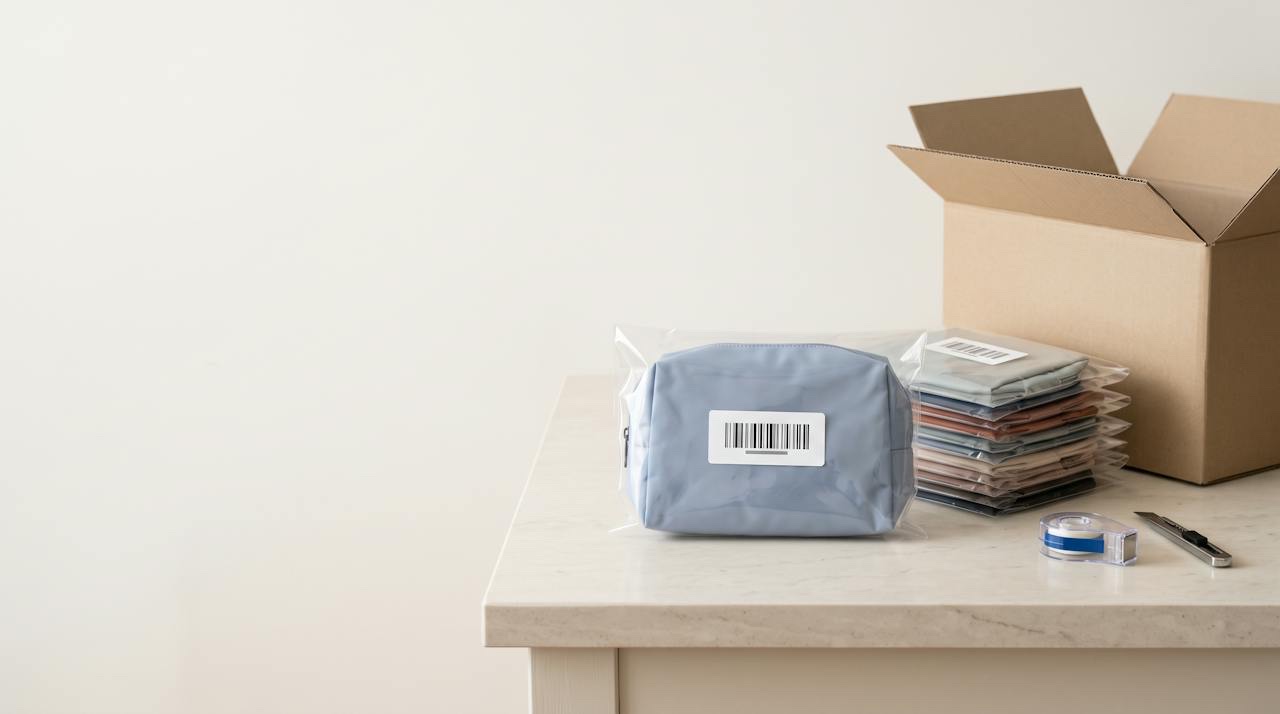
Clarity is the main reason. OPP lets the colour, print and finish of the product show through almost as if there were no bag, which matters when the bag stays on the product in a store or in an unboxing photo. Its stiffness keeps the bag flat and neat rather than wrinkled, and makes it easy to slide a product in.
Two common OPP formats are the self-seal bag and the header bag. A self-seal bag has an adhesive strip on the lip, covered by a release liner that is peeled off before folding the flap over; the adhesive can be permanent or resealable, so say which you need. A header bag has an extra flat band at the top, often with a round or slot-shaped hang hole so the product can hang on a peg display, and the header can carry a printed card or sticker. OPP is not easy to heat-seal on its own without a coated film, which is one reason adhesive closures are so common with it.
OPP vs PE poly bags, and where CPP fits#
A PE poly bag is usually made from low-density polyethylene (LDPE) or a blend. Compared with OPP it is softer, stretchier and quieter, slightly hazier, and more forgiving: it stretches around a corner rather than splitting. That makes PE a common choice for shipping bags, warehouse prep and heavier or bulkier items, while OPP is chosen when the bag is part of the presentation.
CPP, cast polypropylene, sits between the two. It is clear and heat-sealable, softer and less crisp than OPP, and is used for heat-sealed bags and as a sealing layer in laminates. Recycling is the other difference: PE and PP are different plastics and go into different streams. In some markets soft PE film can be returned through store drop-off or film collection, while PP film is collected less often; in others the situation is reversed or neither is collected from households. Check the streams that actually exist where your customers live before claiming that a bag is recyclable.
Why poly bags are used at all#
Bags do a real job. They keep dust off light fabrics and zippers, keep moisture and humidity away during sea freight and storage, stop products scuffing or transferring colour onto each other in the carton, and keep accessories such as straps or inserts together with the product. A bag also gives somewhere to put a barcode or a warning label.
Marketplaces, fulfilment centres and retailers often have their own prep rules for bagging, labelling and warnings, so the bag may be a requirement rather than a choice. Our note on marketplace fulfilment packaging for bags and pouches explains how to approach those rules. The greener options below are about keeping that protection while using less, or different, material.
Greener options: use less bag, or none#
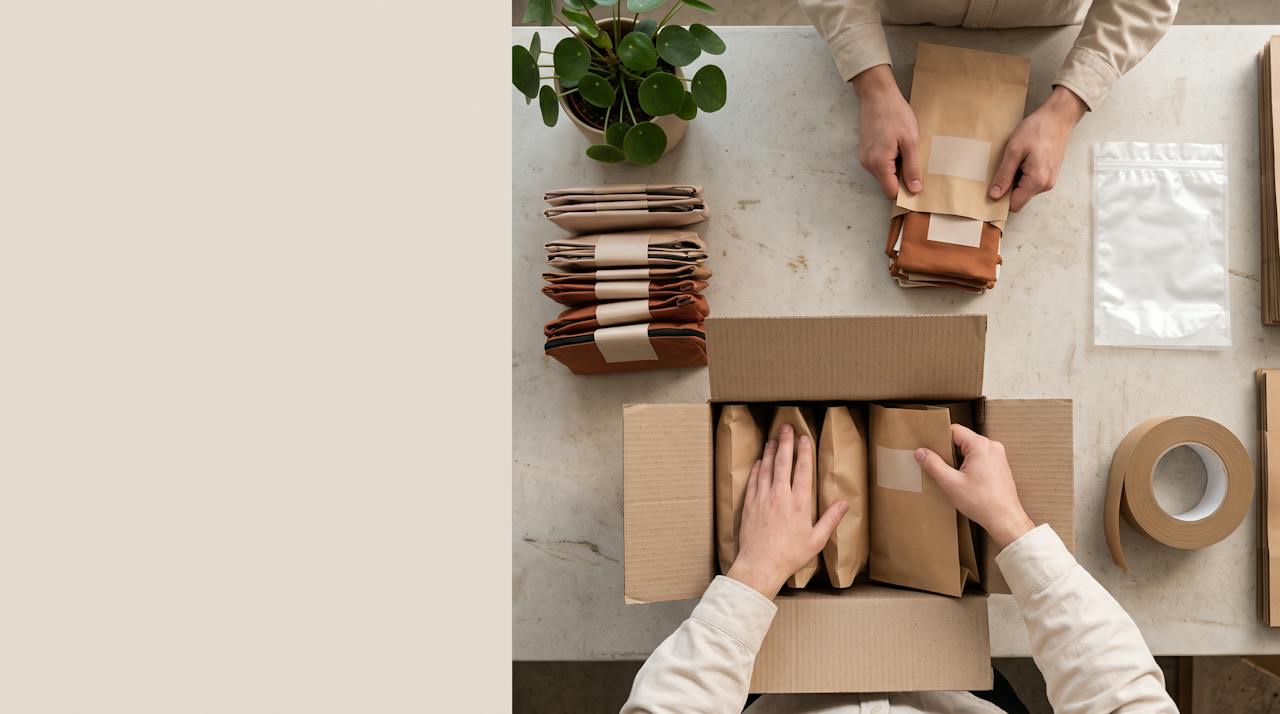
The most effective step is often to remove bags rather than change them. A pouch made from a wipe-clean or dense fabric, or one that already closes with a zipper, may not need a single bag at all if the cartons are clean and dry. Several products can be packed together in one larger bag or a carton liner instead of one bag each, especially for wholesale shipments where products are unpacked by staff rather than shoppers. For gift sets, the cosmetic bag itself can be the packaging: the items travel inside a reusable pouch instead of a box and a plastic sleeve.
Where a bag is still needed, agree the thinnest film that does the job. There is no universal right thickness; send the product and the shipping route, compare samples in two or three gauges, and test them by packing, stacking, dropping and pulling products in and out. Choose the thinnest that passes, and record it on the approved sample. Sizing the bag to the product, rather than using one generous size for everything, also cuts film without losing protection.
Greener options: different materials#
Recycled-content PE and PP films are available. They reduce virgin plastic, but can be hazier, slightly tinted or flecked, and the percentage varies. If you will mention recycled content on the packaging or in marketing, ask for documentation of the content and how it is verified, and keep it on file. A mono-material bag, with the film, closure and any label made from the same plastic, is easier to recycle than a mixed laminate, so avoid paper stickers or mixed-plastic tapes where you can.
Paper and glassine bags remove plastic altogether. Glassine is a smooth, dense paper with some translucency and grease resistance; plain paper is opaque. Both protect against dust and scuffs but give less protection against moisture and do not show the product as clearly, so test them on your route. Compostable films look like plastic but are designed to break down under composting conditions. Many are certified only for industrial composting, not for home compost; many areas have no collection for them; they can have a shorter shelf life; and the rules on what may be called compostable, and how it must be labelled, differ between markets. Treat them as an option to confirm locally, not as an automatic upgrade. Our sustainable materials page shows the product-side options that pair with this packaging.
Suffocation warnings and recycling marks#
Many markets and retailers require, or expect, a suffocation warning on plastic bags above a certain size, telling users to keep the bag away from babies and children. Whether it is required, the exact wording, the languages, the minimum text size and whether holes must be punched in the bag differ between markets and retailers, so check the rules for each destination and each customer's packaging manual rather than copying a warning from another product.
Place the warning where it will be seen and read: printed on the bag face, clear of seams, folds and the adhesive lip, in a colour that contrasts with the product behind it. On a clear bag, a light print can disappear against a light product. Recycling marks and material codes also vary by market, and some places regulate which symbols may be used, so confirm which marks apply where the product will be sold and make sure they match the actual material.
How to specify a product bag#
In the brief or packaging specification, state the material (OPP, CPP, PE, recycled-content film, paper, glassine or compostable film), the bag size relative to the product, including any header or flap, and the thickness agreed on the approved sample rather than a number from elsewhere. Give the closure: open, self-seal with permanent or resealable adhesive, heat-sealed or zip, and whether you need a hang hole and its shape.
Then add any printing and its position, the warning text and languages for each market, the recycling mark, the barcode label position, and any recycled content with the documentation you need. Ask whether bags are needed per item at all, or whether bulk packing is acceptable. On the sample, pack the actual product, check how easily it goes in and out, look for tears at corners and the lip, and check that the warning and marks are readable through to the finished pack.
| Option | Look and feel | Good for | Watch for |
|---|---|---|---|
| OPP (oriented polypropylene) | Glass-clear, crisp, stiff, crinkly | Retail display bags, header bags with hang holes, self-seal bags | Tears easily once nicked; noisy; PP film is not collected everywhere |
| CPP (cast polypropylene) | Clear, softer and less crisp than OPP | Heat-sealed bags, softer retail bags | Less stiff, so headers and lips hold their shape less well |
| PE / LDPE poly bag | Soft, stretchy, slightly hazy | Shipping, warehouse and marketplace prep, heavier items | Less sparkle on display; can wrinkle and scuff |
| Recycled-content PE or PP | Similar to virgin film, may be less clear | Reducing virgin plastic while keeping a poly bag | Haze, specks and shade vary; claims need documentation |
| Paper or glassine bag | Matte, opaque or translucent, paper feel | Plastic-free looks, dry and clean products | Less moisture protection; product not visible through paper |
| Compostable film | Clear to hazy, often softer | Markets with industrial composting access | Usually not home-compostable; shelf life; labelling rules vary |
| No single bag / bulk packing | Nothing to open | Products that protect themselves, wholesale shipments | Check scuffing, dust and the retailer's prep rules first |