Our note on which HS code applies to cosmetic bags, toiletry kits and tote bags looks at bags on their own. Many programmes, though, ship the bag with something in it: a make-up bag filled with full-size products, a travel kit with a toothbrush and a sleep mask, or a gift-with-purchase pouch packed with sample sizes. Once products go inside, the question is no longer only "what is this bag?" but "what is this set?"
This note explains, in general terms, how the General Interpretative Rules deal with sets and with cases sold with their contents, what is weighed when deciding essential character, why two countries can classify the same kit differently, and what information to prepare. It is written for brand buyers and sourcing teams planning filled kits, such as those in our promotional and GWP range. It is background, not legal or customs advice: headings mentioned here are examples only, and the final classification is always decided by the customs authority of the importing country.
Start with the General Interpretative Rules#
The Harmonized System is shared at six-digit level by most trading countries, and it comes with six General Interpretative Rules that are applied in order. GRI 1 says classification is decided by the wording of the headings and the section and chapter notes. Only when those do not settle the question do the later rules come in. GRI 2 deals with unfinished goods and mixtures, GRI 3 with goods that could fall under two or more headings, GRI 4 with goods that fit nowhere else, GRI 5 with cases and packing, and GRI 6 applies the same logic at subheading level.
For a filled kit, the practical point is that customs first looks for a heading that describes the whole product. If none does, because the kit combines things that would each go under a different heading, GRI 3 is often where the analysis turns. Countries also publish their own explanatory notes, rulings and national subheadings beyond six digits, which is why the rules alone do not give a single universal answer.
GRI 3(b): goods put up in sets for retail sale#
GRI 3 is a sequence. Under GRI 3(a), the heading with the most specific description is preferred, but when two or more headings each describe only part of a set, they are regarded as equally specific. GRI 3(b) then says that mixtures, composite goods and "goods put up in sets for retail sale" are classified as if they consisted of the material or component that gives them their essential character. If essential character cannot be determined, GRI 3(c) points to the heading that comes last in numerical order among those that could apply.
The Explanatory Notes to the Harmonized System describe a set for retail sale in broad terms: it is made up of at least two different articles that would on their own fall under different headings, the articles are put up together to meet a particular need or carry out a specific activity, and the set is packed in a way suitable for sale directly to users without repacking. A travel kit for an overnight stay, or a make-up bag with the products to use from it, may meet that description. A random assortment of unrelated items in one box often does not, and may then be classified item by item.
Essential character: factors considered, not a formula#
There is no fixed percentage that decides essential character. Customs authorities and the Explanatory Notes refer to factors such as the nature of each component, its bulk, quantity, weight or value, and the role it plays in the use of the set. In practice, how the set is named, packaged and marketed is often considered too: a kit sold as "a travel skincare set" with a pouch to hold it tells a different story from "a cosmetic bag" with a few samples tucked inside.
Different factors can point in different directions. A pouch may be the largest and most visible item while the products inside carry more of the value, or the reverse. That is why two careful people can reach different conclusions on the same kit, and why the final view rests with the importing country's customs. What you can do is describe the set accurately, so that whoever makes the decision has the facts.
GRI 5(a): cases sold with the articles they hold#
GRI 5(a) deals with cases and containers such as camera cases, instrument cases and jewellery cases that are specially shaped or fitted to hold a specific article or set, suitable for long-term use, and presented with the articles they are made for. When those conditions are met, the case is classified with the articles rather than on its own. A brush roll with a slot for each brush, sold with the brushes, may be an example: the whole may then be viewed with the brushes, for example under heading 9603.
The rule has limits. It applies only to containers of a kind normally sold with those articles, and not where the container itself gives the whole its essential character. A general-purpose cosmetic bag that happens to hold some products is usually not "specially shaped or fitted", so it may be looked at under GRI 3(b) instead. GRI 5(b) separately covers ordinary packing such as boxes and sleeves, which normally goes with the goods unless it is clearly suitable for repeated use.
Four examples of how a set might be viewed#
A cosmetic bag sold empty is the simplest case: it is often considered under the 4202 family, with the subheading depending mainly on the outer material. Fill the same bag with full-size beauty preparations and it may become a set. Beauty and make-up preparations sit in Chapter 33, for example heading 3304, and if the cosmetics are judged to give the essential character, the whole kit may be viewed with them rather than as a bag.
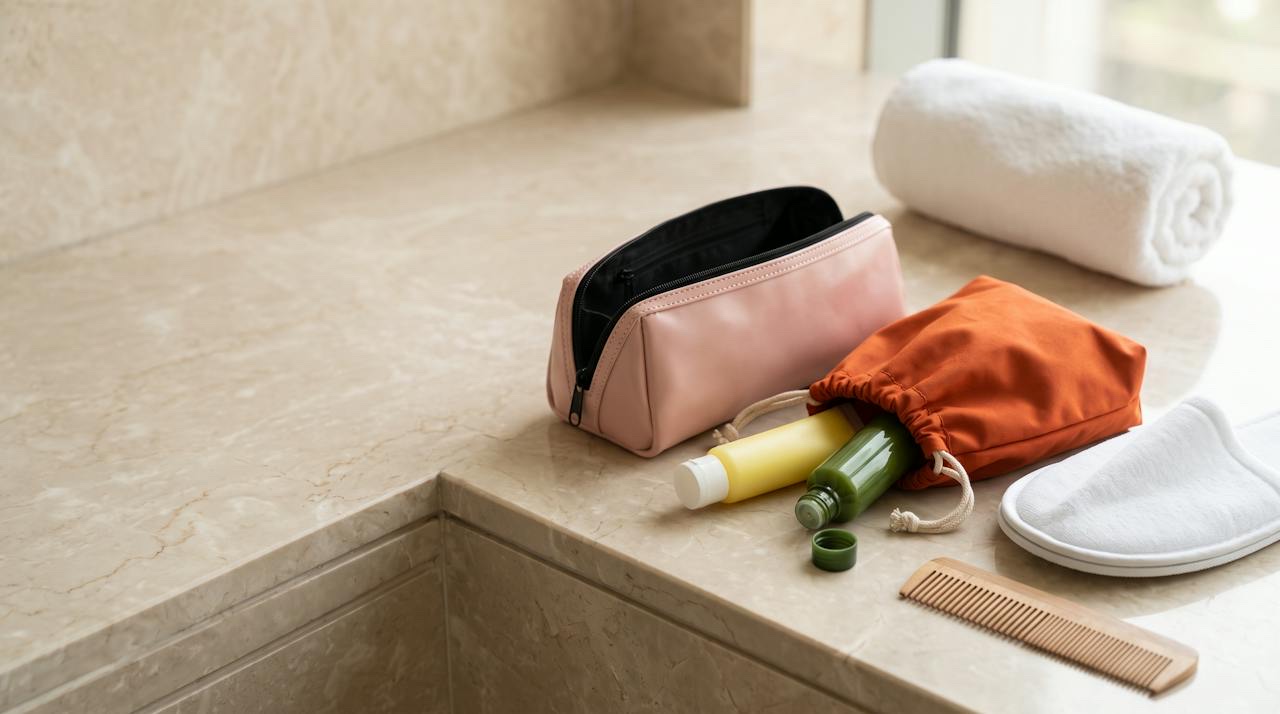
A travel kit with mixed items, such as a toothbrush, comb, sleep mask and small bottles, combines things from several chapters. It may be treated as a set under the item judged most important, and some authorities may consider headings that specifically mention travel sets for personal toilet, such as 9605, which have their own conditions. A textile item such as a sleep mask might on its own be looked at under a heading such as 6307. A GWP pouch packed with sample-size products is often the hardest to call, because the samples may be small in bulk but significant in value, and the pouch may be the part the customer keeps. Our guide to planning a GWP programme around a launch calendar is a reminder to raise this early, before the components are fixed. All of these are examples of how a set might be viewed, not classifications.
Why the same set can be classified differently in different countries#
The six-digit Harmonized System is shared, but each country interprets it through its own customs authority, courts, rulings and national tariff lines. One country may give more weight to value and another to how the set is presented; one may have an earlier ruling on a similar kit and another none. National notes and digits beyond the sixth can also split headings in different ways.
In practice, this means a kit shipped to several markets may be entered under different codes in each, and a classification accepted in one market is not proof for another. Changes to the kit, such as swapping a full-size product for a sample or adding an accessory, can also change the analysis, so it is worth reviewing the classification whenever the contents change.
What documents and information help#
A broker or customs officer can only classify what they can see. For a filled kit, it helps to prepare a component list naming every item, with its material or main ingredients, quantity, size or volume, and its share of the total value. Add the materials of the bag or case, especially the outer surface, and say whether the case is shaped or fitted for its contents.
Photos of the kit open and closed, the retail packaging and any artwork, together with a short description of how it will be sold (on its own, as a gift with purchase, in a set with a product, or free of charge), make the picture clearer. Keep the same component list consistent across the commercial invoice, packing list and product records, because mismatched descriptions are a common cause of questions at entry.
Duty, labelling and compliance implications#
Classification affects more than the duty line. The heading chosen can change which trade measures, origin rules and preferential arrangements may apply, and duty treatment can differ widely between a bag heading and a cosmetics heading, so the decision is worth making before costing is final rather than after the goods arrive. We do not quote duty rates; check the current tariff for each market with your broker.
Putting products inside a bag can also bring in rules that an empty bag does not face. Cosmetics generally carry their own labelling, ingredient, safety and registration requirements in many markets, and items such as toothbrushes or textiles may have theirs. Our note on compliance documents for selling cosmetic bags in the US and EU covers the bag side; the products inside need to be checked by whoever is responsible for them.
Confirm with a licensed customs broker or a binding ruling#
Because classification of sets depends on facts and on how each country weighs them, the safest step is to confirm it before the first shipment. A licensed customs broker in the importing country can review the component list and suggest a classification, and many customs authorities offer advance or binding rulings, which give a decision on a specific product that can be relied on for that product in that country.
ROOTSMEN does not provide customs brokerage or classification advice. What we can do as the maker of the bag is give accurate information on the bag or case itself, such as its materials, construction, dimensions and photos, so that your broker has what they need. The importer of record remains responsible for the classification declared, and the importing country's customs has the final word.
| Example product | What is inside | How it may be viewed | Questions customs may ask |
|---|---|---|---|
| Cosmetic bag sold empty | Nothing | Often considered under the bag family, for example heading 4202, with the subheading turning on the outer material | What is the outer surface made of? Is it a toiletry bag or another kind of container? |
| Cosmetic bag filled with make-up | Full-size beauty preparations | May be treated as a set; if the cosmetics give the essential character, it may be viewed with them, for example under heading 3304 | Which part carries more of the value? Is it marketed as a make-up set or as a bag with a bonus? |
| Travel kit with mixed items | Toothbrush, comb, sleep mask, small bottles | May be viewed as a set, under the item judged to give the essential character; some authorities may consider a heading for travel sets such as 9605 | Do the items serve one activity? Does any one item dominate? |
| GWP pouch with sample sizes | Sample-size skincare or make-up | Depends on whether the pouch or the products are judged to give the essential character, and on how the set is presented | Is it sold or given away? What are the relative values? |
| Brush roll or case fitted for its brushes | Make-up brushes in shaped slots | The case may be classified with the brushes under GRI 5(a), for example heading 9603, unless the case gives the whole its essential character | Is the case made for these brushes? Is it of a kind normally sold with them? |
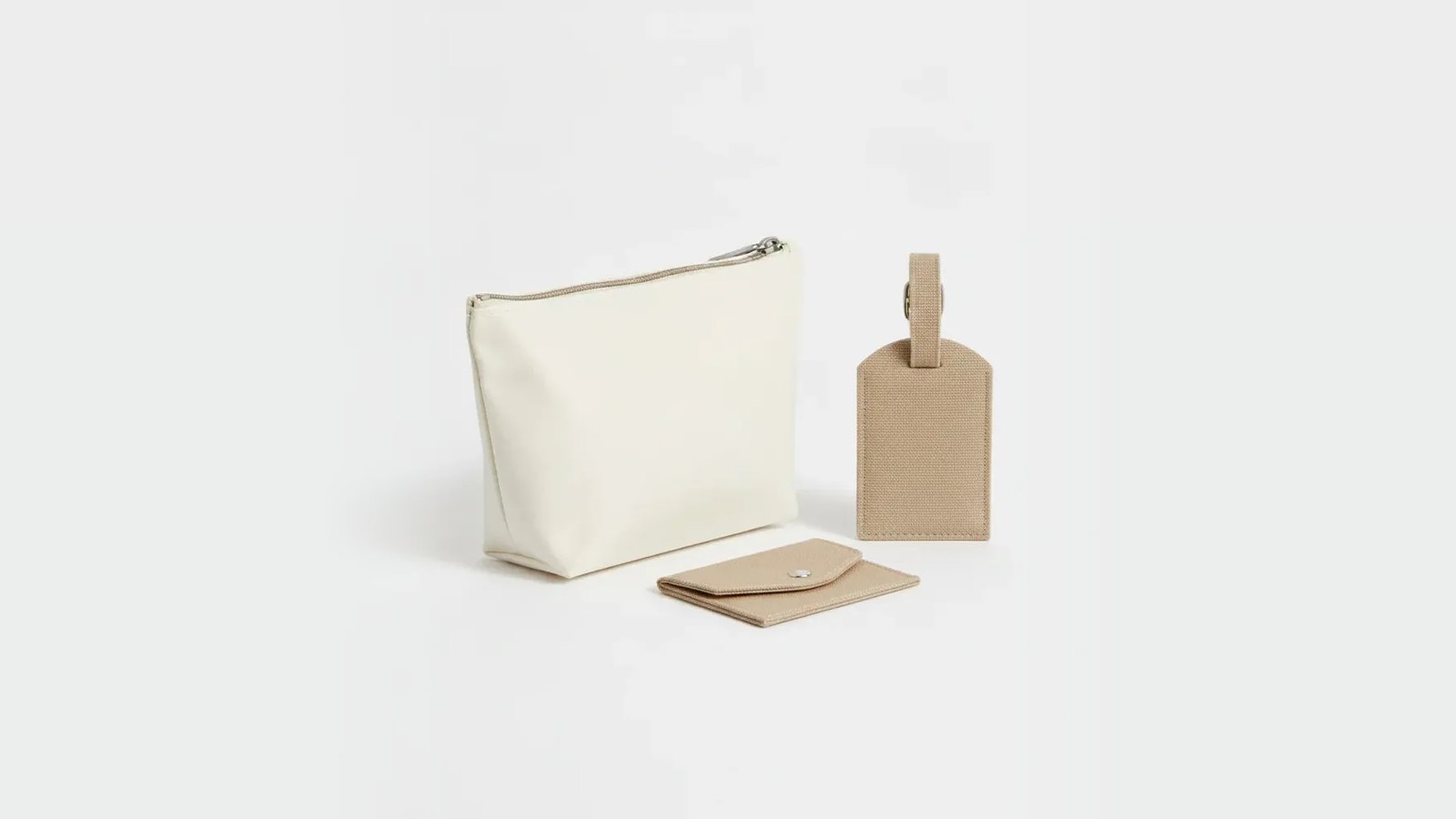
| Gift set of accessories | Pouch, luggage tag, card holder | Several articles from the same family; may be viewed under one heading or line by line, depending on the materials | Are the items of different materials? Are they packed together for retail sale? |