Most bag briefs say a lot about the woven label and very little about the labels the law may require. Yet a cosmetic bag or travel pouch sold in Japan, the EU or the US can be expected to show more than a logo: depending on the market and the material, it may need a fibre-content or quality label, a country-of-origin marking and care information, each with its own rules.
This note follows on from our article on care labels and washing instructions for bags. It explains, in general terms, what Japan's Household Goods Quality Labeling Act, the EU Textile Labelling Regulation and the US textile rules are about, how the fibre or quality label differs from the care label and the brand label, and what the factory needs from you to produce them. It is written for brand buyers and developers working on bags such as our cosmetic bags. It is an overview, not legal advice: rules change, and the details should always be confirmed with the regulator of the destination market or a compliance consultant.
Three labels, three different jobs#
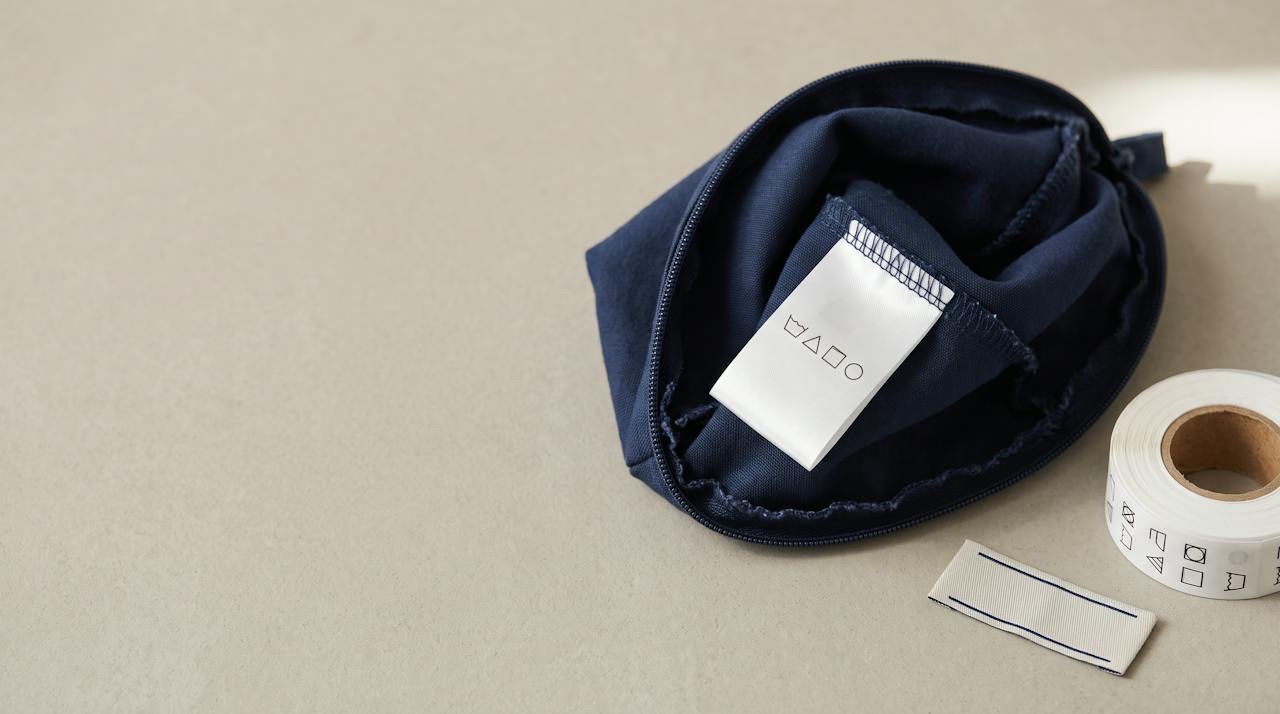
It helps to separate three kinds of label that are often lumped together. The care label tells the user how to clean the bag, usually with washing symbols. The fibre-content or quality label tells the buyer what the bag is made of and, in some markets, who is responsible for the product. The brand label carries the logo and the look of the brand.
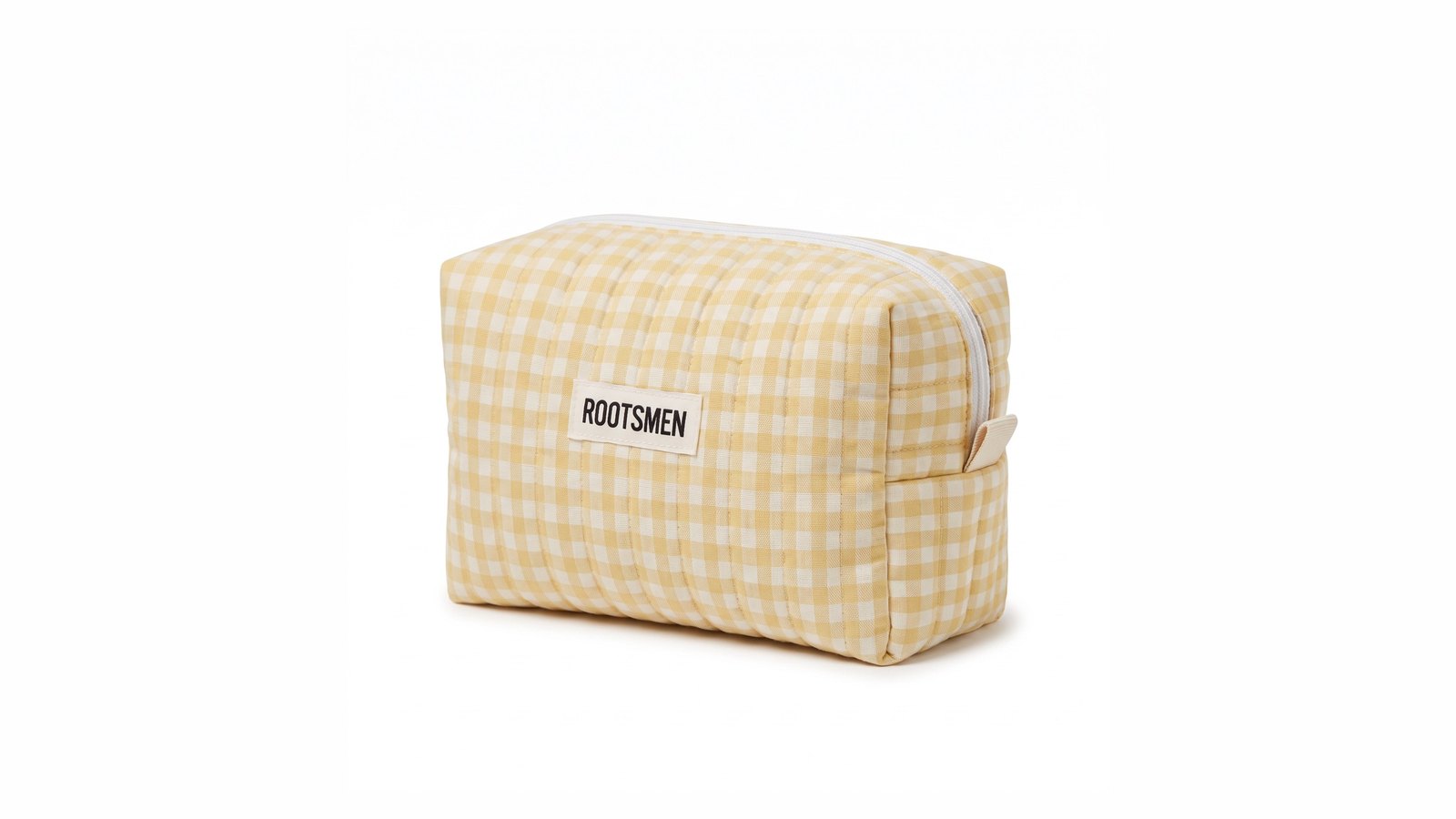
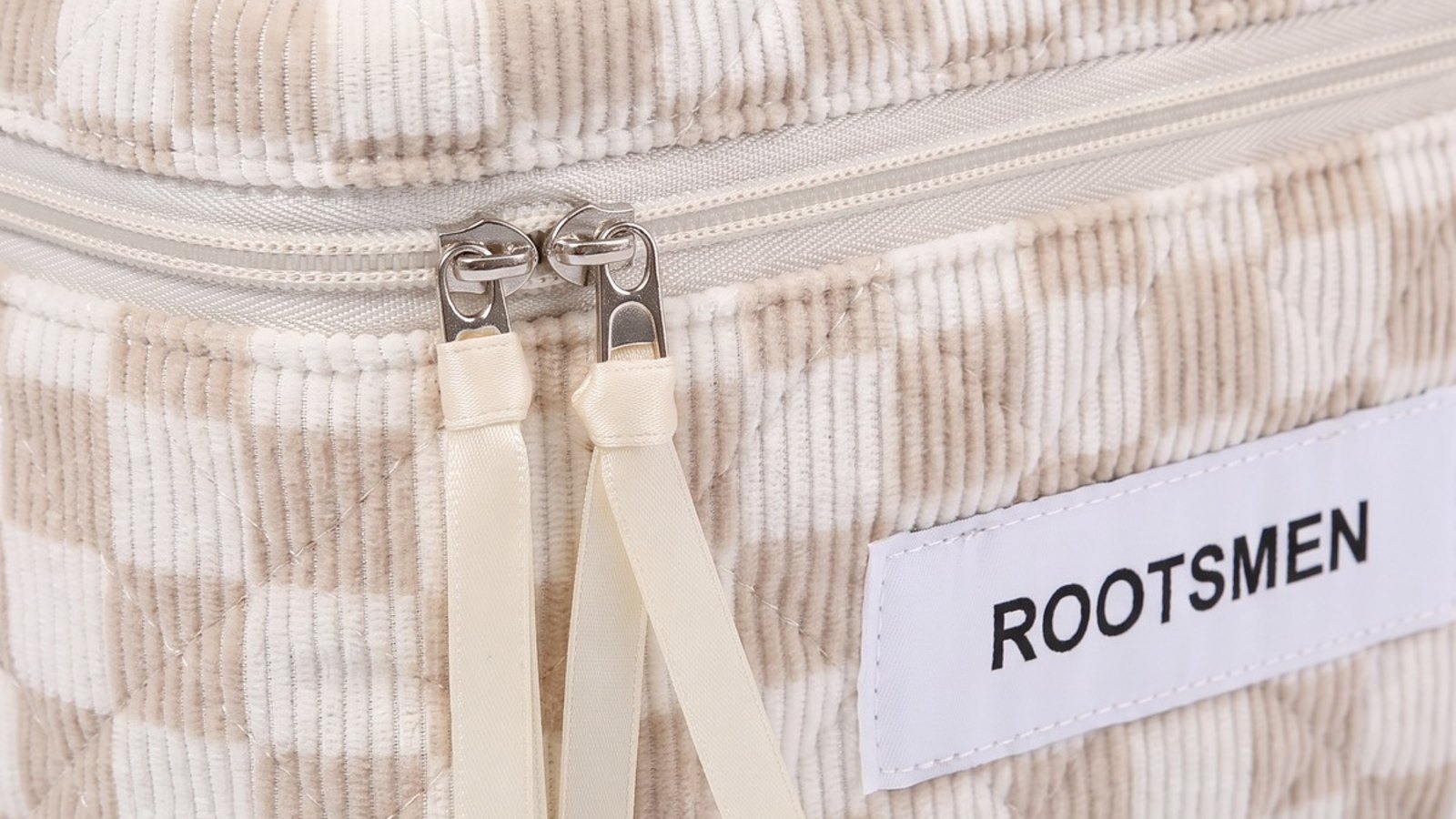
One physical label can carry more than one of these, and a brand label can sit next to a sewn-in composition label in the same seam. What matters is that every piece of required information is present, legible and in the right language, and that nothing on the brand label contradicts it. Our note on woven labels, printed labels and patches covers how each type is made.
Japan: the Household Goods Quality Labeling Act#
In Japan, quality labelling for consumer goods is set by the Household Goods Quality Labeling Act (家庭用品品質表示法), administered by the Consumer Affairs Agency. The Act does not cover every product. It applies to designated items, grouped broadly into textile products, plastic products, electrical appliances and miscellaneous manufactured goods, each with its own labelling standard that says what must be shown.
Bags are relevant because certain bags appear among the designated items, and whether a particular bag is covered generally depends on what it is made of, for example its main material being a textile, leather or synthetic or artificial leather. A pouch in one material may be covered while a similar pouch in another is not. Because the list of designated items and the labelling standards are revised from time to time, check the current list and the standard that applies to your bag, rather than relying on a previous product or a competitor's label.
What a Japanese quality label (品質表示) usually states#
Where a bag is covered, the 品質表示 generally states the material using the terms the standard sets out, in some cases care or handling notes, and the name of the labeller (表示者) together with an address or telephone number. The labeller is the business that takes responsibility for the label in Japan, typically the brand or the importer, not the overseas factory.
The label must be in Japanese and placed where the buyer can easily see it. In practice it is often a sewn-in label inside the bag or a hangtag, sometimes both. Wording, terms for each material and the way the information is arranged are set by the standard, so the safest route is to draft the text with your Japanese importer or consultant and send the factory a finished artwork.
EU: the Textile Labelling Regulation (EU) 1007/2011#
In the EU, Regulation (EU) 1007/2011 governs how the fibre composition of textile products is labelled. Where it applies, the label generally uses the fibre names listed in the regulation, gives the percentages of each fibre, and must be in the official language or languages of the member state where the product is made available to the consumer. Fibre names, not trade names, are what count.
A bag is not automatically a textile product. The regulation applies to textile products and to certain products that contain a minimum share of textile fibres by weight, so a fabric pouch may be inside its scope while a bag made largely of leather, PU or plastic may be outside it, or only its textile parts may need labelling. Other rules can apply whether or not the textile regulation does, such as general consumer-protection and product-safety rules that ask for the manufacturer or importer to be identifiable, and origin labelling where a market or a customer requires it. Check the current text and guidance for your specific product.
US: the Textile Act, FTC rules and bags#
In the US, the Textile Fiber Products Identification Act and the Federal Trade Commission's rules under it require covered textile products to be labelled with generic fibre names and percentages, the identity of the manufacturer or dealer, and the country of origin. The FTC publishes business guidance explaining what is covered.
Many handbags, purses and similar bags are treated differently from apparel and household textiles under these rules, and some categories are excluded or exempt. That does not mean every bag-like textile product is exempt: whether a particular pouch, organiser or soft-goods item needs a fibre-content label depends on what the product is and what it is made of. Check it against the current FTC rules and guidance, or ask a compliance consultant, before deciding to leave the label off.
Country of origin and other markings#
Country-of-origin marking is a separate requirement from fibre content. Many markets expect imported goods to show where they were made, and the rules on wording, permanence and placement differ between destinations. A bag that does not need a fibre label may still need an origin marking.
There may also be requirements on traceability, such as a batch or style reference and the name and address of the responsible business. Our overview of the compliance documents needed to sell cosmetic bags in the US and EU covers the paperwork side; origin marking deserves its own check for each market you sell in.
What the factory needs from the brand#
A factory can tell you what the bag is made of and help work out the fibre composition of each part, but it cannot decide who the legal labeller is or which rules apply in your market. For each destination, send the registered name of the labeller or responsible business, the address or other contact details that must appear, the languages required, and the final wording or artwork for each label.
Tell the factory too which markets each style or colourway is going to, because one bag sold in Japan, the EU and the US may need different labels or a multilingual one. Ask the factory to confirm the materials of shell, lining, trims and any coatings in writing, so the composition on the label matches what goes into bulk, and re-check it whenever a material changes.
Where labels go: sewn-in, hangtag or printed#
Required information is most often carried on a sewn-in label, stitched into a side seam or the lining seam where it is easy to find and stays with the bag. A hangtag is useful for information that only needs to be seen at the point of sale, or as an addition to a sewn label, but it is removed after purchase. Printing the information inside the lining or on a heat-transfer label avoids a scratchy tag in a small pouch, provided it stays legible over the life of the bag.
Which of these is acceptable depends on the rule: some information is generally expected to be permanently attached, while other details can go on packaging or a tag. Agree the position, size, material and attachment of each label in the tech pack, and check on the sample that it can be read, does not irritate, and survives the care the bag is meant to receive.
Confirm before bulk#
Before approving bulk, list each market and the labels it needs, and check the text against the current rules: material terms, fibre names and percentages, labeller details, origin marking, care information and languages. Approve label artwork in writing, and make sure the approved sample carries the real labels, not placeholders.
Rules are revised and exemptions are specific, so treat this note as a starting point. Confirm the details with the destination-market regulator, its published guidance, your importer or a compliance consultant. The factory's role is to make the labels you specify, accurately and in the right place.
| Label | What it is for | What it typically shows | What to check |
|---|---|---|---|
| Japan: quality label (品質表示) | Information required for designated household goods | Material, care notes where required, labeller's name and address or phone | Whether the bag's material puts it on the current list of designated items |
| EU: textile fibre label | Fibre composition of textile products | Regulated fibre names and percentages, in the required language(s) | Whether the bag counts as a textile product under (EU) 1007/2011 |
| US: fibre-content label | Fibre identification of textile products | Generic fibre names and percentages, plus identity of the dealer | Whether the product is covered or treated differently under the FTC rules |
| Country-of-origin marking | Telling the buyer where the product was made | "Made in ..." in the form the market accepts | The marking rules of each destination; a separate topic |
| Care label | How to clean and look after the bag | Washing and care symbols or text | That the instructions match what the material really survives |
| Brand label | Identity and look of the brand | Logo, brand name, sometimes size or style code | That it does not crowd out or replace any required information |