刺繡與壓凹都是為了讓標誌看起來是「經過設計的」,而不是「印上去的」。兩者不能互相取代,多數專案最後由圖稿與表布材質決定,而不是由偏好決定。
該先問的不是哪個好看,而是三件事:這個標誌含多少細節、表布是什麼材料、這批要做多少個。這三個答案通常只會留下一個合理選項,偶爾兩個都不適合,那就該改用印刷或織嘜。
兩種工藝對材料做了什麼#
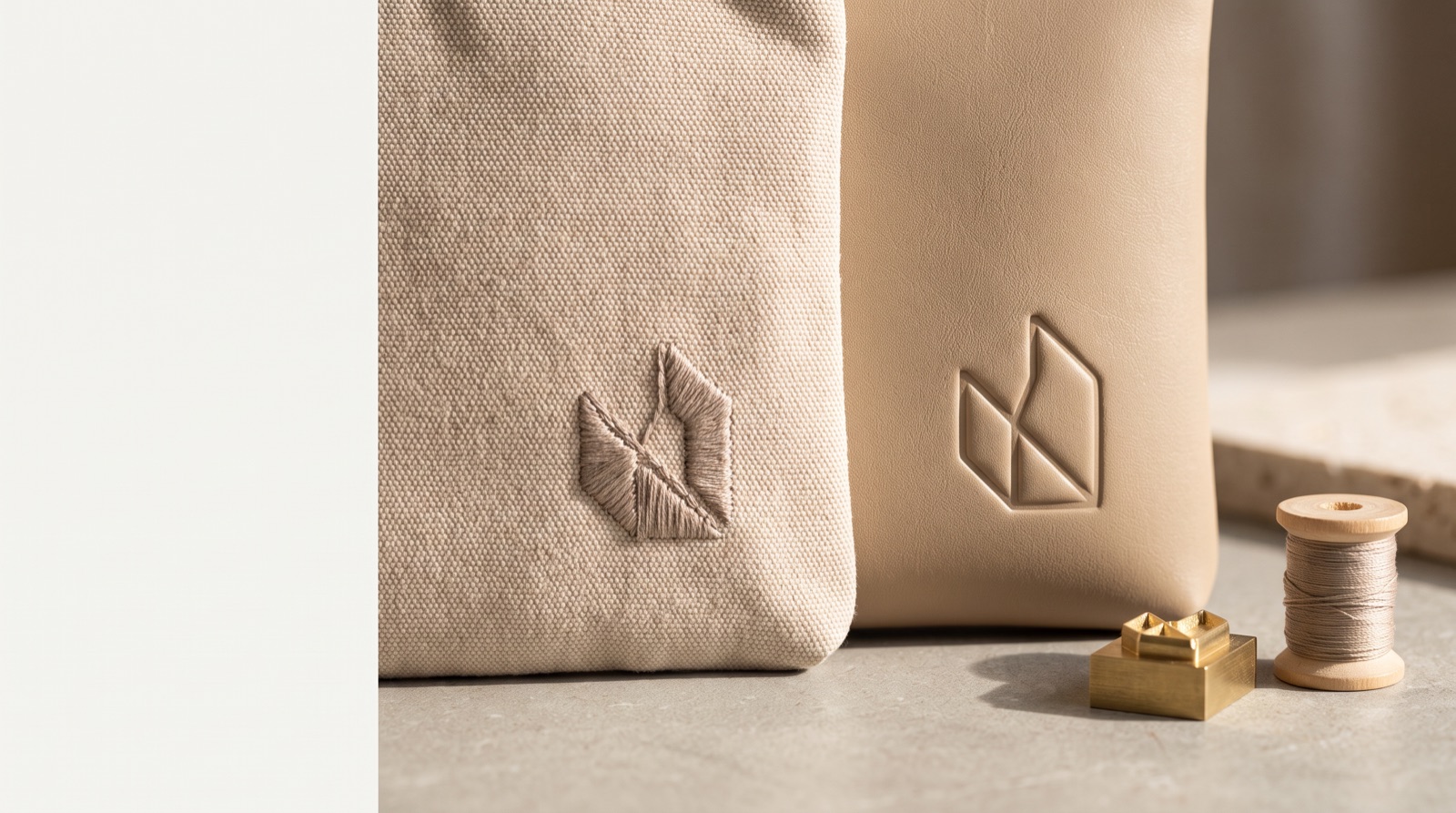
刺繡是「加上去」。圖稿要先轉成針路檔,由多頭繡花機把線繡進布裡,成品會凸出於表面、帶有真實的質感。它有厚度、有重量,而且背面也有東西。
壓凹則是既不加也不減。加熱的金屬模具以固定壓力與停留時間壓進材料,材料留下永久的凹痕。標誌與表布同色,靠陰影而非對比被看見——這正是它看起來安靜的原因。
這個差別幾乎決定了後面所有事。刺繡的極限在於「線能繡多細」,壓凹的極限在於「材料能不能記住被壓過的形狀」。
刺繡適合的場合,以及細節的極限#
刺繡適合有份量的標誌:厚實的字體、簡單的圖示、尺寸合理的文字標。它比多數表面裝飾更耐磨耐洗,所以在「會被用」而不是「被展示」的產品上,刺繡是預設選項。
它不擅長細節。字高低於約 4 公釐時,e、a、o 這類字母中間的封閉空間會隨著針數增加被填滿,細線條則直接消失。名片上好看的標誌,不代表繡出來好看;誠實的做法是事先準備一個簡化版本並一次確認,而不是每次打樣都跟針數吵架。
看報價時有兩個詞值得認識。製版(打版)是把圖稿轉成針路的一次性工序,那是手工判斷而不是檔案轉存,好的製版師會直接告訴你哪些細節守不住。針數則是單價真正的計算基礎:同樣大小,密實填繡比外框線貴,因為機器停在那件產品上的時間更長。
襯紙、定型襯與底下那塊布#
刺繡會拉扯布面。線的張力會把布往內收,沒有支撐的版片就會在標誌周圍起皺,或讓標誌歪掉。解法是定型襯——繡製時墊在版片背後的襯料——在輕薄表布上這不是選配。
這是打樣要處理的問題,不是規格表上寫一行就能解決的。同一個標誌繡在 210D 尼龍和 600D 聚酯上表現不同;在平面上很正的標誌,一旦版片被折成方角,也可能變形。如果標誌位置靠近車縫線、拉鍊或側身,請要求看實際結構上的效果,而不是一塊平的布樣。表布較薄時,裡布與襯料對成品呈現的影響不亞於繡工本身。
還有背面。無裡布的收納包看得到刺繡背面,而且可能磨到內容物——裝玻璃瓶的化妝包尤其要留意。解法只有兩個:加裡布,或把標誌移到背面會被遮住的版片上。
壓凹適合的場合,以及它對材料的要求#
壓凹最適合有厚度、能留住壓痕的材料:PU、較厚的帆布、部分塗層布,以及多數合成皮。壓痕由溫度、壓力與停留時間三者共同決定,而這三個參數要針對該材料重新設定,不能沿用上一批。
薄料或表面紋理很強的表布上,壓痕會鬆開。樣品上很俐落,用一季之後就變淡,因為材料一直想回到原狀。如果這件產品半年後要看起來跟確認樣一樣,就得在打樣階段實測,而不是假設——通常答案是換更厚的材料或加一層背襯。
材料也決定了細節的上限。簡單的文字標或字母組合在 PU 或超細纖維上壓得很乾淨;細節多的標誌則會因材料被擠開而糊掉,道理和小字刺繡被填滿一樣。壓凹本來就是安靜的工法,適合本來就安靜的標誌。
壓凸、素壓與那些講不清楚的名詞#
壓凹是往下壓,壓凸是往上頂,後者需要公母模,在軟性商品上較少見,因為凸起的標誌在袋身上容易磨損。素壓指的是不上任何顏色的單純壓痕——最常見,也最克制。
顏色可以在同一道工序加上去。燙金壓凹是把金屬色或色箔壓進凹痕裡,對比更強,代價是邊緣可能隨使用磨損。很多需求單寫「壓 LOGO」,其實想要的是「壓金」;這兩者模具與報價都不同,講清楚比較省事。
兩種做法都需要依圖稿開一套金屬模。那是一次性模具費,而且依標誌與尺寸各開一套——所以「一個 LOGO 用在八個品項」會比「八個變化版」便宜得多。
誠實比較後,通常會被選上的其他做法#
當標誌對刺繡來說太細、表布對壓凹來說又太軟時,答案通常兩者都不是。織嘜(織標)在小尺寸下能撐住的細節遠多於刺繡,車在接縫裡所以永遠不會讓版片變形,量大時往往還是三者中最便宜的。
橡膠或矽膠標能保留細節,看起來耐用且現代,但要開模並增加厚度。熱轉印能處理漸層與照片級內容,那是刺繡與壓凹都做不到的,代價是標誌浮在表面而非在材料裡。
這些都不是「降級方案」,而是同一個問題的不同答案。需求單如果描述「想要的效果」而不是指定工法,反而更容易拿到最好的那一個。
成本、工期與數量#
刺繡有一次性製版費,單價則依針數計算。它的成本很線性:第一百件跟第一件一樣貴,因為每件的機器時間不變。所以中量時很好用,大量時相對貴。
壓凹有一次性模具費,但單價很低,數量愈大愈划算。在大型企業贈品案上,壓凹經常比密實刺繡便宜。
兩者都會多出一道工序,而且都需要各自確認。請把這段排進時程:品牌工藝的確認樣與結構確認樣是兩件事,把它們當成一件,是很常見的「莫名其妙少了一週」的原因。客製化包袋訂單要多久一文說明這些確認點落在哪裡。
詢價時該附上什麼#
請提供向量圖稿——AI、EPS,或已轉外框的 PDF。點陣圖可以描,但描圖是詮釋,而詮釋正是標誌開始不像自己的地方。同時附上這個標誌會用到的最小尺寸;光是這個數字,就能在報價前解決大半的刺繡問題。
顏色請用標準色號指定,不要用形容詞。繡線是照線卡選色,不是照螢幕;確認也是對著實體線卡做的——和打色與顏色為什麼會跑掉一文講的是同一套紀律。
位置請用固定基準點標示:離某條車縫線、拉鍊端點或底部多少公分,而不是寫「置中」。平面版片上的置中,和成品曲面上的置中,不是同一個位置。
快速判斷#
細節多的標誌、寬容的布質表布:選刺繡,並事先備好簡化版圖稿。簡單的標誌、有厚度的材料、需求偏克制:選壓凹。小尺寸又要細節:織嘜。漸層或照片內容:印刷或轉印。
把向量圖稿連同需求一起寄來,並說明這件產品要承受什麼。兩種工法都由檔案裡的實際內容與表布能承受的極限決定;用真檔案在真材料上做的判斷,才禁得起打樣。歡迎參考我們的化妝包系列。
| 刺繡 | 壓凹 | |
|---|---|---|
| 最適合的圖稿 | 厚實字體、簡單圖示 | 簡單標誌、細節極少 |
| 細節極限 | 字高低於約 4mm 就失去清晰度 | 壓痕鬆開後細節會糊掉 |
| 適合的表布 | 多數布質表布 | PU、較厚帆布、塗層布 |
| 不適合 | Tyvek、TPU、PVC(會被穿孔) | 薄料或紋理很強的表布 |
| 呈現感受 | 有質地、外加、明顯 | 安靜、融合、有觸感 |