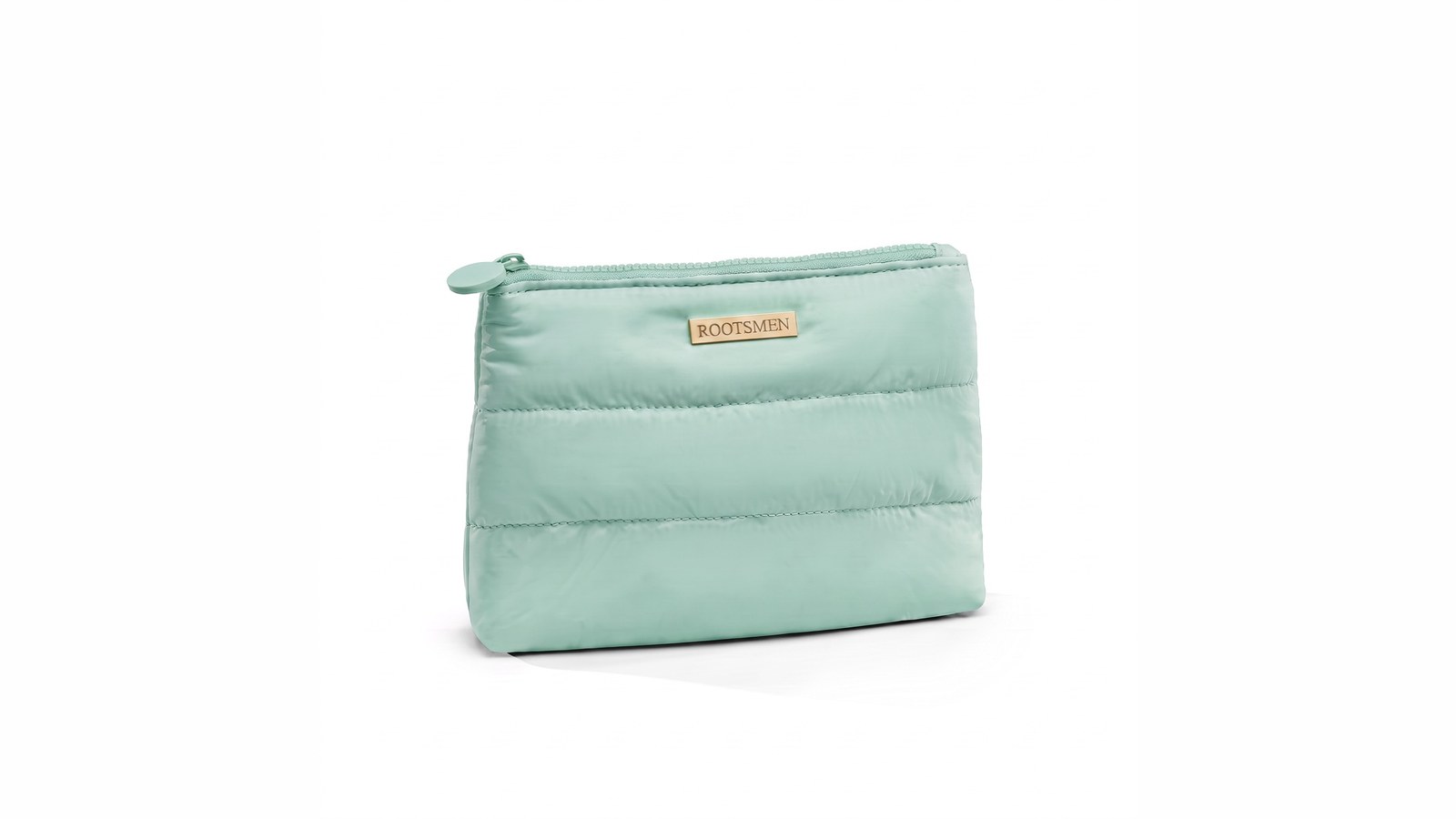
Pastels look like the easy end of colour and behave like the hard end. A mid-tone hides a great deal — a thread slightly off, a lining a shade cool, a zipper tape that was never going to match exactly. A pale shell hides none of it.
That is the whole of an Easter capsule in one sentence: the design is simple and the approval is not.
Approve the product, not the fabric#
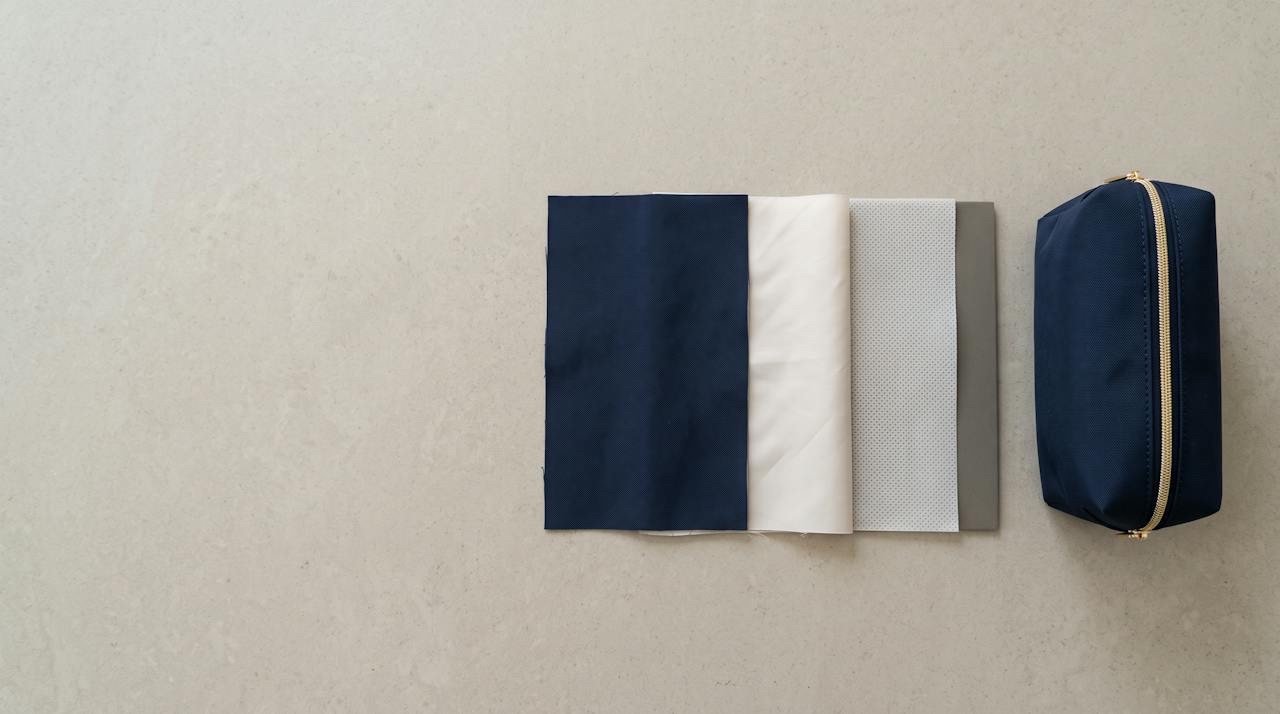
The usual approval sequence looks at the shell on its own, then builds the product. With pastels that sequence finds problems too late, because the problems are relationships: thread against shell, tape against shell, lining showing at the opening.
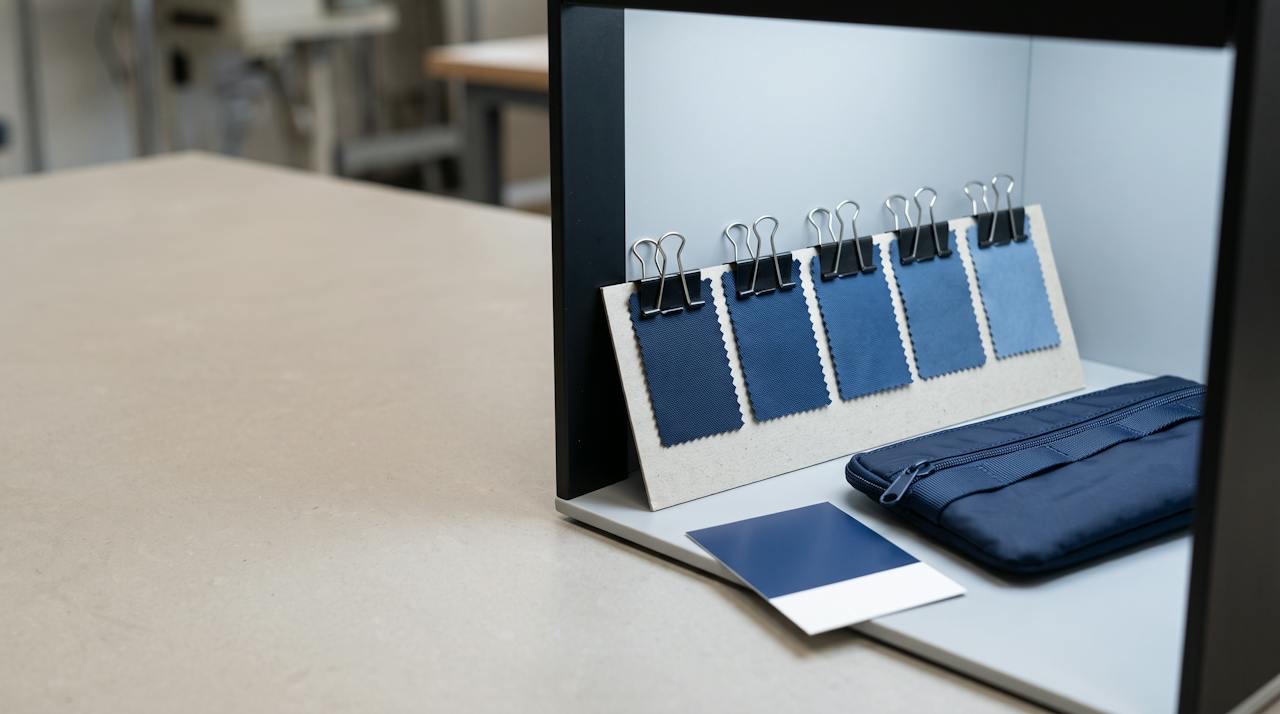
Ask to approve on a made-up sample with the real thread, tape and lining in place. It is a slower step and it removes the failure that matters. 對色 and why colours shift covers the underlying mechanics; the pastel-specific rule is simply that everything has to be judged together.
Watch what shows through#
Pale shells are often also light shells, and a light shell can shadow whatever sits behind it — an interlining edge, a seam allowance, a dark label. 無 of that is visible on flat fabric and all of it is visible on a finished pouch held up to a window.
Lining and interlining is worth reading before choosing a structure for a pale capsule; the usual answer is a lighter interlining and a lining chosen to disappear rather than to contrast.
Spring products are seen in daylight#
Most cosmetic pouches are judged under retail lighting, which is warm and forgiving. A spring capsule is more likely to be carried outdoors and looked at in daylight, which is cooler, brighter and shows differences that a shop floor does not.
If the product is going to live outdoors, approve it outdoors — or at least at a window. It is a free check and it catches the mismatches that only daylight reveals.
Decide how far the pastel has to repeat#
A capsule made once has an easier colour problem than a style that will be reordered. If the pastel is going to come back, the tolerance has to be agreed as a range rather than as a single approved piece, because no two dye lots of a pale shade will be identical.
Say which it is at the start. A one-off capsule can chase an exact shade; a repeating line needs a tolerance everyone has already accepted.
Keep the decoration light#
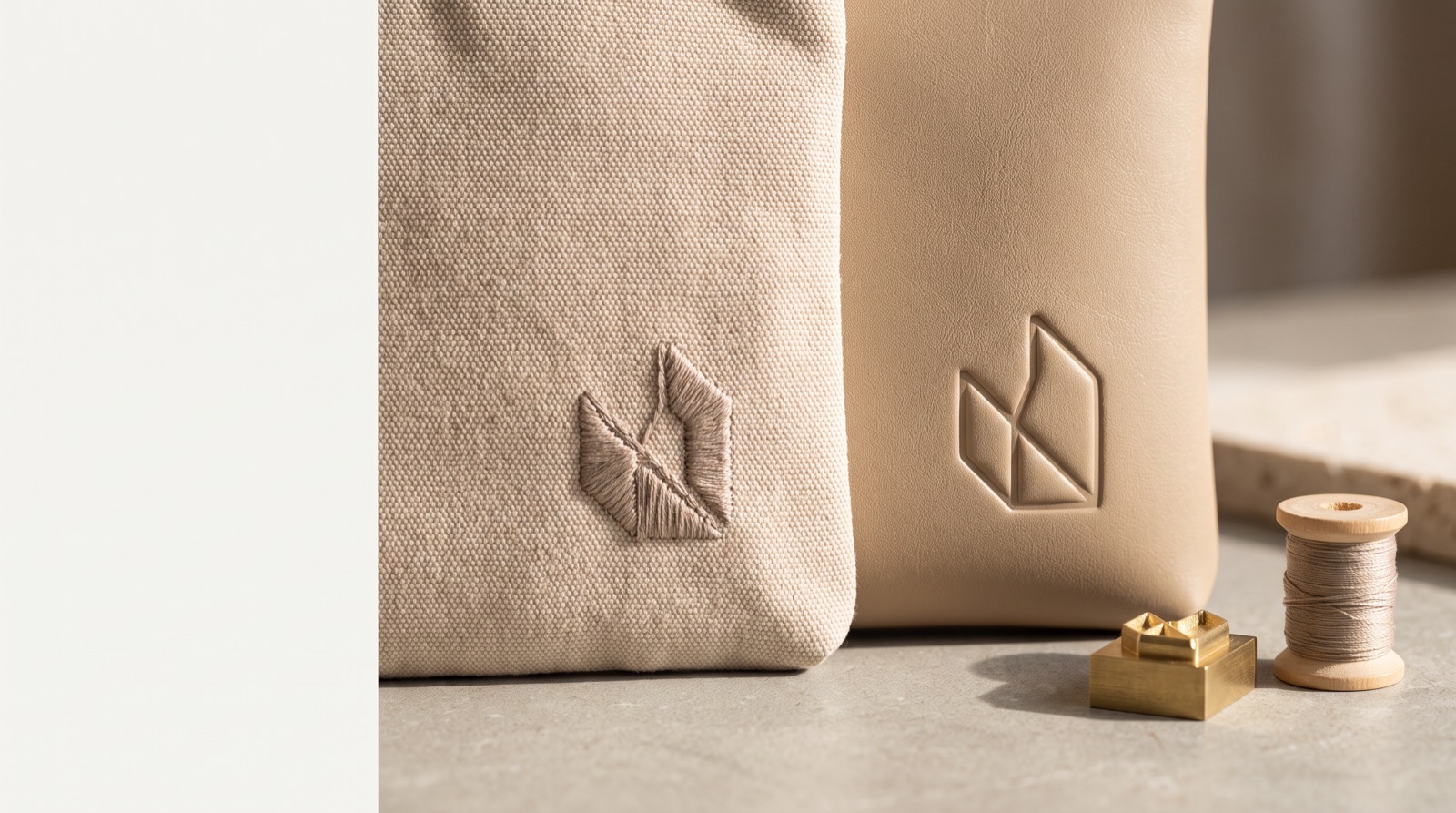
Heavy artwork fights a pastel shell. A dense print flattens it, and a dark motif on a pale ground shows every registration error. The treatments that suit the season are the quiet ones — a tonal embroidery, a small woven label, a contrast zipper tape used deliberately rather than apologetically.
刺繡 versus debossing covers which of those a given shell can carry.
| Component | What shows | How to control it |
|---|---|---|
| Shell dye lot | Drift between batches reads as two products | Approve against a physical standard; agree a tolerance |
| 車縫 thread | A thread half a shade off is visible along a seam | Approve the thread with the shell, not separately |
| Zipper tape | Tape rarely matches a custom pastel exactly | Choose tape against the approved shell, or go deliberately contrasting |
| Lining | Shows at the opening and through thin shells | Approve the lining as part of the assembled product |
| Interlining | Can shadow through a pale, lightweight shell | 檢查項目 on a made-up sample, not on flat fabric |