Christmas is the one season where the bag is not the product. It is the wrapper on something else — a skincare set, a fragrance, a staff gift — and it gets about three seconds of attention when it changes hands. That is the whole brief.
What makes it harder than it sounds is that the pouch has to be ordinary for months before it has those three seconds. It sits in a stockroom, travels in a carton, gets stacked, and reaches the counter already filled. A festive pouch that creases in the box has failed before anyone sees it.
Festive colour is a matching problem, not a design problem#
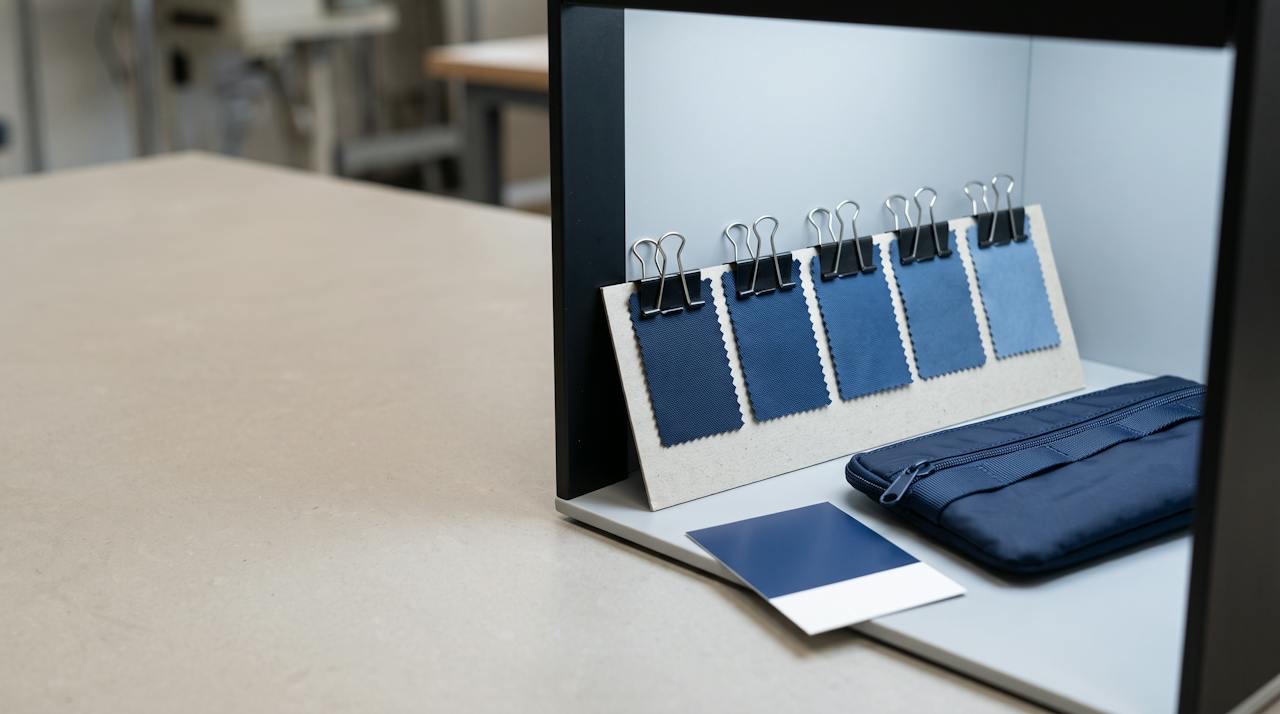
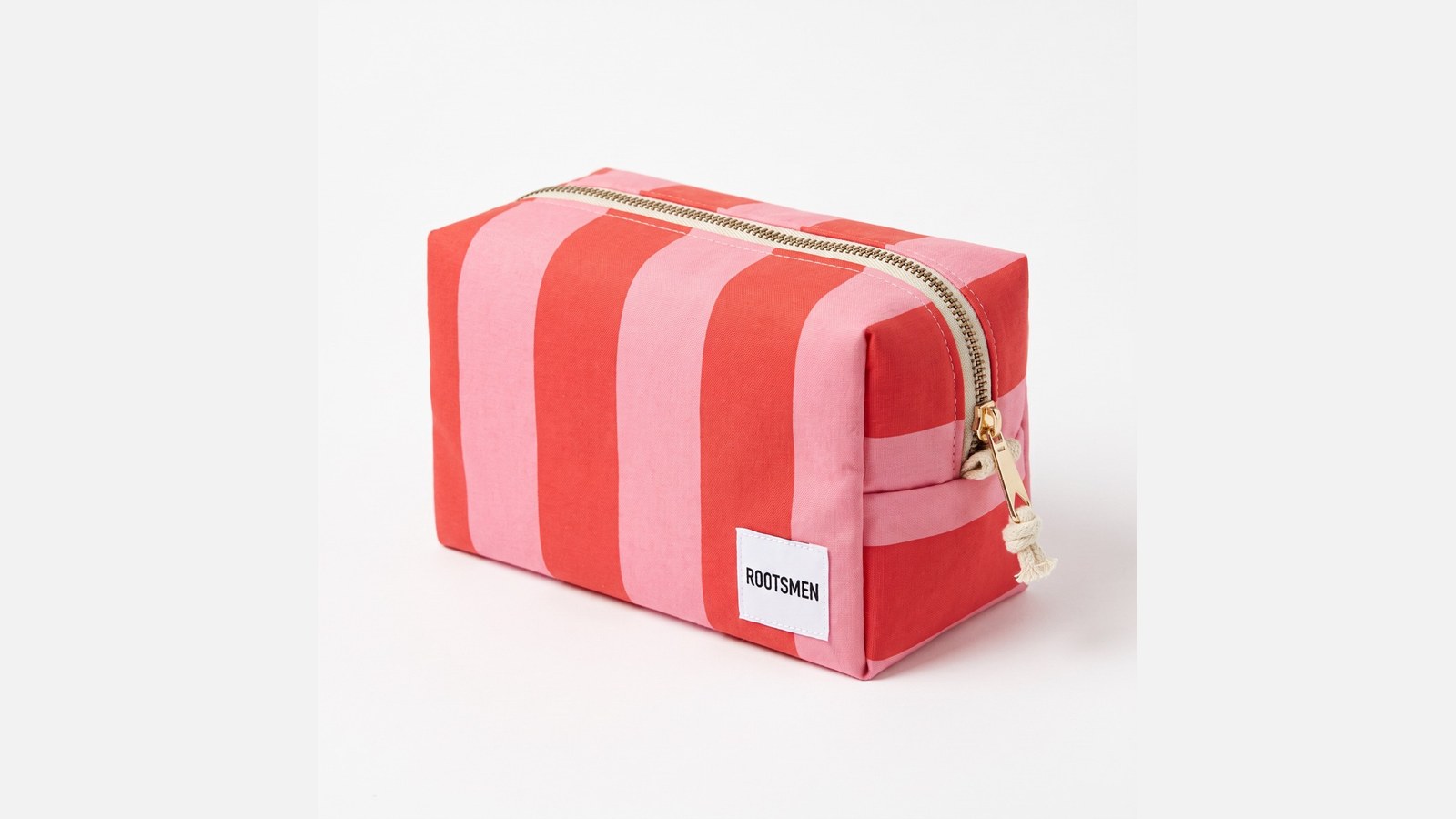
Red and gold are the two colours that move most between a screen, a swatch and a finished batch. Red shifts with the base cloth: the same dye on cotton, on coated nylon and on a quilted polyester reads as three different reds, and under the warm lighting most retail counters use it shifts again. Gold is worse, because what looks like a colour is usually a finish — a metallic ink, a foil or a coated thread — and finishes catch light rather than hold a value.
The way through it is unglamorous. Agree the colour on the actual shell material, not on a card, and look at it in the light the product will be seen in. Our note on colour matching and why colours shift covers the mechanics; for a seasonal run the only extra rule is to start earlier, because there is no second attempt inside a season.
Tamaño the pouch around the gift, not around the shelf#
Seasonal pouches are usually specified from the outside in — someone picks a size that looks generous — and then the contents do not fit, or they rattle. Work the other way. Lay out what actually goes inside, measure it packed rather than flat, and add the room a zipper needs to close over it without straining.
A pouch that is slightly too small is the worst outcome of the season, because the fix is a new size and a new sample. A pouch that is slightly too large just looks slightly too large. If you are unsure, size up. The method is the same one in cosmetic bag sizes and dimensions.
Decoración: pick the method the shell can carry#
Festive artwork tends to be dense — a full-bleed pattern, a metallic motif, a line of type — and dense artwork is exactly what a soft shell handles least well. A print that looks crisp on a flat sample will fold when the pouch is filled, and anything crossing a gusset seam will break there.
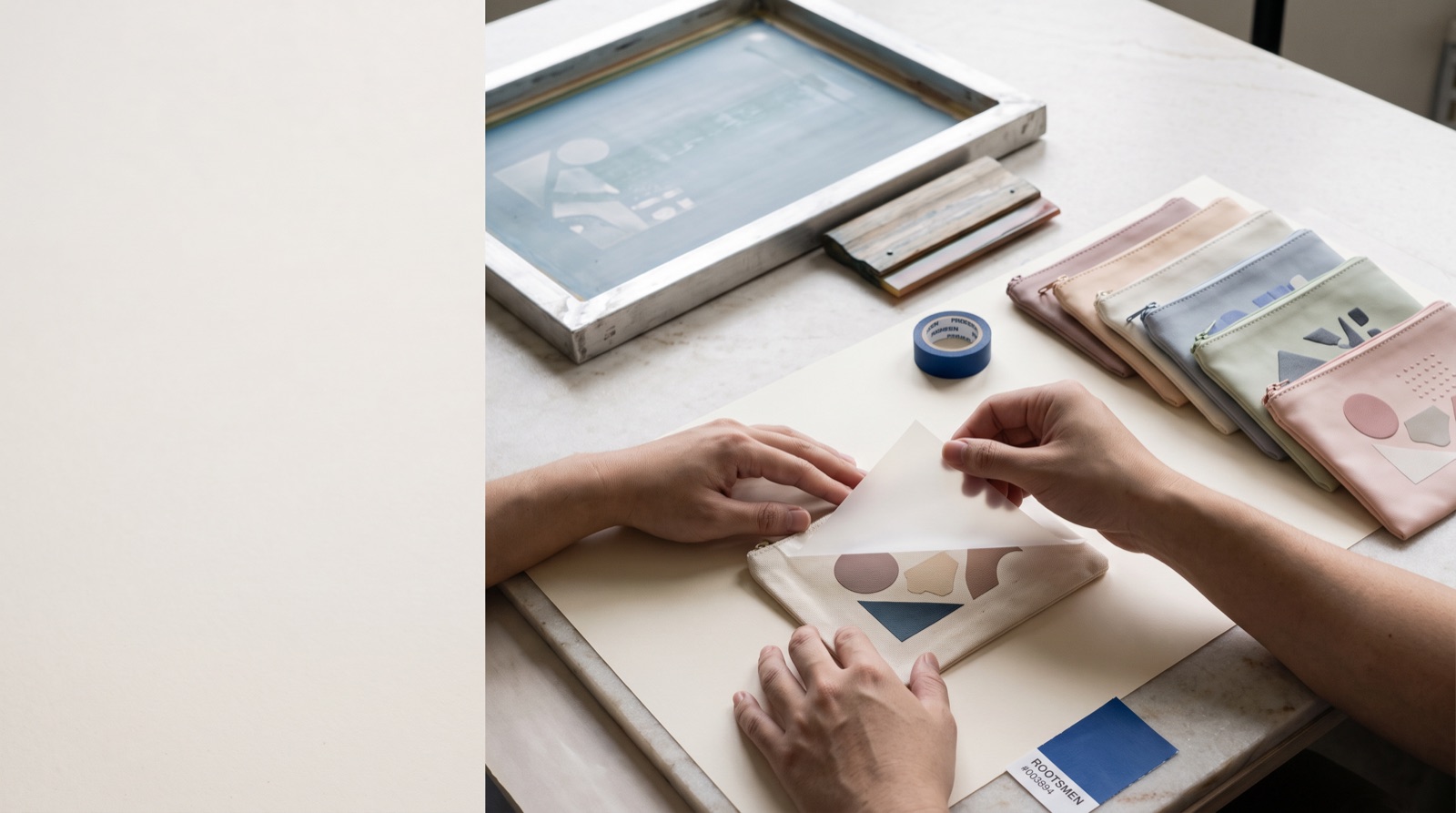
Keep the artwork inside the flat panel and off the seams, and choose the method for the shell rather than for the drawing. Bordado versus debossing and choosing a print method for gift-with-purchase runs both apply here; the seasonal difference is that there is no time to try the second option if the first disappoints.
Pack it so the counter does not have to#
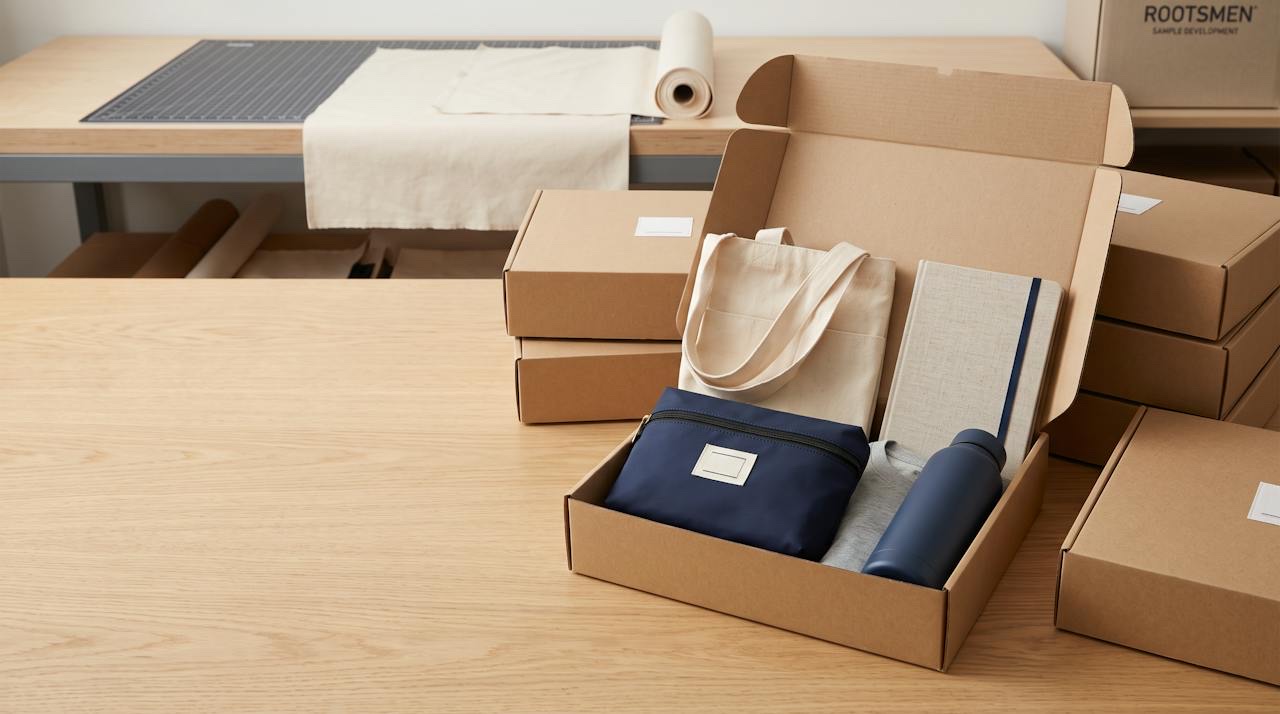
A counter gift is handed over, not unwrapped from a polybag by a member of staff who is already serving someone. How the pouch is folded, bagged and cartoned decides whether it arrives presentable and whether staff can hand it over in one movement.
Say in the brief how the pouch should arrive: flat or shaped, individually bagged or bulk, with or without an insert holding its shape. If the pouch is filled before it ships, say what goes in and in what order, because the filling sequence changes the packing. Reducing plastic packaging is worth reading before you default to a polybag per unit.
What a seasonal brief should contain#
The brief that moves fastest is the one that answers the questions a factory would otherwise have to ask: the shell and its colour, the size with the contents it must hold, the decoration method and where the artwork sits, the hardware and its finish, the label plan, and the packed state it should arrive in.
Everything else — the mood board, the campaign name, the shade of the season — is useful context but does not make anything. If you want a structure to copy, the one in how to write a tech pack for a cosmetic bag works for a seasonal run with nothing added.
Diseño for the season after this one#
The cheapest festive programme is the one where only the artwork changes. If the body, size, zipper and label placement stay the same year to year, the seasonal decision shrinks to a colour and a print — which is a short conversation rather than a new development.
That is worth deciding deliberately rather than discovering. A carrier style you are happy to repeat is an asset; a new silhouette every Diciembre is a new development every Diciembre.
| Método | Holds metallic | Behaves on | A tener en cuenta |
|---|---|---|---|
| Screen print | Yes, with a metallic ink | Flat panels on canvas, cotton, polyester | Cracking where the panel folds; keep artwork off the gusset seam |
| Transferencia térmica | Sí | Smooth coated and puffer shells | Hand feel on a large solid area; it sits on top of the fabric |
| Bordado | With a metallic thread | Acolchado and woven shells | Fine serifs and small type close up; thread has a minimum legible size |
| Debossing | No, unless foiled | PU and coated surfaces | Depth reads differently on a soft shell than on a rigid sample |
| Woven label | Sí | Any shell, as a seasonal add-on | Placement; a seasonal label sewn over a year-round one looks like a patch |