Most giveaway briefs describe the product. An event brief should describe the moment, because the moment is unusual: it is late, the light is low and coloured, the person receiving the item is standing up, and one of their hands is already holding something.
Nearly every specification decision follows from that. Tamaño, closure, shell and artwork all have an obvious answer once the moment is written down, and an arbitrary one when it is not.
Small enough for a pocket#
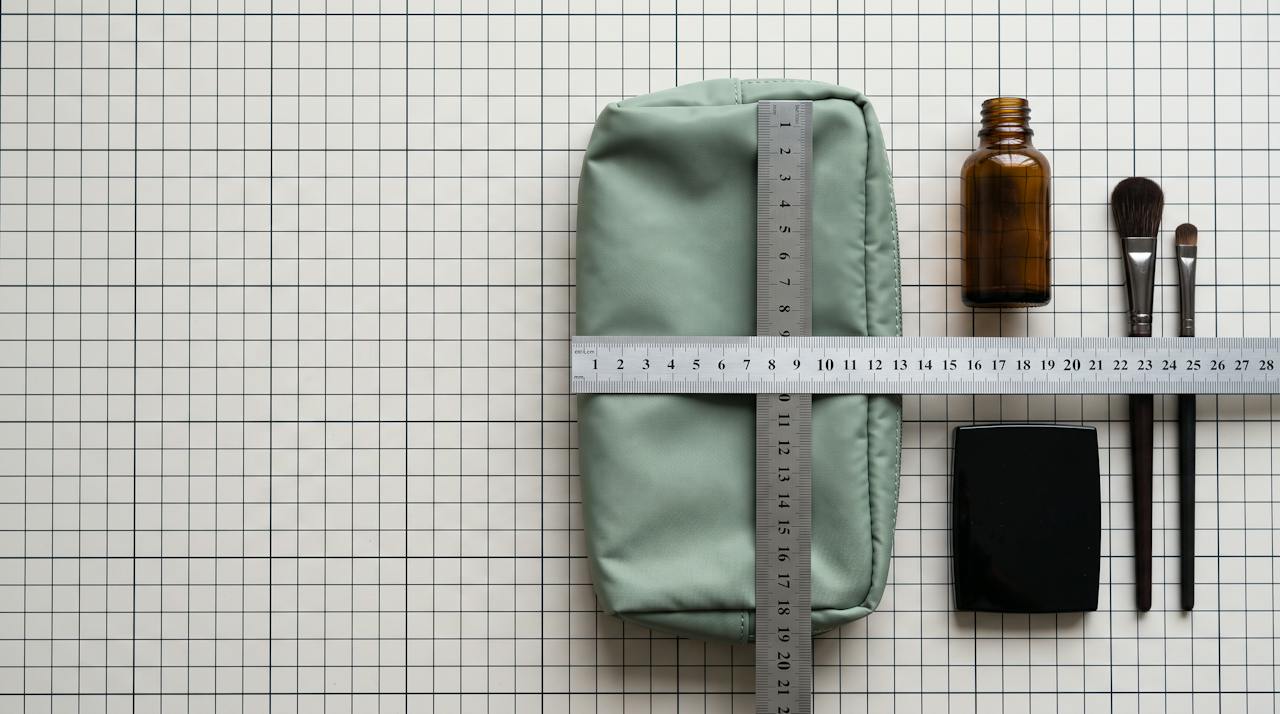
The failure mode of event giveaways is abandonment: the item is handed over, carried for twenty minutes and left on a table. The single strongest defence is a footprint that fits a coat pocket, because a pocket is where it goes when hands are needed.
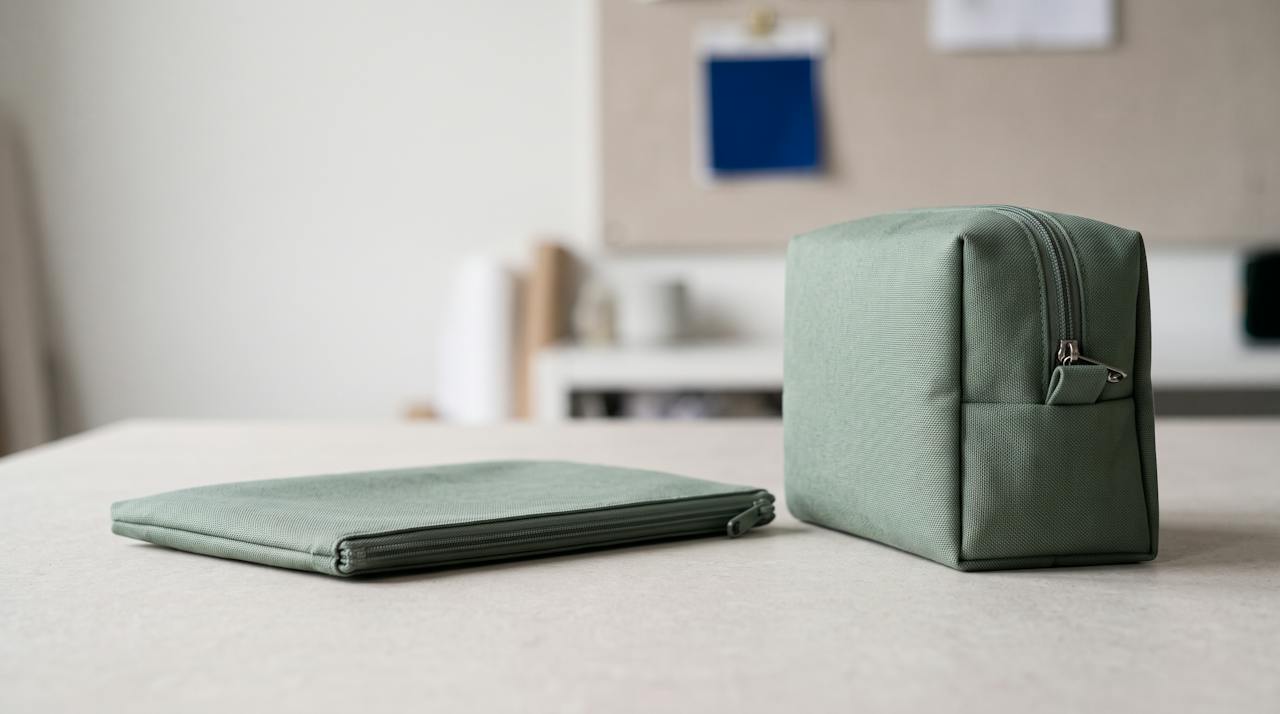
A flat pouch does this better than a boxed one, and a soft shell better than a structured one, because both fold. If the pouch has to hold something with depth, size it to that and accept that it will be carried rather than pocketed — but make that a decision, not an accident. Box pouch versus flat pouch sets out the trade-off.
A closure that works without being looked at#
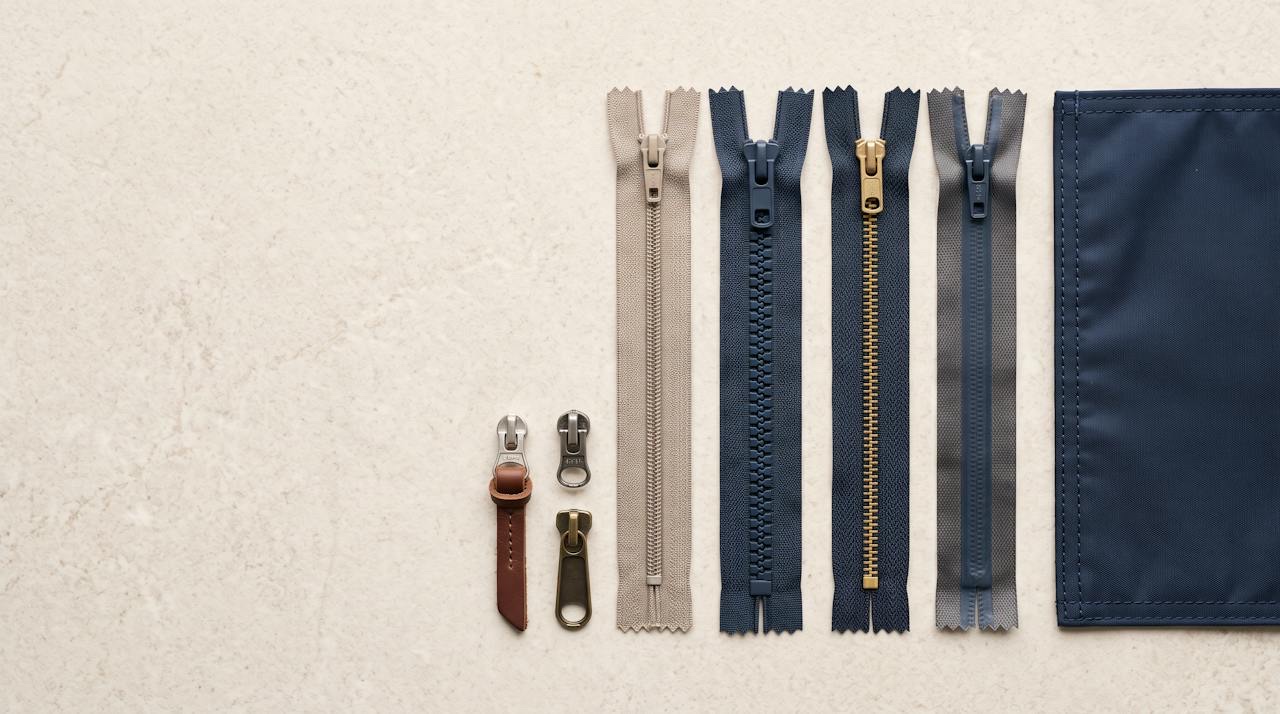
In low light, with one hand, a closure has to be operable by feel. A zipper that runs cleanly is the safest answer, which makes the slider and puller choice more important than it looks: a puller large enough to find without looking is worth more here than a discreet one.
Avoid anything that needs two hands or alignment. Our note on choosing a zipper covers chain and slider choice; for an event piece, bias every decision towards easy running rather than fine appearance.
Arte final that survives coloured light#
Recinto lighting is rarely white. Under coloured light, low-contrast artwork disappears and fine type becomes a smudge, so a motif that looked refined on a screen can read as nothing at all in the room it was made for.
Diseño for contrast rather than subtlety: a clear shape, generous type, and no reliance on a colour difference that a coloured light will flatten. If there is a sponsor or partner mark, check it at arm's length rather than on a monitor.
Shells that survive a bar#
Event pouches get set down on wet surfaces. A pale untreated cotton will take a ring and keep it; a coated or water-repellent shell will not. This is the one place where a technical shell earns its place on what is otherwise a simple product.
Impermeable versus water-repellent explains the distinction — for an event piece, repellent is enough, and the point is recovery from a spill rather than immersion.
Handover speed is part of the specification#
If several hundred pieces are given out in an hour, anything that slows the handover creates a queue. Individually bagged items have to be opened or handed over bagged; items that need shaping have to be shaped by someone.
Say in the brief how the pouch should arrive and who will be handing it over. Shipping flat and unbagged is usually fastest where the venue allows it, and it removes packaging that would be dropped on the floor within seconds anyway.
The year-end programme is the same brief twice#
Most organisations running a countdown event are also running a year-end corporate gift, and the two are usually briefed separately by different people. They rarely need to be different products.
A single carrier style, specified once, can serve both with a change of artwork — the same logic as the corporate welcome kit, which is built around a piece people keep rather than around the occasion.
| Condition | Effect on the pouch | Specification response |
|---|---|---|
| Low, coloured lighting | Fine artwork disappears | Alta-contrast motif, generous type, no thin serifs |
| Standing, one hand free | Two-handed closures fail | A zipper that runs easily, or a simple flap |
| Wet surfaces | Marks and rings on light shells | Coated or water-repellent shell; avoid pale untreated cotton |
| Coat pocket, not a bag | Oversized pouches get abandoned | Keep the footprint small; check it folds |
| Handed out in bulk | Slow handover creates a queue | Ship flat and unbagged where the venue allows |